Books as gifts certainly have a life beyond the holidays. Yet, that may be especially true for those connected to the people, places, ideas, and writers of a particular region. After all, such books not only divert but contribute to an understanding of the things and thoughts that shape one’s community while also providing a deeper sense of place.
With that in mind, let’s look back at some of the books covered in our pages in 2022, celebrate books, and perhaps find a little gem that may make a sweet gift for another — or perhaps yourself.
Let’s start with books recalling people from the region:
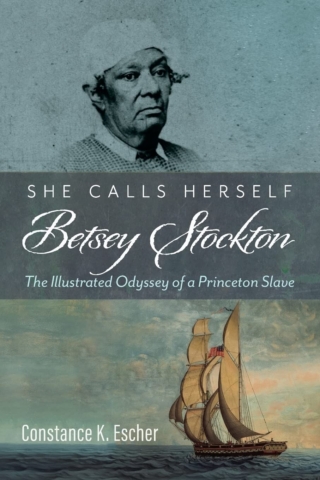
“She Calls Herself Betsey Stockton” is Constance K. Escher’s chronicle of a woman who was born a slave born circa 1798 at the Princeton home of Robert Stockton, given to a minster/educator who exposes her to religion and learning, becomes part of a Princeton religious society, is freed, becomes a missionary, and eventually helps found Witherspoon Street Presbyterian Church.
Escher, who taught for 26 years with the Princeton Public Schools, say her “Aha!” moment for writing the book came “as I opened a biographical file in the upstairs library in Bainbridge House on Nassau Street, a period photograph labeled ‘Betsey Stockton’ tumbled out. There, staring back at me, was a portrait with engaging eyes. It showed the intelligence, the nobility, and the authority of the sitter. Inquisitive by nature and training, I began by asking myself questions a historical biographer uses to ferret out basic facts. Who was Betsey Stockton? What was the life story behind the portrait of this former Princeton slave?”
“She Calls Herself Betsey Stockton: The Illustrated Odyssey of a Princeton Slave,” Constance K. Escher, 200 pages. $24, paperback, Resource Publications.
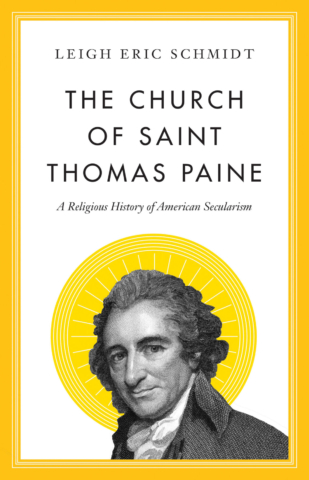
“The Church of Saint Thomas Paine: A Religious History of American Secularism” takes a new look at the writer who not only fanned the spirit of the American Revolution with his noted pamphlets “Common Sense” and “The American Crisis” but lived in Bordentown from 1778-1787.
Author Leigh Eric Schmidt, a professor of humanities at Washington University in St. Louis and past professor and department chair of religion for Princeton University, shows that while Paine’s call to end the European monarchy structure brought him readers, the writer’s call for dismantling religious institutions that supported “divine rites of rulers” made him an enemy to the church and a savior to nonbelievers:
“No founding figure occupied a more canonized role in the 19th century secularist imagination than Paine, whose bold deistic critique of the Bible in ‘The Age of Reason’ had made him the ogre of evangelicals and the hero of infidels,” notes Schmidt. “Denied burial in a Quaker cemetery — a religious fellowship with which he had a lingering familial affinity — he was interred in June 1809 on his farm in New Rochelle, New York, with little ceremony and few at all in attendance. Then, in 1819 the British radical William Cobbett, a one-time detractor turned ardent admirer of Paine, decided to dig up the remains and return them to England as a catalyst for a protest and reform back in the motherland. With that act of grave robbery, Cobbett set Paine’s bones in motion; sardonically dubbed a ‘resurrection man’ by the British press, Cobbett had created an empty tomb of sorts for American freethinkers. That the stolen remains eventually went missing after Cobbett’s own death in 1835 made Paine’s bones the doubly lost relics of 19th century secularism.”
“The Church of Saint Thomas Paine: A Religious History of American Secularism” by Leigh Eric Schmidt, 272 Pages, $27.95, Princeton University Press.
“Retrieving the Life and Art of James Wilson Edwards and a Circle of Black Artists” focuses on group of artists working in the Greater Princeton region during between the 1960s and late 1980s.
In addition to Edwards, the circle included Rex Goreleigh, artist and founder of the influential Studio-on-the-Canal; Hughie Lee-Smith, a nationally known painter; Selma Hortense Burke, a nationally known sculptor; and Wendell T. Brooks, a noted painter and The College of New Jersey professor.
The book was written by Princeton-based artists Judith Brodsky and Rhinold Ponder and Princeton University professor Dr. Rachael Z. DeLue as the catalog for the recent Arts Council of Princeton exhibition examining Edwards and his circle.
Thanks to the curators’ involvement with art and Princeton, the catalog also recreates life in mid-20th century Princeton.
For example, they note that Edwards came to the area “after reading an article in Ebony Magazine extolling Princeton as a community that valued racial integration” and that “the Edwardses had many friends and enjoyed an extensive social life. Their friends included prominent members of the Princeton African American community, the history of which goes back to before the Civil War when Princeton students from the South brought their slaves with them.”
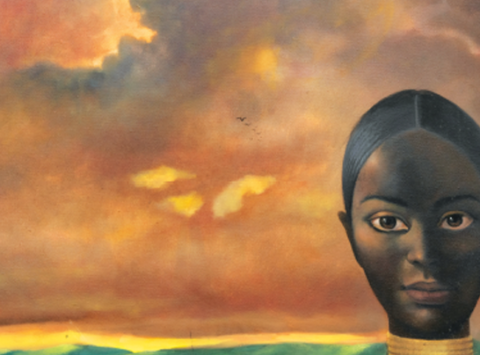
Regarding Edwards’ art, the writes note, “Edwards was engaged with an exploration of ideals of beauty, both Black and white, as expressed through the female form. His library reflects that exploration. It included The Changing Face of Beauty: Four Thousand Years of Beautiful Women by Madge Garland, first published in 1957. He painted dozens of small nudes and portraits of imaginary women throughout his career.”
“Retrieving the Life and Art of James Wilson Edwards and a Circle of Black Artists” by Judith K. Brodsky, Rhinold L. Ponder, and Dr. Rachael Z. DeLue, 114 pages, $45, published by the Arts Council of Princeton.
Other books focus on New Jersey towns and institutions that have made their mark on history:
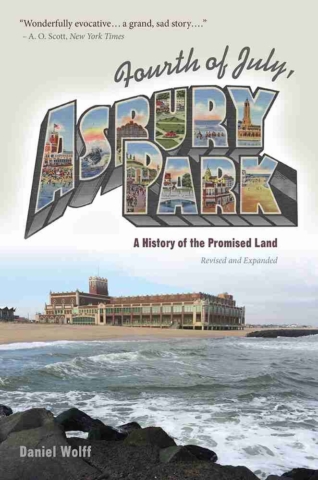
“Fourth of July, Asbury Park” is a deep exploration by Daniel Wolfe, the Grammy nominated biographer of Woody Guthrie and Bob Dylan.
Subtitled “A History of the Promised Land,” the just revamped and reissued tome is a lively, witty, and illuminating look at the ideals, delusions, and cultural hypocrisy that shaped a town — and a nation.
True to its title, the book uses a succession of July 4ths to chart the shore town’s ups and downs and the forces that made it happen.
The first July 4th is the one in 1870 that marks the personal day of independence for Asbury Park founder, James A. Bradley. He’s a wealthy New York City brush manufacturer grown world weary and following a calling to create spiritually-oriented community on the Jersey Shore.
Bradley’s Methodist religious fervor is reflected in the town’s namesake, the influential English-born American Methodist evangelist Francis Asbury who helped bring Methodist values to America.
The book then chronicles how Bradley’s vision of less inclusive, restrictive, and business-driven community sowed problems that eventually turned into a god-send. That was especially true regarding the formerly proscribed popular music that – with Bruce Springsteen’s hit album “Greetings from Asbury Park” – helped put the decaying city firmly on the map.
“Fourth of July, Asbury Park” by Daniel Wolff, 208 pages, $25.95, Rutgers University Press.
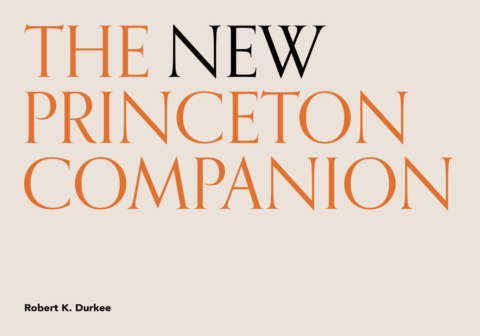
“The New Princeton Companion” is the update of what its publisher calls “the definitive single-volume compendium of all things Princeton” — or 400-plus alphabetically arranged entries that map to university’s founding in 1746 to today.
Its author is Robert K. Durkee, who was a Princeton University undergraduate in the 1960s, reporter and editor for the Daily Princetonian, columnist for the Princeton Alumni Weekly, vice president for public affairs, and vice president and secretary from 2004 through 2019.
The new publication follows the approach developed in 1978 by Princetonian Alexander Leitch’s original publication of the same name and handily encapsulates the university’s history, traditions, characters, and towering figures for quick review.
“The New Princeton Companion,” Robert K. Durkee, 584 pages, $60, Princeton University Press.
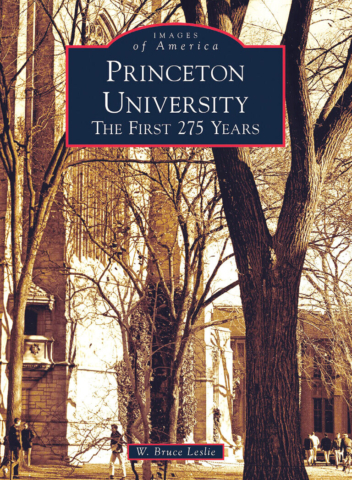
“Princeton University: The First 275 Years” is historian and Princeton University Class of 1966 graduate W. Bruce Leslie’s recently released Arcadia Press publication.
Benefiting from other studies of the oft-examined institution and Princeton University’s archives, Leslie provides a concise 128-page overview of the life of the university from its Scottish, Protestant, and exclusively male roots to its current role as a coed, multi-ethnic, and ecumenically inclusive world-known institution.
The book provides easy invitations to linger over any of the numerous vintage photos — a hallmark of such Arcadia publications — or to focus in a specific era or theme — such as Chapter Five’s “Becoming Princeton University” and how in 1896 the College of New Jersey morphed into Princeton University.
While that general history can be found in other Princeton University references, this book benefits from the writer’s own experiences of being a Princeton University student during the second part of the 20th century and continuing to witness changes up to current times.
“Princeton University: The First 275 Years,” W. Bruce Leslie, 128 pages, $23.99, Arcadia Publishing.
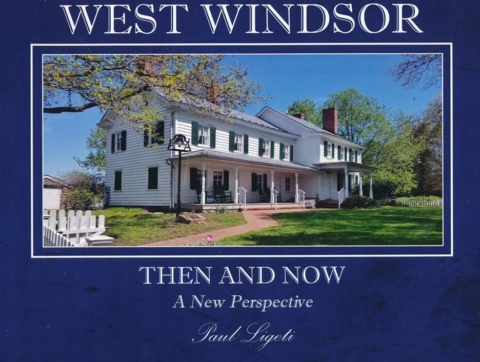
“West Windsor Then and Now: A New Perspective” marks the town’s recent 225th anniversary by updating and revising an original book released 25 years ago.
According to Historical Society of West Windsor vice president Paul Ligeti — author of the current anniversary edition — the original book “was something never seen before: a comprehensive analysis of centuries of West Windsor history, released amid a related year-long celebration. Authored by Henry Innes MacAdam and designed by Jeff and Ruth Currie over the span of just a few months, the original “West Windsor Then and Now” brought to residents stories familiar and new: tales of early settlers, community growth, personal lives just as nuanced and important as ours, scientific breakthroughs, and even an ‘alien invasion’ — to name just a few.”
About the new publication, Ligeti says, “The new book was written with the intent that it should be easy for anyone of high-school reading level and above to pick up and become well-versed in our collective community history. We incorporated color images onto almost every page of the book — historical photographs, documents, illustrations, maps, and more. It also has a list of the nearly 200 still-extant local sites we believe are 100 years old or older (some dating to the 1700s).
Divided into 20 sections, the 172-page publication starts off with “Natural Resources” and the simple yet often forgotten premise: “To understand West Windsor’s environment is to understand its historical foundations. The town’s natural resources were fundamental in influencing how life developed here.”
“West Windsor Then and Now: A New Perspective” by Paul Ligeti, 170 pages, $29.99 (softcover), $49.99 (hardcover), available through the Historical Society of West Windsor website.
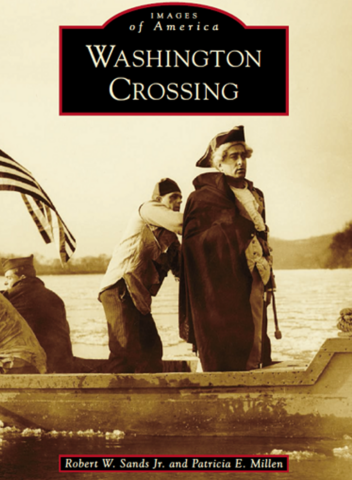
“Washington Crossing,” by Ewing-based historians Patricia Millen and Robert Sands, is an Arcadia Press book of mainly vintage photographs “was written to honor the 1776 crossing of the Delaware by General George Washington and his army and the parks that mark its place in history.”
As the two note, the photos “preserve more than the events of the American Revolution. For generations of people, the parks have been an extension of their own backyards and hold fond memories of hiking thorough wooded trails — or along the canals — family picnics and outdoor play watching or witnessing history relived on Christmas Day.”
“We have attempted to capture these timeless moments that make up the story of both parks. (And) preserve the pictorial history of the crossing and the parks that flank the river — for all the thousands of visitors who come each year to stand on the banks to marvel at the site where Washington crossed the Delaware.”
Nevertheless, the Christmas Day events are some of the main fun of the book. As Sands and Millen note, while Actor St. John “Sinjun” Terrell and six friends in rented costumes began the first modern re-enactments of the crossing of the Delaware in 1953, the first recorded crossing reenactment was on January 23, 1947, when a group of Phi Sigma Nu fraternity members from Rider College staged an event to draw attention to their club. The event featured Washington appearing on a bicycle.
Also of interest is the story of how the now iconic painting of “George Washington Crossing the Delaware” was banished to Taylorsville, PA, until it was reclaimed as a masterpiece and how the current replacement was painted.
“Washington Crossing” by Robert Sands Jr. and Patricia Millen. 128 pages of photographs and captions. Available through Arcadia Publishing, $23.99.
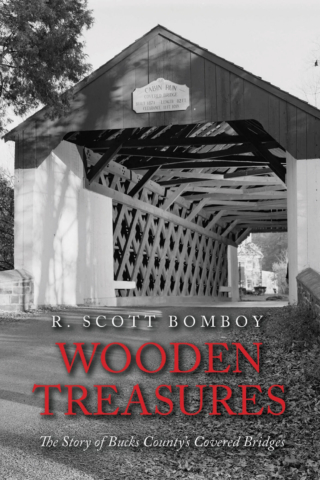
“Wooden Treasures” claims to be the first complete history of one of Bucks County’s covered bridges. And who’s to argue?
Bucks historian R. Scott Bomboy’s 220-page book documents the 51 covered bridges that had been built (only around a dozen remain) and includes more than 240 photos and illustrations — some published for the first time.
This book that started as a 2018 Mercer Museum in Doylestown tells the story of how covered bridges had become ingrained in everyday Bucks County life for generations.
It also argues that today’s citizens need to connect the origins of covered bridges in Bucks County to the new technology that was developed to connect to America’s pioneering covered bridge builders connecting Pennsylvania and New Jersey during the pre-Industrial era in the early 19th century. And that technology paved the way for at least 39 covered bridges paid for by Bucks County between 1825 and 1875.
“Wooden Treasures,” R. Scott Bomboy, 220 pages, $29.99, Bridgetown Publications. More information: coveredbridgebook.com.
And there are books whose topics go beyond New Jersey and its residents, but whose authors are very much parts of the Princeton-area scene.
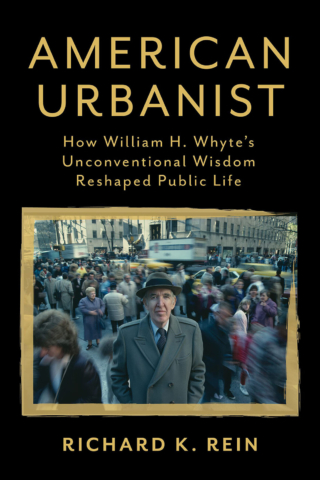
“American Urbanist: How William H. Whyte’s Unconventional Wisdom Reshaped Public Life” is by Princeton resident Rich Rein, known to many as the founder and longtime editor of U.S. 1.
Winning high praise from both the New York Times and the Wall Street Journal, the book is a groundbreaking look at the individual who introduced a fresh way of looking at social organizations and examining urban projects.
As Rein notes early in the book, Whyte was the author of the 1956 best seller “The Organization Man,” a book “that defined a generation of men and women who committed themselves to the big corporations and other institutions where they expected to be employed for a lifetime.”
A Princeton University English major, and later a writer for Fortune Magazine, Whyte developed some of his ideas while serving in the U.S. Marine Corps.
While writing for the Marine Corps Gazette, Whyte began to understand how vital institutions could create cultures with a belief system that often squelched the equally vital input of individuals within that organization, resulting in Whyte coining now common term “groupthink” to define the phenomenon.
“Spend a few hours with William H. Whyte, and you may never look in the same way at the place where you live or the company where you work,” Rein declares in his preface and in interviews.
It’s a great and fitting declarative sentence that can be followed with “Rich Rein has written an engaging and well researched book that does just that.”
“American Urbanist: How William H. Whyte’s Unconventional Wisdom Reshaped Public Life,” Richard K. Rein, 335 pages. Island Press. $35.
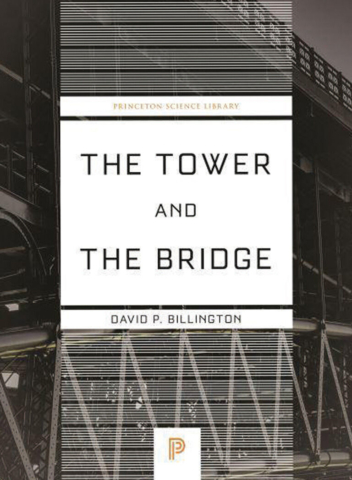
“The Tower and the Bridge” is the reissue of late Princeton University engineering professor David Billington’s book examining engineering and a new art form: structural art, an approach the writer calls “parallel to and fully independent of architecture.”
As Billington explains, “The idea is related to my wish to create a course in structural art similar to courses in painting or literature in which the finest works are studied one after another thereby suggesting the evolution of principles of form.”
And, he continues, “like that other Industrial Revolution art from, photography, the development of the new technology of industrialized iron brought forth a new means of artistic expression. Just as there are artists who have practiced both painting and photography, so there are artists who have created works of structure and works of architecture. But the distinction between the two is, just as clear as that between photography and painting.”
As indicated in the title, the artistic examples are referenced by a tower, the distant Eiffel Tower in Paris, and a bridge, the closer Brooklyn Bridge in New York City, built by Trenton’s John A. Roebling whom Billington calls “an almost inchoate romantic idealism” and “the first American structural artist to attract international attention.”
The reason was that “(he) was building not just for profit; indeed it is unlikely that he made much money from his bridges. Nor was he writing just for publicity. He did both building and writing to express his ideal for society: that the spirit can be uplifted by understanding technology and by creating out of it superior works that people can afford, that they can openly use, and that they can aesthetically enjoy. That is the meaning of technology, and that is the want to be satisfied: not just materials needs but ‘a high spiritual culture.’”
“The Tower and the Bridge,” David P. Billington, $22.95, 308 pages, Princeton University Press.
“Architect of Courage” is a novel by West Windsor writer Victoria Weisfeld.
The story follows a successful middle-aged New York architect, Arch Landis, whose extramarital affair in a post-9/11 city leads him into a deadly plot and personal revelations. As the writer says about the work, “The story isn’t just a mystery. It was also of Landis’s emotional journey. It has a story arch. He is learning and growing and, while he’s full of regret, he’s coming to terms with what has gone on.”
Although a first novel for Weisfeld, it isn’t a first for Weisfeld who, in addition to reviewing mystery and crime for the United Kingdom online publication Crime Fiction Lover, has published short mystery stories in several anthologies and noted mystery magazines, including Ellery Queen, Sherlock Holmes, and Black Cat, and in the U.S. 1 Summer Fiction issue.
“Architect of Courage,” Victoria Weisfeld, 350 pages, $15.99, Black Opal Books.
Finally, one bonus selection:
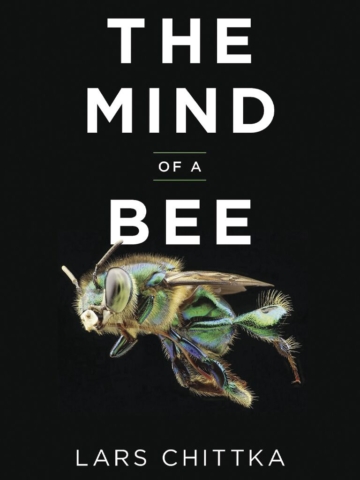
“The Mind of a Bee” is one of a bunch of new books released this year. And while it was written by a German born scientist working in England and doesn’t reference the area at all, the Princeton University Press publication does focus on a subject inhabiting our lives and imagination.
Researcher and writer Lars Chittka opens the 260-page books by helping the reader become a bee: “You have 360-degree vision, and your eyes process information faster than any human’s. All your nutrition comes from flowers, each of which provides only a tiny meal, so you often have to travel many miles to and between flowers — and you’re up against thousands of competitors to harvest the goodies. The range of colors you can see is broader than a human’s and includes ultraviolet light as well as sensitivity for the direction in which light waves oscillate. You have sensory superpowers, such as a magnetic compass. You have protrusions on your head, as long as an arm, which can taste, smell, hear, and sense electric fields. And you can fly.” And that’s just the start.
About creating the book, Chittka says, “I just feel that the number of discoveries has exponentially accelerated over the past few years. I don’t think that it has been seen by public. There is a general ‘buzz’ about the bees in the media. Bees are kind of a mascot to nature preservation. (But) people are not aware of the mind and the thinking of bees.”
“The Mind of a Bee,” Lars Chittka, 260 pages, $29.95, Princeton University Press.