Editor’s Note: For full “Off the Presses” columns on each of the books referenced here, click on the book titles below.
We didn’t need a Publishers Weekly story telling us that “book sales should finish 2021 on a good note,” it’s something we noticed form our busy “Off The Presses” column that featured new books from regional writers and publishers on subjects ranging from historic accounts to creative musings.
We also didn’t need anyone to remind us that it is a good time to revisit the past year in books at time of the year when people are looking to purchase books as gifts for others or themselves.
So let’s take a look at the books of 2021:
History
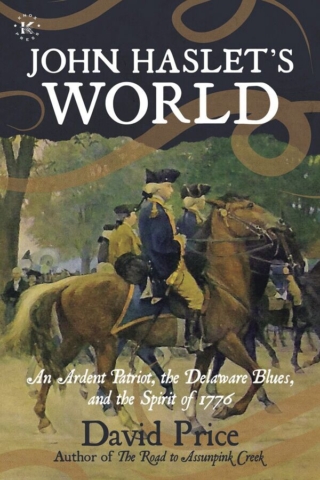
Lawrenceville author and Princeton Battlefield guide David Price brings local history alive in “John Haslet’s World: An Ardent Patriot, the Delaware Blues, and the Spirit of 1776.”
The focus of the book is an Irish-born American Revolutionary War colonel who on January, 3, 1777, died “on a frozen battlefield with the other soldiers of George Washington’s Continental Army who had faced one hardship after another, both before and during their grueling winter campaign, in pursuit of a young nation’s quest for independence from Great Britain.”
The book is Price’s third in a series of volumes focusing on the events between December 25, 1776, and January 3, 1777, during America’s War for Independence.
And in this one he uses his years of expertise and love of history to write a fresh chapter of the Revolution and tell the story of a man who embodied the yearning for a nation built on the premise of equality and the inalienable rights of life, liberty, and the pursuit of happiness.
“John Haslet’s World: An Ardent Patriot, the Delaware Blues, and the Spirit of 1776” by David Price, $18, 302 pages, Knox Press.
Stories of Slavery in New Jersey
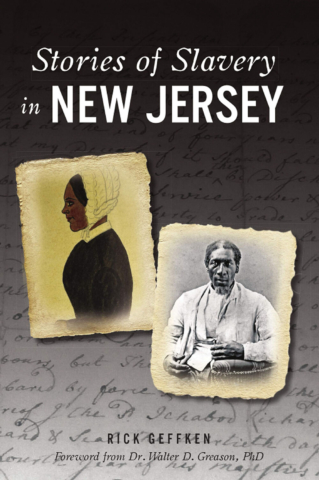
Rick Geffken, the Monmouth County-based co-author of “Highland Beach, Gateway to the Jersey Shore, 1888-1962” and “Lost Amusement Parks of the North Jersey Shore,” announces early that this book is about Black people enslaved by white people in New Jersey. “If that’s a hard statement to read, it was equally difficult for me to discover this truth so late in my life,” he continues.
“Living in the Garden State for over seven decades now, I’m incredulous that I knew nothing about slavery for most of them.” After all, he adds, “slavery was ‘baked into’ New Jersey from its very beginnings.”
Geffken says he began the book before George Floyd was killed by a police officer in 2020 but adds that his “death and those of other Black men and women closer to home are the direct results of the shamefully long aftertaste of slavery. I see hope that the resultant national protests will change how we live together everywhere in this country.” The book is an attempt to help.
“Stories of Slavery in New Jersey” by Rick Geffken, 208 pages, $21.99, The History Press.
“It’s hard to imagine how (the firemen) did what they did,” say Michael Ratcliffe, the journalist-turned-professional Lawrenceville fireman about his Arcadia Press book. “The firefighters of the 19th and early 20th century were supermen. They did incredible things with limited resources. It’s a romantic image — steam and horses running, and the risks they took and fires they fought. It must have been something to see.”
Ratcliffe says the work on the book goes back some 20 years when he was a Times of Trenton city desk reporter covering crimes and fires and developed a collegial relationship with the Trenton Fire Department.
Starting with firefighting in Trenton, even before there was a United States and a formal City of Trenton, the book uses mainly photographs grouped into eras to tell the story of Trenton’s firefighters.
“I tried to squeeze in as much information in as I could. Those looking into the firefighting industry will find answers in the book,” he says.
He also wanted to present the dramatic moments of Trenton firefighting history. And if one fire can show the drama of Trenton firefighting it is the 1915 Roebling Factory fire — suspected of being part of a pre-World War I German sabotage effort (after the Roebling Company received a U.S. military-related contract).
While the book is dedicated to his fire-fighter father, Ratcliffe says he was thinking of all the “firefighters who gave their lives but are forgotten. These guys rescued a lot of people and saved a lot of lives. Their stories should be told.”
The book is being sold with proceeds going to the Meredith Havens Fire Museum and the Trentoniana Collection.
“Trenton Firefighting,” by Michael Ratcliffe, 128 pages, $21.95, Arcadia Press.
Salut!: France Meets Philadelphia
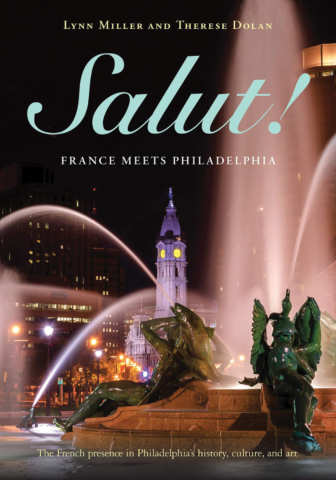
Authors and Temple University professors Lynn Miller and Therese Dolan argue that although Philadelphia was established as a British colony in the 1680s, events leading to the American Revolution “pushed the leaders of both the city and the Revolution away from England to build alliances with the France.” And that “the diplomatic missions of Benjamin Franklin and Thomas Jefferson in Paris not only deepened their exposure to French Enlightenment ideas that would continue to shape the country’s ideas but also familiarized them with prominent artists and aesthetic traditions that would significantly impact late 18th century American art.”
The authors continue to point out that the city and nation where shaped by individuals of French heritage. That includes merchant and financier Stephen Girard; former aide-de-camp to Baron von Steuben and president of the American Philosophical Society Pierre Duponceau; master furniture maker (and great-great grandfather to Jacqueline Bouvier Kennedy) Michael Bouvier; and St. Augustine’s Church and the Cathedral-Basilica of Saints Peter and Paul architect Napoleon LaBrun, and others.
Meanwhile, France became the choice for young Philadelphia artists who would become world figures themselves: Thomas Eakins, Henry Ossawa Tanner, and Mary Cassatt. And French architects Paul Philippe Cret and Jacques Greber’s Benjamin Franklin Parkway brought a Parisian-style boulevard to the heart of the city.
The book is filled with insights and engaging stories — including Joseph Bonaparte’s arrival in Philadelphia and the impact of his decision to settle in Bordentown.
“Salut!: France Meets Philadelphia” by Lynn Miller and Therese Dolan, 400 pages, $40, Temple University Press.
Subtitled “The Epic Death of Ulysses S. Grant and the Making of an American Pantheon,” the book by Hamilton native Louis L. Picone is a fresh look at the United States figure who made President Abraham Lincoln’s resolve to maintain the union during the Civil War a reality.
While the book on the victorious Civil War general who became the 18th president of the United States is of general and national interest, he is also connected to the region: he had a home in nearby Burlington, New Jersey, his New York city monument is in close proximity to the region, and that monument’s designer, John Hemenway Duncan, also designed the Trenton Battle Monument.
This is Picone’s third in a series of American history books, including the 2012 “Where the Presidents Were Born: The History and Preservation of the Presidential Birthplaces” and its 2016 companion “The President Is Dead: The Extraordinary Stories of the Presidential Deaths, Final Days, Burials, and Beyond.”
Here he focuses his substantial research and engaging style on an object where Grant and others play supporting roles to a bigger story about a time when “the public demanded a memorial tomb surpassing any other created before.” And then on an individual who stepped forward in the 20th century to rekindle that spirit.
“Grant’s Tomb: The Epic Death of Ulysses S. Grant and the Making of an American Pantheon” by Louis L. Picone, 324 pages, $25.99, Arcade Publishing.
Ballad of an American: A Graphic Biography of Paul Robeson
The 141-page book uses 122 pages of comic-book styled illustrations to trace the life of an American of African ancestry and his journey from segregated Princeton — where he was born on April 9, 1898 — to an international platform where he demonstrated vast talents, despite harsh American racism.
Illustrator and text writer Sharon Rudahl’s mainly black-and-white illustrations are reflective of the underground comic book milieu that she helped create. She started as a cartoonist during the 1970s drawing for the anti-Vietnam underground newspaper Takeover and the counterculture focused The Good Times before becoming part of the feminist collective that launched Wimmen’s Comix.
Taking its title from a WPA-era musical piece that become one of Robeson’s signature songs — along with “Old Man River” from “Show Boat” — Rudhal’s book allows readers or viewers to scan the flow of Robeson’s life and the conflicts and hypocrisy of the era.
That the writer/illustrator charges the story with emotional visual and textual cues is to be expected and probably calculated to engage the eyes and minds of readers too impatient to read a more nuanced text.
After all, she is writing about a man who “grew up to be a world class athlete, a powerful actor, and an electrifying singer, cherished his African heritage, embraced the songs of many cultures, and whose voice was for voiceless common people. Everywhere.”
“Ballad of an American: A Graphic Biography of Paul Robeson,” art and text by Sharon Rudahl and edited by Paul Buhle and Lawrence Ware, 144 pages, $19.95 (soft cover), Rutgers University Press.
Art and Creativity
Creativity: It’s Not What You Think
“This short book grew out of conversations I had with friends about my creative journey and how I expanded my boundaries in my art and more importantly in my life expression,” writes Skillman-based sculptor and graphic artist Don Campbell in his book “Creativity: It’s Not What You Think.”
Calling the publication “an artist’s inner journey from mind to heart to the source of all creativity,” Campbell writes in his book’s foreword the above-mentioned personal conversations grew into public talks he started giving to local organizations on creativity and eventually the book, “a companion to my talks for audience members who wish to review the ideas that I introduced.”
He says the book published through his design and creative company is a work in progress, “influenced and inspired by many artists, scientists, business leaders, psychologists, and mystics throughout my life.”
But, he adds, it “is not intended for artists only, but for anyone who has ever experienced an inner urging, a voice, a feeling that something is inside that calls out to be born.”
Admitting that “many books have been written about (creativity) from varying perspectives,” he begins his discussion with the following quote by 20th century American psychologist Rollo May: “Creativity is the process of bringing something new into being. Creativity requires passion and commitment. It brings to our awareness what was previously hidden and points to new life. The experience is one of heightened consciousness: ecstasy.”
“Creativity: It’s Not What You Think” by Don Campbell, 106 pages, $15.99 paperback, $4.99 Kindle, DJ Campbell Enterprises.
Art and Faith: A Theology of Making
This new book by Makoto Fujimura, the internationally recognized artist and writer based in Belle Mead, continues his exploration of art making as a generative and Christian activity, a topic previously noted in his earlier works, “Cultural Care,” “Refractions: A Journey of Faith, Art, and Culture,” and “Silence and Beauty.”
“I now consider what I do in the studio to be theological work as much as aesthetic work,” he notes. “I experience God, my Maker, in the studio. I am immersed in the art of creating, and I have come to understand this dimension of life as the most profound way of grasping human experience and the nature of our existence in the world. I call it the ‘Theology of Making,’ and I hope in this book to introduce its most important constellation of mysterious elements. I thus become my point of reference of a lifetime of star-gazing into the infinite realities of beauty and the sacred — and then creating.”
He continues to say that the “Imagination, like art, has often been seen as suspect by some Christians who perceive the art world as an assault on traditional values. These expectations of art are largely driven by fear that art will lead us away from ‘truth’ into an anarchic freedom of expression. Yet after many decades of the church proclaiming “truth,” we are no closer as a culture to truth and beauty now than we were a century ago. I have spent the past two decades developing a path toward what I call “culture care” away from the typical culture war stance. In this book I outline a path toward culture care via what I see as flowing out from a biblical model of flourishing toward the New.”
“Art and Faith” by Makoto Fujimura, 170 pages, $26, Yale University Press.
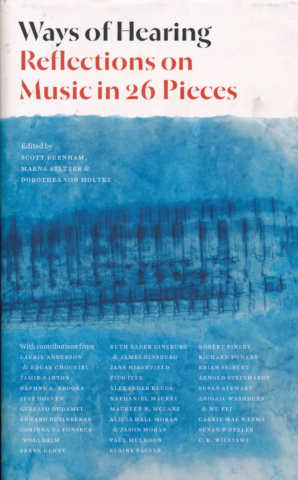
Edited by three noted Princeton figures — City University of New York music professor and Scheide professor of music history emeritus at Princeton University Scott Burnham, Princeton University Concerts director Marna Seltzer, and Labyrinth Books co-owner Dorothea Von Moltke — the book marked the 125th anniversary of Princeton University concerts by eliciting responses from musicians as well as “poets, writers, scholars, and architect, a film director who is also a writer, a music critic, a dance critic, a visual artist, a physicist, and a Supreme Court Justice.
“We challenged these remarkable souls to write about a specific piece of concert music, a quality or genre of music, or a way of being with music that has meant much to them. And we offered them the option of doing so through an interview, an essay, a poem, or even some sort of nonverbal creative expression. What we received has been extraordinary. As the contributors concentrate their attention on their chosen piece of music, or more broadly on the role of music in their life, they open themselves up to the reader.”
“Ways of Hearing: Reflections on Music in 26 Pieces,” 204 pages, $19.95, Princeton University Press.
The Chapel of Princeton University
“On the 50th anniversary of the publication of ‘The Chapel of Princeton University,’ it is a privilege and great joy to reissue the book, which remains the authoritative resource on the fabric of this magnificent edifice,” writes Alison L. Boden, Princeton University Chapel dean.
Author Richard Stillwell notes that “The purpose of this book is to give the visitor as complete a description of the chapel as possible so that, provided he has the patience to follow the symbolism of the carving and the stained-glass windows, (they) will come to realize that the decoration of the building contains the essence of the Old and the New Testaments, both of which appear on the seal of Princeton University.”
While the original book did that in black and white, the new edition comes alive in color and is a great way to become more aware of those symbols and designs that make the building a work of art in its own right.
“The Chapel of Princeton University” by Richard Stillwell, with foreword by Alison L. Boden, 160 pages, $35, Princeton University Press.
Novels
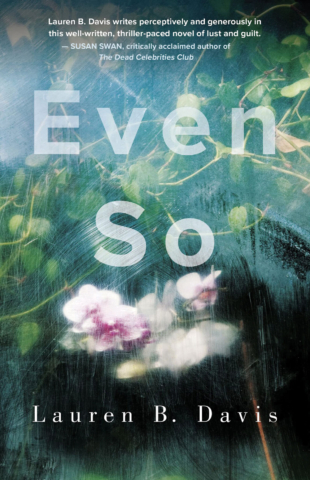
Set in Princeton, Lawrenceville, and Trenton, Princeton writer Lauren B. Davis’ story follows the soul journey of a woman living in privilege as she learns the meaning of what it is to truly love others.
As Davis writes, the transformation came slowly. “Angela had begun volunteering at the Our Daily Bread Food Pantry a little over six months ago. One of those frequent fundraising letters had come in the mail, asking for donations. She had written a cheque, of course, but then had begun thinking. She had time on her hands, too much time, in fact.
“Ever since (her son) had moved to the Lawrenceville boarding school, the restlessness Angela had felt creeping up on her for so long had become impossible to ignore. Running helped, but she couldn’t run all day every day, could she? When she felt that tinge of possibility looking down at the cheque she’d written for the Pantry, she felt perhaps this was what she was being called to do. She telephoned them. Spoke to the nun, Sister Eileen, who ran the place, and asked if she could pop in with a cheque and for a chat about volunteering. This is the way that it had started.”
“Even So,” 336 pages, $21.99, Dundurn Press.
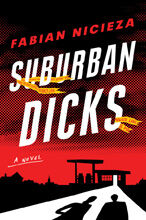
Fabian Nicieza, the Princeton Junction-based Marvel and DC comic writer and co-creator of Deadpool, has written his first detective novel.
Set in West Windsor, the book tells the story of would-be FBI profiler Andrea Stern and disgraced journalist Kenny Lee who team up to investigate a murder at the Valero gas station on Route 571 and stumble across a decades-old conspiracy.
Although the novel is set in the West Windsor-Plainsboro community, the author says he went to great pains to make sure people know that the story is totally fictional, “The main impetus for (using West Windsor and Plainsboro was) because it was the community that I lived in, I understood it at least on a tactile level. I knew where places were, and I knew where things were happening.
“That allowed me to structure a story where I could manipulate the movement of characters. I knew where the soccer fields are, because I coached on the soccer fields. I know where to get a bagel, because I go to get a bagel at the Bagel Hole. I know what the train whistle is like, because I know what that train whistle is like. And I understand what the sludge and grind of the commute into the city is like, because I’ve done it.”
“Suburban Dicks” by Fabian Nicieza, 400 pages, $27, G.P Putnam’s Sons.
The author of several published novels ranging from young audience to science fiction, New Jersey native Nick Korolev approaches his account of New Jersey’s state monster by using different eras, character perspectives, and legends to freshen his take on the more than twice-told tale.
Divided into six time periods, the first appropriately starts in 1735 when Sarah Leeds has her unlucky and unwanted 13th child who immediately begins a transformation to something other than a healthy human child and ends with a paranormal television show crew and a New Jersey doctoral student encountering the living legend.
While Korolev uses the familiar tales and newspaper accounts, he also mixes in the Leni Lenape legend of M’sing, a guardian of the forest and innocent creatures — including children. The result is that the Jersey Devil here is more an angel, one that avenges evil doers and guards the innocent, than just your everyday demon.
The book hits closer to home with a section where the Devil makes a visit to Trenton.
“The 13th Child” by Nick Korolev, 230 pages, $16.95 Hellbender Books.
Poetry
Nationally known and former Trenton area poet Pablo Medina’s “The Foreigner’s Song: New and Selected Poems” is a type of aural retrospective. Here the Cuban-born American poet reaches back to his first published book of poems, the 1975 “Pork Rind and Cuban Song,” culls from five others, and releases 19 fresh works that open with “That Dream Again.” It’s a fitting title to start the book. Not only does Medina mention dreams in a number of his poems, he charges his poems with a dreamlike quality — one that leads readers to a place where familiarity and certainty surrender to strangeness and reflection. And some of those places happen to be in the Garden State.
“The Foreigener’s Song: New and Selected Poems” by Pablo Medina.
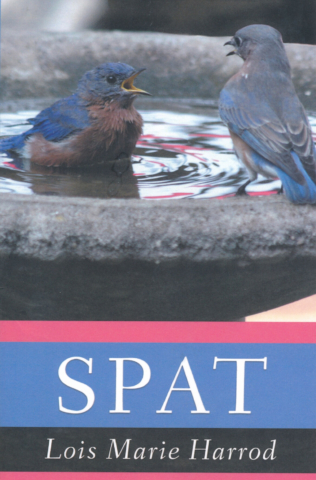
The new volume is Hopewell-based poet Lois Marie Harrod’s 18th collection of poetry.
A recognized state and Geraldine R. Dodge poet, Harrod is also known for her involvement with the U.S. 1 Poets and Delaware Valley Poets, leading creative writing and literature courses for The College of New Jersey and Evergreen Forum in Princeton, and as a teacher at Voorhees High School.
While the volume’s name — and the opening poem — evoke a petty fight, the poem and book can perhaps been seen as part of the past-spat reflections on the whys and whats that lurk under the skin and rise to the tongue.
The book is dedicated to her husband, The College of New Jersey emeritus professor of literature Lee Harrod — or as she puts it, “My one and only spat-mate.”
“Spat” by Lois Marie Harrod, 40 pages, $14.99, Finishing Line Press.
The latest poetry edition from US 1 Poets, founded in 1973, continues a longtime regional tradition of publishing and represents a new partnership with the Delaware Valley Poets, established in 1952. This year’s edition featuring scores of area writers is dedicated to four poets from US 1 who have made substantial, crucial contributions over many years: Betty Lies, Elizabeth (Mimi) Danson, Dave Worrell, and Nancy Scott.
“US 1 Worksheets Volume 66,” 127 pages, $15, DVP/US 1 Poets.
Drama
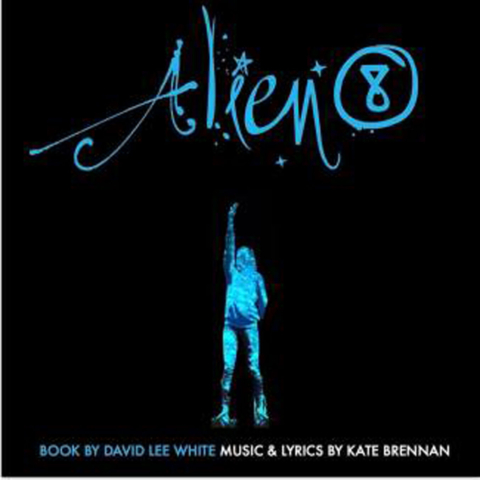
Passage Theater’s past associate director and Bordentown Township-based playwright David White is the co-author (along with Kate Brennan) of the recently published 100-minute alien-themed stage musical that saw life as part of a McCarter Theatre summer youth program in 2017.
The work that had its world premiere at Drexel University in 2019 involves a mysterious non-gender specific and non-vocal “young visitor” to a Midwestern town that becomes confused and begins making a range of conclusions and decisions. While the play is aimed for a high school and college audience, it also has larger appeal.
“ALiEN8,” Book by David Lee White, Music and Lyrics by Kate Brennan. Printed scripts available at $8.95, www.youthplays.com.
Regional Interest
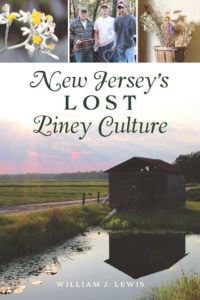
New Jersey’s Lost Piney Culture
Author William J. Lewis is a New Egypt resident, former Rider University student, ex-United States Marine, and self-referenced “lifelong Piney.” His book explores both an important region of New Jersey and how the people of the Pines were labeled and marginalized by the larger population.
As he notes, “Up until, say, the early 1900s, the Piney way of life depended on hunting, fishing, trapping, and harvesting items to supplement the family budget, creating an independence from a modern New Jersey 40-hour workweek their descendants do not enjoy.”
However, Lewis says social and political forces conspired to make the region’s population increasingly marginalized, especially with Governor James Fielder’s 1913 reference to “Pineys” as degenerates. As Lewis says, the governor coming “out publicly against the people of the region and, ultimately, the Piney way of life was all based on lies published in a report by Dr. Henry Goddard and Elizabeth Kite, which had serious ramifications on the Pineys back then and still has effects that continue to be felt to this day.
“While Governor Fielder used his words and position of power to tear down an entire culture as a plank in his reelection platform, it was John McPhee who ultimately helped save the Pineys with his words, which produced the power to influence a positive change” — and something Lewis hopes to continue with his book.
“New Jersey’s Lost Piney Culture,” William J. Lewis, 144 pages, $21.99, The History Press.
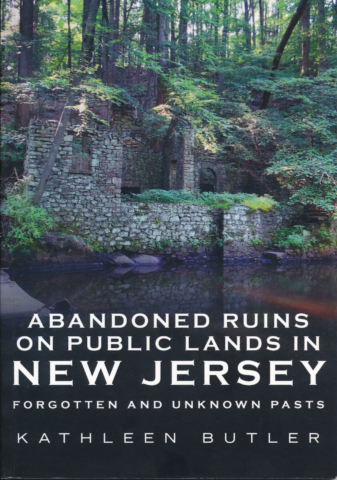
Abandoned Ruins on Public Lands in New Jersey: Forgotten and Unknown Pasts
Kathleen Butler, a Bristol, Pennsylvania, resident originally from Port Murray, New Jersey, is the creator of the 98-page book featuring 18 history-connected adventures.
Some are to familiar sites, such as Cape May Bunker and Fort Hancock. Some are on the roads less traveled, Fries Mills and Manuka Chuck (train) Tunnels. And some are in or around the U.S. 1 newspaper region, the D&R Canal Trail Abandoned Rail Cars in Lambertville and the Smithville Ruins outside Mt. Holly. She also adds a 19th personal journey: visiting her now-abandoned childhood home near the Musconetcong River.
With an emphasis on more photographs than text, the book reflects one of Arcadia Publishing’s approaches to preserving history, such as its series of books telling the tales of towns through historical photos and postcards.
In this one, the author is out to preserve the current decay of forgotten places and invite others to go on their own adventures and keep history alive.
“Abandoned Ruins on Public Lands in New Jersey: Forgotten and Unknown Pasts,” Kathleen Butler, 98 pages, $23.99, America Through Time.
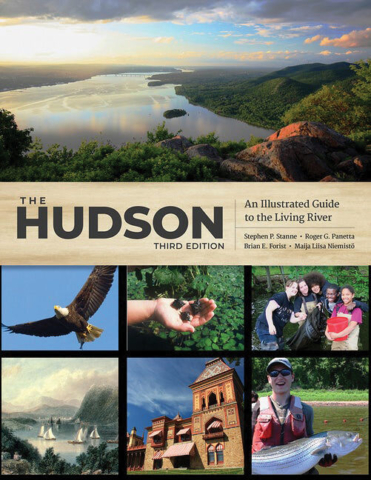
Rutgers University Press’ “The Hudson” brings to life a major natural wonder that is significant to our region as well as brings to mind the opportunity to take a brief day trip to see some of its scenic wonders.
The book is subtitled “An Illustrated Guide to the Living River,” and the writers — Stephen Stanne, Brian Forist, and Maija Liisa Clearwater, all connected to the Hudson River Sloop Clearway, and retired Fordham history professor Robert Panetta — say when they began to work on the book 25 years ago it was designed mainly for teachers.
Then, “over the years, we have found that this book fulfills a larger role, providing information to anyone inclined to be a student of the river, whether or not the inquiry takes place in a formal classroom.”
And why not? In addition to being an historic waterway that many of us encounter regularly on the way to New York City or along 21 miles of the northern section of the state, the Hudson constantly gets our attention, the writers argue.
As proof, they point out the U.S. Airways Flight 1549’s “Miracle on the Hudson” emergency landing in 2009, a humpback whale’s 2016 swim to the George Washington Bridge, the opening of the Hudson River Park in Manhattan, the growing kayak tours industry, and the Walkway Across the Hudson — that happens to be the world’s longest elevated pedestrian bridge, just about 125 miles away from our region.
And while the book periodically has the feel of a textbook, its guidebook quality makes it appealing and allows the reader the option to take a quick dip or a deep dive into the 315-mile river’s lore.
“The Hudson: An Illustrated Guide to a Living River,” 368 pages, $29.95 paperback, Rutgers University Press.
Social Sciences
“The deaths of George Floyd, Ahmaud Arbery, Breonna Taylor, and far too many others can be our impetus as parents, caregivers, and educators to work toward a future of racial acceptance, diversity appreciation, and equal protection under the law,” writes Lynne Azarchi at the start of her book, “The Empathy Advantage.”
Written at a time when “COVID-19 and many African Americans’ deaths were drastically changing our world in ways that we could never have been imagined,” the events seemed to touch the Trenton native and executive director of Kidsbridge Tolerance Museum.
While Azarchi starts her book on a dark note by saying, “Empathy is lacking in the world. Tolerance for those who are different is more absent than ever,” she brings in hope and says, “But in these pages, I can help parents make this world change to the better, one child a time.”
Written with former Times of Trenton writer Larry Hanover, the book is an easy-to-read mix of textbook, self-help, and lessons learned shared in anecdotes and reports on studies — the latter supported by a 13-page bibliography.
There are also 30 pages containing online resources for each chapter topic — suggesting that the book will be updated to meet changing social attitudes and events.
Reiterating her stance that empathy can be enhanced through education and related experiences — such as getting to know about people from other cultures and races — Azarchi says, “It largely comes down to the Golden Rule: ‘Do unto others, as you would have them do unto you.’”
“The Empathy Advantage,” 312 pages, $30, Rowman & Littlefield.
The College of New Jersey emeritus professor Gary C. Woodward recently turned his life-long fascination for communications work into a book that takes a sound look at hearing in a visual age.
Holding the opinion that sound is the primal sense, Woodward also argues that the proliferation of audio technology over the past century has made sound the “newest” sense.
His book is broken into three sections. “Human Equipment” focuses on the “motivation to listen” and cultural uses of sound. “Natural, Organized, and Disorganized Sound” looks at the use of sound recording, especially in the film industry.
And “The Modern Assault on Hearing” shows how the seemingly invisible, and generally seen as benign, phenomenon of sound can be turned into a destructive weapon. That includes the unfolding story of sound evidently being employed by foreign governments to sicken overseas American ambassadors and how sonic cannons are being used to disperse crowds, including the incapacitation of participants of a Black Lives Matter protest in New York City.
Reporting that sound is a sense we can’t turn off, Woodward looks to tune our ear and thinking to what is going on around us and “come to our senses.”
“The Sonic Imperative: Sound in the Age of Screens” by Gary C. Woodward, 320 pages, $16, www.theperfectresponse.com.
Reinventing Masculinity: The Liberating Power of Compassion and Connection
Edward M. Adams, a psychologist practicing in Lambertville and Somerville, and Ed Frauenheim, Princeton University Class of 1989 and senior director of content at Great Place to Work US in San Francisco, use their book to add to the ongoing discussion regarding the psychological situation of men in a changing world, especially contemporary American men.
Focusing on the concept of “confined masculinity,” the writers say men become trapped by seeing only three roles for themselves: the protector, the provider, and the conqueror, and that “these are the central archetypes or standard models available to men under traditional views of what a ‘real’ man is. These archetypes have ancient origins and tend to be universal across cultures. They hold value because they speak to timeless human experiences and adaptations. But in each man’s life these archetypes play out in ways that are influenced by time and place. And, like everything else in psychology and biology, there are always individual differences. By keeping individual differences in mind, we can apply the archetypes to our lives, knowing their place is in the realm of the imagination.”
They add that one antidote to confinement is to consider “The Five Cs: Curiosity, the wondering if there’s a better way than the traditional models of manhood; Courage, the challenging of subjective fears and social constraints on individual expression; Compassion, acknowledging suffering and pain within oneself and in others; Connection, accepting life as an interconnected system; and Commitment, persisting in the work to expand gender roles in favor of a liberating, powerful masculinity that works for all.”
“Reinventing Masculinity: The Liberating Power of Compassion and Connection” by Edward Adams and Ed Frauenheim, $17.95, 218 pages, Berrett-Koehler Publishers.
Personal Accounts
Pennington-based psychologist Lise Deguire has written an autobiographical account of her disfigurement by fire and the effects it had on her life and family. In her own words, she opens her painful, yet hopeful, story:
“I was ‘Case Number One.’ I never knew my lawyer presented my sad story to the U.S. Senate. It wasn’t until I was 54, trolling the internet, when I discovered my old photos, permanently enshrined in the 1971 Committee on Commerce hearings. These hearings, including my own case, eventually led to the landmark creation of the Consumer Product Safety Commission.”
The writer says was led to believe that the accident that damaged her had been caused by lighter fluid that wasn’t canned properly and her injuries were entirely due to corporate greed.
However, during the 50th anniversary of the fire, she says reread the file her father had kept and found a newspaper article that her family had won the settlement although the fluid was a household solvent, not lighter fluid.
Deguire adds, “Given all these warnings labels, I don’t know how my family even had a case against Solox, let alone won the settlement. According to the small article I read, the warning label about Solox being flammable had been removed. My best guess is that my mother misused the product, and she was at fault for that, but the lack of the flashback-arrestor cap still made the company liable. Also, there were all the devastating photos of this four-year-old girl who was tragically disfigured, which would make a jury sympathetic, regardless of my mother’s culpability. So, Solox settled the case with my family and paid us off.”
It was during her investigation of the facts that she also finds that she had been given a superhero-like nickname based on the missing flashback cap, Flashback Girl.
As the author notes, “I do have an amazing story to tell, and it only starts with my quirky name. I have endured fire, abandonment, medical torture, negligence, and the death of my entire family. Yet, like Batman and Wolverine, I survived trauma after trauma, strong and resilient. As a psychologist, I now spend my life guiding others toward health and wholeness. How did get there? Can my superhero life inspire others? That is the story of this book.”
“Flashback Girl: Lessons on Resilience from a Burn Survivor” by Lise Deguire, 276 pages, $14, Dr. Lise Deguire, L.L.C., Available on Amazon.
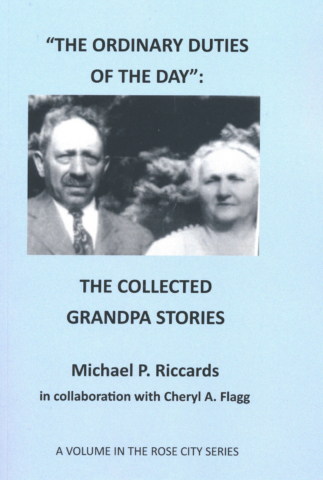
The Ordinary Duties of the Day
“This collection is a series of vignettes, very short stories, on the life and experiences of my maternal grandfather,” writes Michael P. Riccards in the introduction of his book “The Ordinary Duties of the Day: The Collected Grandpa Stories.”
The former president of New Mexico’s St. John’s College, West Virginia’s Shepherd College, and Massachusetts’s Fitchburg State, the Hamilton-based writer adds that in addition to recounting tales of “a gentle, caring, hardworking, and honest man,” he is also offering a “series of stories on Italian and Italian-American life with their principles, customs, and anniversaries on display” and that he is “attempting to reconstruct and save the world of Italians in this country just as Philip Roth (also from New Jersey) and Frank McCourt recalled the worlds of Jewish and Irish life.”
While the stories take place in northern New Jersey, some of the themes and subjects are universal.
“The Ordinary Duties of the Day: The Collected Grandpa Stories,” Michael P. Riccards, 366 pages, $10, available on Amazon.