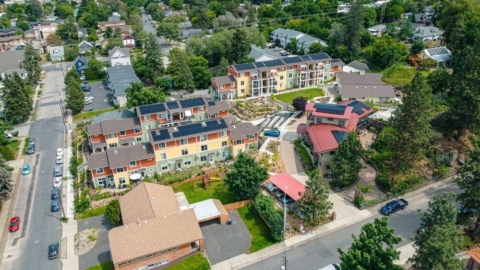
Central New Jersey is not immune to two of the major problems afflicting people across the United States: loneliness and a housing shortage. A new initiative in the Hightstown/East Windsor area aims to address these issues by developing a collaborative neighborhood while offering a model for people to help plan their own affordable and friendly living spaces. The Rocky Brook Cohousing project brings together residents, planners, and advocates with a shared vision for a more connected, sustainable future.
As this project gets off the ground, it will be the first cohousing community formed in New Jersey. At this stage, Rocky Brook Cohousing has enlisted Charles Durrett, architect and advocate for affordable, sustainable design, as a consultant on the project. Durrett has designed more than 50 cohousing communities in North America.
The project is going public with a kickoff meeting on Thursday, May 15, at 6:30 p.m. at the First Presbyterian Church of Hightstown. Durrett will explain how cohousing works for anyone interested in learning more about the project or becoming a resident. He’ll explain why cohousing started in the U.S. and what living in one of these communities is like. In Durrett’s words, “It’s really all about bringing neighborhoods back, high-functioning neighborhoods, where people know each other, care about each other, and support each other.”
A Grass Roots Project. Rocky Brook Cohousing is an initiative started by area residents to develop a cohousing community of approximately 30 units on land in the local area. The idea is to gather people from all walks of life who would like to have a private home within a community that encourages interaction with one’s neighbors.
Designed around the principles of collaboration and sustainability, the neighborhood will feature shared amenities and input into community decisions, creating what organizers describe as a “blueprint for belonging” in small-town America.
Durrett was initially motivated to become involved in cohousing because he wanted to live somewhere like the small town he grew up in. Reflecting on his experience, Durrett says, “I’ve designed thousands of multifamily housing projects, but none of ‘em are anywhere near as gratifying as co-housing because co-housing, you walk on site and it’s palpable.” As Durrett sees it, cohousing is “designed to make people’s lives more convenient, more practical, more economical, more healthy, more fun, and more interesting.”
The location for Rocky Brook Cohousing is intended to be in East Windsor or Hightstown, though a site has not been finalized. With planning in the initial stages, a larger group of interested residents will be needed to realize the vision of creating this neighborly community in Central New Jersey. In Durrett’s view, “future neighbors can always do a better job of designing a high-functioning neighborhood than a regular home builder can.”
The residents will influence the direction of the design as the project unfolds. In collaboration with Durrett, the size and configuration of the private homes and shared amenities will be created to accommodate the group’s needs. If most people choosing to join have children, a greater percentage of the residences may have three bedrooms. Most units may be smaller if more single or retired residents joined. However, the intention is to have a mix of ages and household sizes, as cohousing is a terrific option for families with children, single people, and retirees.
Cohousing in the U.S. According to The Cohousing Association of the United States, there are currently 206 established cohousing communities in the United States and 117 cohousing groups at different stages of formation, like Rocky Brook Cohousing in New Jersey. Though the idea was imported to the U.S. from Denmark, where cohousing started in the 1960s, the concept of creating living spaces that enhance community ties has repeatedly cropped up in different forms around the world.
One common misconception about cohousing is that it is like living in a commune. Yet, cohousing has more in common with a small village or a neighborhood where all the kids play together, and people borrow tools and socialize. While cohousing is more structured towards community than a traditional HOA, it still prioritizes residents’ privacy. Imagine if a local development had frequent block parties, it was common to borrow a cup of sugar, residents were highly involved in decisions for the community, and people made a point to spend time getting to know each other.
Another assumption people make about cohousing is that it is only for vegan tree-huggers. The reality is that people in co-housing have regular jobs in all types of industries, come from all parts of the political spectrum, and live quite ordinary lives. Some go to church, belong to the chamber of commerce, enroll their kids in scouting and soccer, or are enthusiastic sports fans. The commonality is that people choose to live in a more interactive and supportive community, understanding that neighbors will have different interests and lives.
Cohousing is a cooperative model of living that combines the individualistic norm of having a private home, whether an apartment or house, within a development where there are many shared spaces and residents participate in the management of the community. Residents make decisions about the design and maintenance of the development, with more involvement than in a typical homeowners’ association.
The shared spaces in cohousing almost always incorporate a community kitchen and can include gardens, children’s playrooms, guest rooms that can be reserved for visitors, workshops, gyms, and other spaces decided by the community. Residents are free to balance their own involvement in community events like weekly shared meals with their own lives.
Some shared responsibilities in communities include maintenance and serving on committees to help manage the community’s needs. Each cohousing development can decide how to accommodate resident preferences. Some may incorporate mowing the grass as a member task, while others might hire a landscaping service. Many cohousing communities self-manage, yet some employ a management company, just like an HOA typically uses.
The intention is to create spaces where more connections between residents of all ages happen naturally. The sense of community is an outgrowth of the design of the homes and shared spaces. Parking is often at the edge of the property to create a more walkable neighborhood that encourages regular human contact. Yet individual privacy is also inherent in the design, with separate units containing private kitchens and enough space for the residents to be comfortable.
Potential Benefits of Cohousing for People and Towns. One of cohousing’s benefits is its ability to combat isolation and build stronger social connections. While many Americans today report feeling isolated, studies show that cohousing residents experience significantly reduced feelings of loneliness compared to those in traditional living arrangements. Features such as shared meals, communal spaces, and regular group activities foster daily or weekly contact among neighbors — something far less common in traditional housing developments.
Beyond reducing loneliness, cohousing can cultivate a strong sense of belonging and mutual support among residents. This social infrastructure can certainly enhance individual well-being, but it can also contribute to developing social capital within the cohousing community and the broader neighborhood.
Cohousing can also have financial advantages. Though the initial cost of a unit is typically in line with market rates, residents often see long-term savings thanks to energy-efficient construction and shared amenities like internet and gym equipment.
Shared spaces like guest rooms, workshops, and common areas allow residents to live comfortably in smaller, more affordable units. Bulk buying, shared meals, and cooperative childcare can also reduce individual expenses.
A recent survey of 200 cohousing residents found that many saved at least $200 monthly, with some reporting savings of more than $2,000.
Towns also see financial benefits, with more tax revenue and new residents patronizing local businesses. According to Durrett, “it’s not just construction and jobs, but also mortgages, and the list goes on and on. It’s a shot in the arm for the local economy.” A cost/benefit analysis of one of Durrett’s projects showed the town gained about $20 million above and beyond the $20 million budget for the cohousing development.
For people frustrated by the dysfunction of current politics, cohousing is “democracy in action,” and a model of participatory governance of one small neighborhood. Residents play an active role in decision-making, from maintaining the overall property to organizing social events. Regular meetings and committee work give everyone a voice and foster a spirit of collaboration. As a result, many cohousing residents also become more involved in local issues and civic life, strengthening ties with the surrounding community and benefiting other town residents.
Durrett sees cohousing as embodying the core values of choice and self-determination. He says, “Over the last 50 years, we’ve been channeled into single-family houses with garages and no front porches, which facilitates privacy and watching TV. Normal subdivisions give residents a choice between privacy and privacy.” Continues Durrett, “Every cohousing community that gets started states that people want a balance between privacy and community.”
Rocky Brook Cohousing can give residents a chance to define the architecture and community and enjoy a socially resonant and more sustainable lifestyle. As Durret says, “It’s just a group of people who ask themselves, ‘who we are and how do we want to live?’” At the May 15 presentation, the organizers hope enough people will decide that cohousing is how they want to live and take the next steps toward making Rocky Brook Cohousing their new home.
Rocky Brook Cohousing Kickoff Meeting, First Presbyterian Church of Hightstown, 320 North Main Street, Hightstown. Thursday, May 15, 6:30 p.m. The presentation is open to the public; RSVP requested at rockybrookcohousing.org/events.
For more information, visit the Rocky Brook Cohousing website or learn more about cohousing at www.cohousing.org.
Julia Tell is a freelance content writer specializing in construction and education as well as a volunteer for the Rocky Brook Cohousing project. Her articles have appeared on websites including Business Insider, GoodRx, Procore, and EdSurge. She holds a Ph.D. in media & communications, an MFA in Film, and a BA in dance. Find her at www.juliatell.com.