To the Editor: 10,000 New Trees Planted to Restore the Sourlands
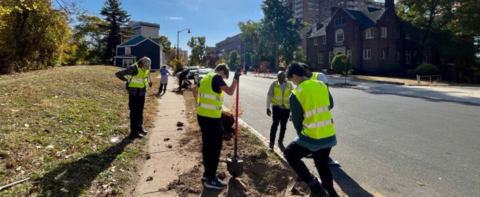
On behalf of the Sourland Conservancy’s staff, board, and members, I would like to express our heartfelt gratitude to the residents, volunteers, businesses, and community partners who have dedicated their time and energy to restoring the Sourland forest. This week, we achieved an incredible milestone: planting 10,000 native trees and protecting them from deer browse this year alone. Together, we have planted over 50,000 trees and shrubs since 2020, a vital step toward healing our forest.
Our work couldn’t be more urgent. The New Jersey Forest Service estimates that our 90-square-mile region has lost more than one million trees in recent years to the emerald ash borer, an invasive insect. That’s nearly 20 percent of our forest devastated by a single threat. And the challenges don’t end there: overdevelopment, invasive plants, an overpopulation of white-tailed deer, and various pathogens all compound the damage. These threats impair the forest’s ability to filter our air and water, mitigate flooding, and provide food and shelter for wildlife — including the 57 threatened and endangered species that depend on the Sourlands for survival.
A healthy forest is essential to our health and well-being. More than 800,000 Pennsylvania and New Jersey residents rely on the Sourlands for drinking water, according to the Watershed Institute. The forest also plays a critical role in reducing carbon emissions and combating climate change.
The work we do today will determine the legacy we leave for tomorrow. Restoring the forest is not just an environmental effort — it’s an investment in our collective health and safety. To learn more about our forest restoration efforts and how you can make a difference, please visit www.sourland.org/act-ash-crisis-team.
Let’s continue to grow this vital work together.
Laurie Cleveland
Executive Director, Sourland Conservancy
New Jersey’s Bright Green Future
Editor’s note: This edition of the New Jersey Conservation Foundation’s State We’re In column is a farewell from outgoing co-executive director Jay Watson.
For the last three years, I have served in the unique capacity of co-executive director of New Jersey Conservation Foundation, most recently alongside my colleague Alison Mitchell. This is my final time authoring this column, as I transition from co-executive director at the end of 2024 to a new role to focus more on urban green infrastructure investments in Trenton and around the state, and Alison steps forward as the sole executive director.
I feel blessed to have served in this role and wanted to take this opportunity to look back at how much incredible progress has been accomplished in protecting land and natural resources in New Jersey, and what lies ahead.
This state we’re in is also blessed — with an abundance of permanently protected open spaces, from High Point to Cape May Point. We have amazing parks, forests, natural areas, and other undeveloped open spaces that support our people, plants, and wildlife.
New Jersey has been forward thinking in our green investments since the 1960s. The first Green Acres ballot questions set the stage for a strategic agenda to preserve our forests, fields, farmlands and open spaces while also providing resources to improve our parks in just about every community — all of which contributes to a high quality of life.
We are the most densely developed and populated state in the nation and our people are as diverse as our landscape. Thus far collectively, we have managed to protect nearly 33 percent of our land base — 1.6 million acres of New Jersey’s 4.8 million-acre total land mass — and we have much left to do!
The incredible New Jersey Conservation Blueprint tool estimates that we have just 1.4 million acres left that are undeveloped and largely unprotected. That is a little less than the size of Everglades National Park and a little larger than Grand Canyon National Park! The ultimate decisions about what happens to these lands will be decided over the coming few decades. That means that all land use in New Jersey will be decided; all land stakes claimed.
Fortunately, this state we’re in is also blessed with incredible preservation partners that are working hard every day to build on our collective preservation successes in every region of the state. Nonprofit land conservancies, state, county, and local agencies are working together to make sure that we continue preserving those lands that provide critical ecosystem services like stormwater absorption, carbon sequestration, and habitat for our many species — from Bobcats to Bobolinks and Bog asphodel to Yellow Spring Beauty. This land also offers our people places to seek respite from the built environment and enjoy time in our wonderful outdoors.
These partners will continue working in major ecoregions like our Pinelands, Highlands, Sourlands and Delaware bayshore, while also making sure that we are investing in conservation, recreation, and engagement in our cities. Nature for All!
Earlier this year, New Jersey Conservation Foundation, the Nature Conservancy, and others brought together many experts, groups, and agencies working in conservation and environmental protection in New Jersey to develop a report titled “Nature for All – A 2050 Vision for New Jersey” to assess what is left in our state and create a collective vision for a future New Jersey that maintains a high quality existence for many future generations.
That report calls us to preserve half of what is left, with 500,000 acres of the most important lands for ecosystem services, climate, and habitat values protected by 2050; and beyond that, an additional 200,000 acres of remaining important lands. It is an ambitious agenda that will require more motivated, willing conservation sellers, public support, and incredible staffing, innovative approaches, and bold leadership across our landscapes and partnerships.
I cannot wait to see the good work and bright future for conservation ahead!
To learn more about the New Jersey Conservation Blueprint, please visit www.njmap2.com/blueprint. Check out the “Nature for All – A 2050 Vision for New Jersey” report at www.njconservation.org/nature-for-all. For more information about New Jersey Conservation’s executive director Alison Mitchell, visit www.njconservation.org/staff.