We all need serenity these days.
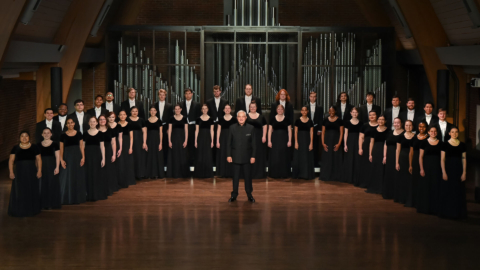
Thankfully, a lovely dose of calm and hope can be heard through the recently released “A Serenity of Soul” (GIA Choral/Masterworks) by the Westminster Choir of Rider University. Conducted by Dr. James Jordan, the choir observed its 100th anniversary in 2020, and the release is a celebration of its century-plus.
Serenity of Soul marks the recording debut of Grammy-nominated Jordan as conductor of Westminster Choir, and it is also the seventh recording since the group’s founding in 1920 by John Finley Williamson.
The album, with 15 tracks, was recorded in Gill Memorial Chapel on Rider’s campus in Lawrenceville, and at Christ Church in New York City between May 4 and 11, 2023.
Pianist Gregory Stout and organist Mary Dolch accompany the choir, and both have a singular talent of being virtuosic and humble simultaneously. The accompaniments have difficult passages at times and both play with skill, but they both also know how to let the choir shine.
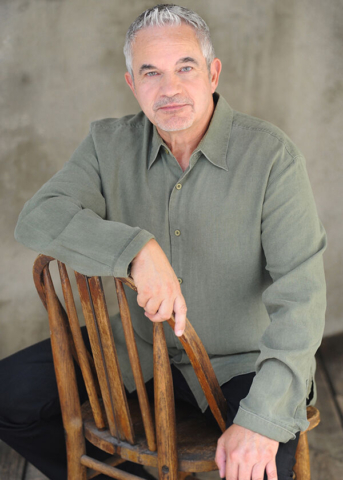
Jordan, who has been recognized as one of the United States’ preeminent conductors, recording artists, writers, music psychologists, and innovators in choral music, says, “All the music on this recording reflects, in sound, that serenity (and yes, beauty) is within all of us if we choose to go there.”
The centerpiece of the album is Benjamin Britten’s (1913-1976) cantata “Rejoice in the Lamb,” based on the poetry of 18th-century writer Christopher Smart and translated from the Latin by Britten.
“We are deeply proud of this CD, the title of which is taken from a passage in the Britten ‘Rejoice in the Lamb’ — ‘a remarkable stillness and serenity of soul,’” says Jordan. “It’s probably one of the most astonishing moments in choral music. The piece is built on the genius poetry of Christopher Smart, who at the time was diagnosed with ‘relies mania’ but we now know he was in a bi-polar spectrum.”
“His poetry takes us into those worlds, and Britten also captures the normalness of what is it to be at peace in the world and to love yourself,” Jordan says.
“A Serenity of Soul” opens and closes with two magnificent, uplifting contemporary works, Sir James MacMillan’s (b. 1959) “O Radiant Dawn” from Strathclyde Motets, and “Trinity Te Deum” by contemporary composer Eriks Esenvalds (b. 1977).
“Behold, O God Our Defender” by Herbert Howells (1892-1983) significantly utilizes the word “behold” as though reflecting, “Look at the beauty and wonder, even in our daily lives.” The source of the work was Howell’s 1952 invitation to compose a short piece for Queen Elizabeth II’s Coronation Service and draws from verses in Psalm 84. It is a quietly spirited and hopeful work.
The American folk song “Shenandoah,” arranged by James Erb (1926-2014), begins in a hushed manner, so beautifully sung it gives one the chills, and even more so as the choir crescendos and reveals its grandeur.
Two works by Johannes Brahms (1833-1897) follow, Opus 92, No. 3 “Abendlied” and Opus 64, No. 1 “An die Heimat,” and both evoke a sense of melancholy, poignancy, but also hope. “Heimat” means “homeland,” which Brahms was apparently yearning for at the time of this composition.
He had recently moved from his longtime residence in Hamburg, Germany, to Vienna, Austria. Brahms found himself in the middle of a great cultural mecca, with a vivacious artistic scene, yet it was not his home, and a deep longing and desire for the affection of old friends and family can be heard in this piece and its performance by the Westminster Choir.
“Rejoice in the Lamb” was written in 1943, in the same year as Britten’s opera “Peter Grimes.” In the liner notes, Jordan writes that, “both works deal with the subject of an individual alienated from the narrow perspective of a judgmental society.”
“In most of Britten’s works, one gains a glimpse into Britten’s viewpoint of life’s struggles of the individual against society, war, religious bias, and individual freedom,” he writes. Yet, “All of Britten’s works are intense psychological profiles of the human condition and offer much wisdom to listeners about life’s journey.”
A close listen and look at Smart’s ideas reveal faith and reverence, almost that of a shaman, maniacal and spontaneous. We can also detect Smart’s mental instability.
The poet’s ups and downs (and debts) found him in trouble with the law, institutionalized for his condition, and at odds with the social order in general.
But, we sense Smart’s quest for serenity and “home” while feeling like the odd man out. We also feel his compassion for those who are like him, experiencing “otherness” in a judgmental society.
The piece begins reverently, with the words, “Rejoice in God, O ye Tongues; Give glory to the Lord, and the Lamb.”
The passage of “Hallelujah, hallelujah/ Hallelujah for the heart of God,” is significant to the essence and the dramatic shape of the composition. Jordan writes that “the entire work is anchored by two statements of ‘Hallelujah,’ exactly the same music. That music appears in the middle, and then closes the work.”
In one emotional passage, this writer wondered if Smart was musing about all things on earth being alive. It was noted that he went through periods of religious mania, when he would drop to his knees and pray in the street. But was he onto something?
Perhaps he was foreshadowing the Transcendentalists, the philosophical, spiritual, and literary movement that developed in the late 1820s and 1830s in New England. One aspect of the Transcendentalists was to glorify and commune with nature. Or Britten may have been tapping into this philosophy through his own translation.
The words speak of the spirit/soul in Smart’s cat “Joffrey,” a mouse, and especially flowers with, “the flowers are great blessings … for the flower glorifies God … the flowers are peculiarly/the poetry of Christ.” Britten’s playful music in the passage complements the lyrics.
Later, as though shouting his unhappiness across the centuries, Smart writes of hysteria (perhaps during one of his manic episodes), being accused and taken away to an institution, where he is physically and emotionally abused. Yet he has faith that he will rise above this torture.
The loud, discordant music perfectly expresses Smart’s difficult time and illuminates the words: “the Watchman smites me with his staff./For the silly fellow, silly fellow, is against me./For I am in twelve hardships, but he that was born of a virgin/shall deliver me out of all.”
The piece then transitions through a veneration of the different instruments in the orchestra, singling out the trumpet as a “Blessed intelligence…and so are all the instruments in Heav’n.”
The hysteria ebbs and we hear, “And the devils themselves are at peace,” as “Rejoice in the Lamb” resolves into quietude.
“Pilgrim’s Hymn” by Stephen Paulus (1949-2014) is so tender and lovely, it sounds as though it is a personal message of hope, written directly to a friend.
It is, in a way.
Jordan writes that Paulus was a friend of Westminster Choir College and became a personal friend of his as well. The performance and recording of “Pilgrim’s Hymn” is the choir’s way to say thank you to Paulus and his music, as Jordan writes, “hearing your voice of awe and wonder, colored with the unique voice of the Westminster Choir.”
This writer listened to “A Serenity of Soul” during a blistering heatwave, in a summer where the destruction of the climate is becoming more apparent, where there is political upheaval here and abroad, and American democracy is in a fragile condition. This superb recording provided a serene, sonic respite.
“A Serenity of Soul” is on the GIA Choral/Masterworks label, distributed through Naxos on all major streaming outfits including Spotify and Apple Music. Also available online.
More information: www.rider.edu/academics/colleges-schools/college-arts-sciences/westminster-choir-college