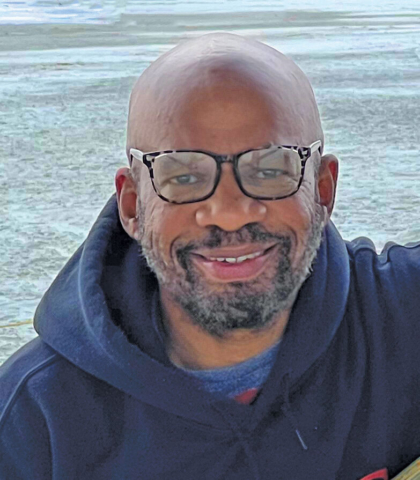
The Trent House Association presents a virtual talk on Timbuctoo, a community founded in the early 1800s by formerly enslaved and free Black people in Burlington County, on Wednesday, February 9, at 7 p.m.
The program, “Timbuctoo and the First Emancipation of the Early 19th Century,” will be led by Guy Weston, managing director of the Timbuctoo Historical Society and visiting history scholar at Rutgers University. He is also the author of “Timbuctoo and the First Emancipation of the Early-Nineteenth Century,” recently published in New Jersey Studies.
In the following excerpts from that essay, Weston puts Timbuctoo, New Jersey, and slavery in their important historic context:
Timbuctoo is an unincorporated community in Westampton Township, Burlington County, New Jersey. It was settled by formerly enslaved and free Black people beginning in 1826, reaching approximately 125 residents by 1860. The community also included at least two churches, two schools, and a benevolent association that helped people in the community in need.
Legislation to make Juneteenth a national holiday calls attention to the end of racialized slavery in the United States and the history of emancipation efforts of the 1860s, namely, the Emancipation Proclamation, the end of the Civil War, and the ratification of the Thirteenth Amendment.
Frequently missing from this discussion are when northern states began passing legislation to end slavery, beginning in the late 1700s. New Jersey was the last state to pass such legislation.
New Jersey’s characterization as resistant to emancipation is well documented: New Jersey was the only northern state that failed to ratify the Thirteenth, Fourteenth, and Fifteenth Amendments, and was the only northern state that Lincoln did not carry in the 1860 election.
By 1830, fully one-third of the 3,568 northern Black people still enslaved lived in New Jersey. (However) this statistic is misleading in the sense that the vast majority of people counted as enslaved were located in New Jersey’s northern counties.
A number of factors account for this stark contrast. Most notably, Quaker influence was strongest in the southern counties. While many Quakers enslaved Black people before 1776, a long and passionate debate led to the conclusion that enslavers should play no role in the Society of Friends. Quakers were leaders of advocacy to end slavery in New Jersey, petitioning the legislature to enact laws to abolish slavery as early as 1775.
(Yet) clearly, some who advocated for abolition did not want Black people to be their peers. The Quakers’ motivation to manumit enslaved people and/or advocate against slavery has also been questioned.
Objectively speaking, issues like this are difficult to assess 200 years later because we don’t know to what extent such attitudes should be generalized to the Society of Friends as a whole.
What we can say more definitively are things like Black settlements in southern New Jersey tended to be near Quaker strongholds; Quakers had tangible participation in Black settlement such as selling land and providing mortgages, legal services to escaping people, and employment; and Quaker-dominant southern New Jersey was more favorable overall to abolition than the counties in the northern region of the state. The influence of Quakers in southern New Jersey in general, and Burlington County in particular, cannot be overstated.
Timbuctoo and the First Emancipation of the Early 19th Century presented by Guy Weston, Wednesday, February 9, 2022, at 7 p.m. via Zoom. No pre-registration is required. A pay-as-you-wish donation is can be made by PayPal at www.williamtrenthouse.org/donation.html. Join the presentation: tinyurl.com/Feb9Talk.
‘Magical Habits #4: A Conversation about Personal Writing” is Labyrinth Books’ next in a series of live streaming programs, set for Wednesday, February 9, at 6 p.m.
The program is a discussion with Princeton University assistant professor of English and American studies Monica Huerta, author of the book on writing, “Magical Habits”; Alexis Pauline Gumbs, poet and founder of Eternal Summer of the Black Feminist Mind and BrokenBeautiful; and Tala Khanmalek, political activist and assistant professor in the Department of Women and Gender Studies at Cal State Fullerton.
In a recent interview for the book’s publisher, Duke University Press, Huerta reflects on the creation of “Magical Habits”
For most of the time (the book) was “coming together” — I didn’t know why or what I was writing. There are portions of writing — single sentences, sometimes whole paragraphs — that I wrote my first year of college, and other small portions I wrote in the last pass through the manuscript during copy edits.
I tried to mark the “compendium” quality of the book with a series of dates of when I first started some of the writing in each essay and of when I last substantively revised it at the end of each of the essays. My hope is that (it) gives a layered sense of the varying needs the writing was meeting — some personal, some critical, some theoretical, some formal.
The “coming together” happened when I realized that the disparate bits asked related questions about habits we cultivate, knowingly and otherwise — through reading, but also through ordinary forms of distraction and pleasure — in order to live with what are unbearable histories by any measure.
But even as the writings now gathered speak to each other through these questions about habits, I also hope the book as a whole maintains a sense of having been worked on and worked through alongside the ordinary course of living that made the writing possible and thinkable.
I’m proposing the thesis bits as “an intimate archive” that turns my first sustained attempt at scholarship inside out and so contextualizes that effort in the more personal stories from which its questions arose.
In the essays, those episodes are also situated in relation to history, memory, language games, migrations, and the mutations of racial capitalism in the late-twentieth century.
I suppose there is a way to read the book as tracking the way my own questions changed over time.
Magical Habits #4: A Conversation about Personal Writing, Wednesday, February 9, 6 p.m. Free. The program’s collaborators include Labyrinth Books, the Princeton Public Library, and Princeton University’s Lewis Center for the Arts, Humanities Council, English Department, and Program in American Studies. Register online. www.crowdcast.io/e/monica-huerta-with/register.
The Princeton Makes and Ragged Sky Press-sponsored monthly Second Sunday Poetry Reading is set for February 13 at 4 p.m.
The free session features the Princeton-area poets Elizabeth “Mimi” Danson and Carlos Hernández Peña.
Danson, born in England, is member of the U.S. 1 Poets’ Cooperative and has published poems in various journals, including U.S. 1 Worksheets. The Princeton-based Ragged Sky Press has published two poetry collections of her work: “The Luxury of Obstacles” (2006) and “Look Again” (2019).
Carlos Hernández Peña was born in Mexico City, served as co-editor of US1 Worksheets from 2005 to 2008, and has published in the following literary publications: Drunken Boat, Fox Chase Review, Hayden’s Ferry Review, and U.S. 1 Worksheets.
The samples of their work reprinted here recently appeared in the U.S. 1 Poets’ new book, “Worksheets 66.”
Second Sunday Poetry Reading, February 13, 4 p.m. Princeton Makes, Princeton Shopping Center, next to the Metropolis Hair Salon. This is an in-person event, so participants need to practice social distancing and the unvaccinated must wear a mask. A limited open mic for the first 10 to sign up follows. For more information, contact princetonmakes@gmail.com.