The Parnell Poetry Project will have its inaugural launch on Sunday, February 6, at 2 p.m. at Goodbeet Café in Bordentown.
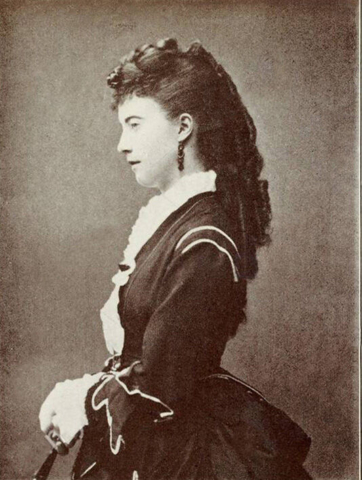
The project is named in honor of Frances “Fanny” Parnell, the 19th-century Irish poet and nationalist who died at her mother’s ancestral home in Bordentown in 1882.
The February reading features four active regional writers.
Roberta Clipper, a nationally published writer, Rider University instructor, and Bordentown resident; Ellen Foos, a Princeton-based poet, Princeton University Press editor, and founder of Ragged Sky Press; and Todd Evans, a Trenton-born poet and poetry and theater event coordinator. Bordentown-based writer and U.S. 1 Newspaper editor Dan Aubrey will host.
Fanny Parnell (born 1848) is the poet-activist sister of noted Irish leader and home rule advocate Charles Stewart Parnell and the granddaughter of United States rear admiral and Bordentown resident Charles Stewart, also known as “Old Ironsides.”
Parnell’s American-born mother, Delia Stewart Parnell, married Irish aristocrat John Henry Parnell in New York City and moved to Ireland, where she had 11 children.
John Parnell died in 1879, and Delia returned to the Bordentown family estate. Fanny Parnell followed on an extended stay that ended when she unexpectedly died of a heart ailment.
Ireland’s National Radio Service, the RTE, has called Parnell a “trailblazer” whose “poetry was celebrated by Irish nationalists, and her activism helped to bring many Irish and Irish-American women into politics.”
She was an advocate for the Irish poor and supported programs to support the Irish during the Great Famine.
In 1882 the Pilot Newspaper in Boston took notice of Fanny Parnell’s publication of her book of poems, “Land League Songs,” in pamphlet form and called it “an extraordinary addition to the Irish agitation” for home rule and personal and religious rights.
“The publication makes no pretense to ‘style,’” the Pilot editors said. “It is an uncovered pamphlet, in large, clear type, and the burning words of indignation, pathos, hope, the splendid bursts of wide human sympathy, are all the more impressive from the severe plainness of the pages. The ‘Songs’ are respectfully dedicated by the author to the ‘Persecutor of the Poor, The Hunter of Priests, and the Shooter of Women and Children— William Buckshot Forster.’
“That these poems, filled with fiery inspiration, will be widely read in the United States there is no doubt. The English press has followed Miss Parnell’s words as they appeared in The Pilot and other American papers. Here is evidence enough in 16 pages to send the gifted lady to an English prison for life, if only the secretary for Ireland, to whom the poems are dedicated, could get her within the power of his police.
“We shall notice more fully in the future these remarkable poems. We are glad to see them issued in such a form as brings them within reach of the million.”
The 1880 poem “Hold the Harvest” is an example of Parnell’s work, one Irish home rule activist Michael Davitt called “The “Marseillaise of the Irish peasant”:
Now are you men or cattle then, you tillers of the soil?
Would you be free, or evermore in rich men’s service toil?
The shadow of the dial hangs dark that points the fatal hour
Now hold your own or, branded slaves, forever cringe and cower!
The serpent’s curse upon you lies — you writhe within the dust
You fill your mouths with beggars’ swill, you grovel for a crust
Your masters set their blood-stained heels upon your shameful heads
Yet they are kind: they leave you still their ditches for your beds!
Oh by the God who made us all, the master and the serf
Rise up and swear to hold this day your own green Irish turf!
Rise up! And plant your feet as men where now you crawl as slaves
And make your harvest fields your camps, or make of them your graves!
But God is on the peasant’s side, the God that loves the poor,
His angels stand with flaming swords on every mount and moor,
They guard the poor man’s flocks and herds, they guard his ripening grain,
The robber sinks beneath their curse beside his ill-got gain.
The reading’s date is connected to the early February Irish celebrations of new life: the Celtic festival of Imbolc and St. Brigid’s Day. Brigid is a patron saint of midwives, farmers, poets, and printers.
Goodbeet is located at 1 ½ Crosswicks Street, Bordentown. For more information, contact coworksprojects@gmail.com.