Princeton University Press recently released several books offering ideas about thinking and consciousness. And while the writers or subjects do not have a direct connection to the region, their ideas and thoughts offer all of us something new to consider — not a bad idea as we move into the new year.
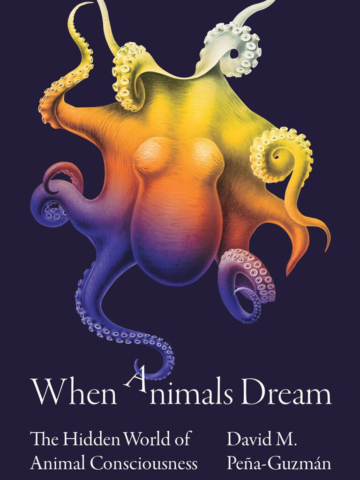
Let’s start with “When Animals Dream: The Hidden World of Animal Consciousness” by David M. Peña-Guzmán.
The San Francisco State University associate professor of humanities specializing in critical animal studies and the philosophy of science writes that “one thing that anybody who has read any articles or books in the philosophy of consciousness knows is that if you ask ten people to define consciousness, ten experts, you’re going to get at least eleven answers. There is very little agreement about how to define this term.
“One of the arguments that I make in the book is that this kind of consciousness is inherently connected to dreaming. You cannot dream and not have this kind of consciousness, because by definition, a dream is the manifestation of a world or the disclosure of a world of experience to an ego that is the center of that world.
“I don’t think pet owners would be all that surprised with some of the conclusions that I draw in the book, and it’s because, in many ways, this book is a defense of the intuitions that many pet owners have about their pets that scientists tend to be skeptical about. It’s actually the pet owner or the person who lives with animals or who shares their lives with animals that is the hero in the story insofar as they’re the ones that give the animal the benefit of the doubt. And it’s a benefit that I think animals are entitled to.”
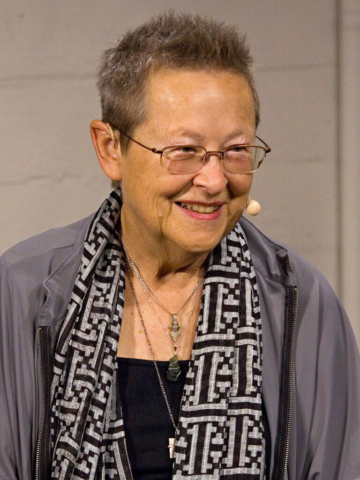
“Rules: A Short History of What We Live By” is by Lorraine Daston, director emerita Max Planck Institute for the History of Science, Berlin.
The American-born scholar gets to the point with the following example regarding rules in Western society: “The history of rules is rich in lessons for which rules work and which don’t, and under what circumstances. Take the case of rules governing who can wear what where. Unless you attended a school with a dress code, you’re unlikely to have encountered official rules of this sort (unofficial rules are a different story: just try wearing a tuxedo to a barbecue).
“But many cultures all over the world have tried to regulate dress in mind-numbing detail, and some still do: one of the demands of reformers demonstrating recently in Sudan was to suspend the strict rules dictating what women could wear in public, which threatened women caught wearing trousers with a flogging. Whether in the name of modesty, avoiding excessive expenditure, protecting local goods against imports, or enforcing the social order, these sumptuary regulations (from the Latin sumptus, meaning ‘expense’) tended to pop up whenever a city became prosperous enough for its richer residents to splash out in the latest style.
“By the thirteenth century, the codes of wealthy trading centers like Genoa or Venice read the like the medieval version of Vogue, as municipal authorities scrambled to keep track of the latest fashion — beaked shoes, ermine trim, wide sleeves, puffy pantaloons, you name it — and ban it.
“Of course, this was a hopeless game of whack-a-mole, as anyone with experience of high school dress codes knows.”
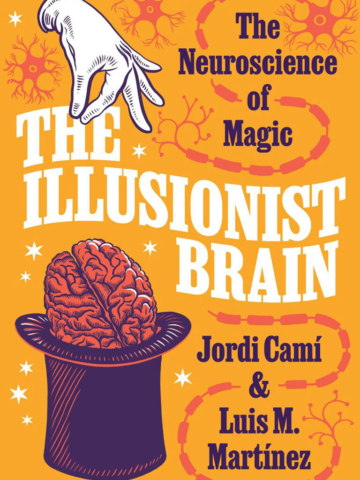
“The Illusionist Brain: The Neuroscience of Magic” is by Jordi Camí, member of the Spanish Society of Illusionists and a professor of pharmacology at Pompeu Fabra University and general director of the Barcelona Biomedical Research Park in Spain, and Luis M. Martínez, neuroscientist at the Institute of Neuroscience in Alicante, Spain.
The two scholars note early in this book that they “explore the cognitive processes behind the art of magic, an ancient artistic activity that, after centuries of trial and error, has accumulated an important repository of wisdom regarding its techniques.
“Magic tricks always begin with a demonstration, a story or a proposition that concludes with a seemingly impossible, fascinating, and unexpected result. As spectators, we are captivated by the disparity between what we assume will happen at the end of the trick and what we finally observe happening. These outcomes are tremendously provocative. They contradict our hypotheses and make us doubt everything we have learned. They are cognitive dissonance in and of themselves.
“Magic can manipulate our memories, condition us, and influence our intuitive decisions, all without our realizing it. Magic tricks deceive us because they are presented with a logic and a naturalness that hardly seem suspicious. Everything is predictable until the surprising outcome that shatters our expectations. This surprising outcome, the climax of the magic act, is the crucial point of the trick. It is very difficult to master, as it requires that the magician challenge our capacity to infer and anticipate, processes that are not under our conscious control. That is why we say that magic speaks to, challenges, and deceives our unconscious brain.”
“Sonorous Desert: What Deep Listening Taught Early Christian Monks — and What It Can Teach Us” is by Kim Haines-Eitzen.
The professor of religious studies at University of North Carolina, Chapel Hill, writes that “solitude — being alone — has long been praised as a necessary condition for creativity. Author Virginia Woolf, in her book ‘A Room of One’s Own,’ offered an extended meditation on the writer’s need for solitude. So did many poets. In their writings, May Sarton (‘alone one is never lonely’) and William Wordsworth (‘the bliss of solitude’) were especially eloquent in their praise of solitude. Poet Marianne Moore has even argued that ‘the cure for loneliness is solitude.’
“My research on the history of religious hermits shows that there have long been individuals who seek solitude in remote and silent places, and we can learn many lessons from them. The etymological history of the word ‘hermit’ is itself telling: ‘Hermit’ comes from an ancient Greek word, ‘erēmitēs,’ that means both a desolate and lonely place and a state of being alone.
“The lives of hermits may seem distant from our busy contemporary lives. But the romantic appeal of an unencumbered and undistracted life has not disappeared. Hermits in the 21st century come from all walks of life, religious and secular, but share with those from the past a longing for quiet solitude and simplicity.
“Could the wisdom of artists, poets, and religious hermits offer comfort in a time of loneliness today?”
And finally there’s “Flying Snakes and Griffin Claws: And Other Classical Myths, Historical Oddities, and Scientific Curiosities” by Adrienne Mayor.
As the classic research scholar at Stanford University notes in a published interview, “I explore the borders of history, archaeology, anthropology, science, and mythology, ferreting out germs of truth embedded in legends and popular lore. These essays reflect my research over the years, combing through old texts and arcane sources for intriguing wonders and marvels, historical mysteries, diverting anecdotes, and hidden gems from antiquity, medieval, and modern times.
“One of my ancient heroes and guides is Herodotus, the insatiably curious Greek historian who traveled to exotic lands, interviewing local people about their histories and strange customs; his accounts captivated the Athenians of the fifth century BC. Herodotus kept an open mind and sometimes expressed skepticism, but he could never let a good story go untold. I’ve always been drawn to the dusty corners of literature, art, and history. Whenever I come across extraordinary or inexplicable details in ancient writings I begin a file, like a cold-case detective. My files are unruly thickets of random information that might one day yield patterns.
“I expect readers will dip in and read the essays in any order that piques their interest. Taken together, recurrent themes emerge and I think the essays could serve as dots for tracing my thinking about the intersections of ancient and modern popular lore, nature, history, and science.”
For more information on the books and other Princeton University Press releases, visit press.princeton.edu.