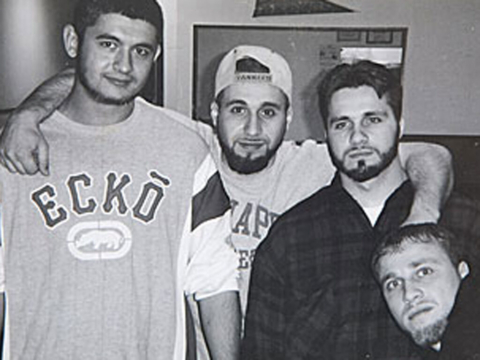
Six years after the 2001 terrorist attack on the World Trade Center, a group of five young New Jersey men of Middle Eastern background were charged with conspiring to launch a terrorist attack on soldiers at nearby Fort Dix.
The case occurred at a time of anxiety, uncertainty, and tensions between mainly Americans of European heritage and those perceived to be of Middle Eastern background — spurred by the fact that the terrorists behind the 9/11 attacks were Muslims from the same region.
The United States Attorney for the State of New Jersey, Chris Christie, oversaw the investigation and the subsequent conviction of the five men now known as the Fort Dix Five.
While the case was one that Christie used to prove he was tough on terrorism, it also attracted legal attention, journalistic investigations, and the argument that the still imprisoned men are innocent and were entrapped by the U.S. government.
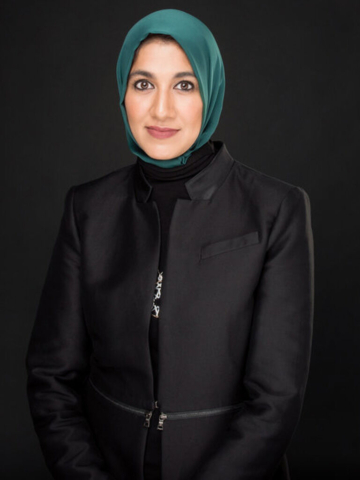
One such investigator is Huma Yasin, a criminal defense attorney and author of “Conspiracy: The True Story of the Fort Dix Five.”
Written several years ago but still unpublished, the work of creative non-fiction is part of the author’s push to keep a spotlight on the case and the questions regarding its prosecution.
It is also a call for the public to be vigilant regarding how the law can be misused.
Here is an overview of the case:
At the time of their conviction, the Fort Dix Five were Serdar Tater, age 27, married with one child; Mohammed Shnewer, age 23; Dritan (Tony) Duka, age 30, married with five children, 11, 10, 6, 5, and 4; Eljivir (Elvis) Duka, 26, married to Shnewer’s sister, Hanan, with one daughter, 18 months; and Shain Duka, age 28.
They lived in Camden County and attended Cherry Hill High School.
The Duka brothers’ parents were from Albania. Their father ran a roofing business where his sons sometimes worked. The Shnewers were from Palestine. Mohammed and his father drove cabs. Serdar’s family was Turkish. His parents owned a pizzeria. He worked at a 7-Eleven.
According to an online brief by Project SALAM, a legal advocacy group for Muslims, the five would go to the Poconos to ski, ride horses, play paintball, and shoot at a licensed shooting range.
In 2007 one of them made a videotape of a trip. It was dropped off at a Circuit City to have the video transferred to DVD for each to have.
The Circuit City employee saw the tape, saw young men on a shooting range speaking in Arabic, and called the police.
The police arrived within an hour and two officers watched the video. When they heard the word “jihad” (which can refer to a holy war or a personal struggle of any kind), they said “Stop it. That’s enough,” and opened the case.
The FBI then engaged two informants: Besnik Bakalli, who had attempted murder in Albania and fled to the United States to avoid a blood feud, and Mahmoud Omar, who was on probation after serving prison time for bank fraud and, according to Yasin, was “paid nearly a quarter million dollars in exchange for cooperating with the FBI.”
Within 15 months, one of the informers had persuaded the five to engage in an illegal weapons sale. The result was the announcement of five men conspiring to attack a U.S. military base.
At the time future governor of New Jersey and United States presidential candidate Chris Christie appeared in front of the Camden Federal Court House and said, “The philosophy that supports and encourages jihad around the world against Americans came to live here in New Jersey and threaten the lives of our citizens through these defendants. Fortunately, law enforcement in New Jersey was here to stop them.”
However, legal professionals and investigative journalists began reporting a potentially different story.
According to SALAM: “The tactics used on the defendants by the informants in this case were interesting. Mostly Omar worked on Mohammed (Shnewer). Omar was about 15 years older than Mohammed. Mohammed was about 20 years old, self-conscious, and overweight. Omar would call him a woman and tell him to be a man. Omar called Mohammed hundreds of times, wanting to get together, calling, calling. Mohammed often would not answer the phone.
“The informants would ask the defendants to download jihadist movies to their computers. These videos were not of interest to the defendants, they simply downloaded them to please the informants.
“Serdar Tater worked in a 7/11 and his family owned a pizza shop near Fort Dix. Omar constantly asked Serdar to give him a Google map of the pizza shop with Fort Dix. Serdar kept asking why. Omar said he would tell him after he gave him the map. Serdar became suspicious, and told a policeman who was a customer of the 7/11 about Omar wanting a map. The policeman called the FBI, and left a message on a voice mail at the FBI, but no one ever got back to him. Eventually, because he was tired of being pestered so much, Serdar did give Omar the map.
“The informants went to the Poconos with the defendants on one of their vacations. The informant would say ‘This is training.’ The defendants would say, ‘What are you talking about? this is vacation!’”
As a Guardian newspaper writer reports, “Prosecutors used the informants’ evidence to paint a picture of a group of men who had been watching bloody jihadi videos, and been recorded lambasting American policy in Iraq and discussing radical Islam, including the lectures of slain Yemeni-American cleric Anwar Al-Awlaki. Shnewer, the FBI said, had conducted surveillance of Fort Dix and the Dukas were picked up after they illegally bought powerful guns in a deal arranged by an informant.”
While the gun sales arrest recording allegedly reports one of the Dukas saying he was happy they didn’t have to wait in lines to shoot guns in the Poconos, the United States Government said, “The defendants’ arrests occurred on May 7, 2007, in Cherry Hill as Dritan and Shain Duka were meeting a confidential government witness to purchase four automatic M-16 rifles and three semi-automatic AK-47 rifles to be used in a future attack on military personnel. The other defendants were arrested at various locations at about the same time.
“On Dec. 22, 2008, after 5 and a half days of deliberations, a jury convicted the three Duka brothers, Shnewer, and Tatar on Count One of the seven-count Superseding Indictment that charged them with conspiracy to murder members of the U.S. military. The jury also convicted the Dukas and Shnewer of firearm offenses; including possession of machine guns.
“The evidence proved that one member of the group conducted surveillance at Fort Dix and Fort Monmouth in New Jersey, Dover Air Force Base in Delaware and the U.S. Coast Guard in Philadelphia. The co-conspirators obtained a detailed map of Fort Dix, where they hoped to use assault rifles to kill as many soldiers as possible, according to trial testimony and evidence.”
Christie said, “These people were ready for martyrdom. They spoke about martyrdom extensively in the tapes. They said they were to do this in the service of Allah.”
However, in a 2015 interview for the online publication The Intercept, informer Mahmoud Omar, while implicating the reportedly impressionable Shnewer, said the Duka brothers were innocent and “good people,” adding, “I still don’t know why the Dukas are in jail.”
Yasin argues the case as follows:
“Christie claimed the group settled on attacking Fort Dix because one of the men delivered pizzas there. This, like many others, was a half-truth.
“Serdar Tatar had delivered pizzas to the base. His father owned a pizzeria nearby where Tatar worked.
“However, Christie conveniently omitted that Tatar contacted the FBI six months prior to his arrest, warning them of a potential terrorist attack on the base. The person he claimed was interested in harming the country was Mahmoud Omar, one of the two informants. Omar was the only person pressuring him for information about the base.
“During trial, the prosecution failed to produce a single piece of direct evidence despite the overwhelming amount of surveillance collected — including hundreds of hours of informant-based recordings, thousands of FISA wiretaps, amongst others — showing the men agreed to attack the base. The five men never met to discuss an attack, nor did they look at a map of Fort Dix together, or settle on any specific targets.
“In the absence of direct evidence, Christie’s office capitalized off the post 9/11 hysteria and presented the jury with inflammatory videos found on one of the target’s computers — 95 percent of which were downloaded off public internet search engines after one of the informants began requesting videos repeatedly. What should’ve been protected under the First Amendment was used by the prosecution to argue evidence of intent.”
During a recent telephone interview, Yasin, an Oklahoma native raised in a Pakistani family supported by her physician father, says her interest in the case started while working on an academic law review piece dealing with Islamophobia — a bias she discovered after a white American terrorist bombed the Alfred P. Murrah Federal Building in Oklahoma City in 1995.
The attorney was attracted to SALAM and its work protecting Muslim Americans against legal discrimination and offered to provide pro bono services.
“They turned me onto the Fort Dix case. My interest was piqued. And I thought this sounded conspiratorial. I just wanted to know more.”
She says she then traveled to Cherry Hill, met with the family members, and obtained the text of the trial, FBI surveillance logs, informer generated reports, “hundreds of hours” of recordings between the informant and the targets, and transcripts.
She also spoke and corresponded with each of the five prisoners but did not communicate with the informers. The reason was that Bakalli could not be located and Omar offered to speak only for pay.
Yasin adds that she “reached out to the FBI, and they wouldn’t comment. I went to the house of one of the agents and left a note; I got a stern call from the D.C. office never to do that and to make a request to contact an agent, So, I followed that protocol and was told no.
“This was interesting me. They sent people into homes and places of worship, but I, as an attorney, writing a book, and being transparent, was met with stern words.”
As a defense attorney, Yasin says she held her judgement throughout to understand the case but says “there were actions by the judge that I found problematic and there were things that the jury saw that were tainted. If (the trial) were done today, there may not be the same outcome.”
She says that while some anti-Muslim attitudes may have lessened in recent times, there is a potential that it played a guiding factor in the case.
As Yasin writes in a statement, “We know juries tend to cast their verdict based on the emotion and the cognitive paradigm that exists already rather than the evidence.
“The criminal justice system is one of the most complex, comprehensive, and dynamic storytelling machines. Criminal trials are theatrical performances that weave together competing narrative patterns from a mosaic of storytellers: investigators, witnesses, experts, media, attorneys, and judges. It’s a delicate fusion of law and performance art, with each side meticulously crafting their story to grip the jury-audience’s attention and trust.
“From formation to execution, the latent power resting within these competing stories is resounding. They can lead to a complete and total exoneration; they can also lead to a death sentence. Sometimes the jury believes the right story. But sometimes, they don’t.”
Regarding the writing of the book Yasin says, “Once I stared looking into (the case), I felt that everyone show know about the story where an informant grooms someone half his age, and I decided I would write a book about it.
“It is creative nonfiction. It’s me recreating the sting as though you are watching it unfold, just as I listened to it unfold (on tape) and captured the dialogue.”
She also wants to delve into the idea of the crime of conspiracy. “It is a mental crime. A conspiracy is two or more people who have the intent to engage in an agreement to commit an illegal act and take substantial steps to perform that.
“Substantial steps can mean what the jury wants it to mean. It is not defined. The people don’t have to be in the same place at the same time. It is a mental crime — it is very abstract. There is no smoking gun. It is in your mind. They were convicted of conspiracy. A jury rendered them guilty of that charge.”
Although her agent had stimulated interest in both profit and nonprofit presses, Yasin says the publishers decided that “it isn’t timely” and “there is no ROI” (return on investment).
However, she says, the Five are still in prison — and failed to have the case officially reviewed, including a request in 2016 where the defendants noted that court appointed lawyers advised them not to speak during their trial.
Now an active attorney outside Houston, where she and her physician husband have a family, Yasin says, “Maybe I will self-publish I would prefer not to. I don’t have the bandwidth. I have trials coming up and I’m a full-time mom and I’ve got a job.”
However, the attorney, recently involved with investigating sexual abuse at a Texas mosque, considers the impact of the story. “The take away for me is I have four children — and (the Duka brothers’ mother) Lasa Duka in one swoop lost three of her kids who will die behind bars. And two of them had their own children.
“We can talk about this in theory, but there is a significant human cost born by people who are unable to put their words out into the mainstream because of language or other reasons. But, they’re human beings. It’s something we should be thinking of.
“I am not in it to make a buck; I lost money doing it. I’m looking for a story to expose what happened because what happened is a travesty because (these) men are behind bars. I’m in it for the truth.”
For more on Huma Yasin and the Fort Dix Five book, go to www.humayasin.com.