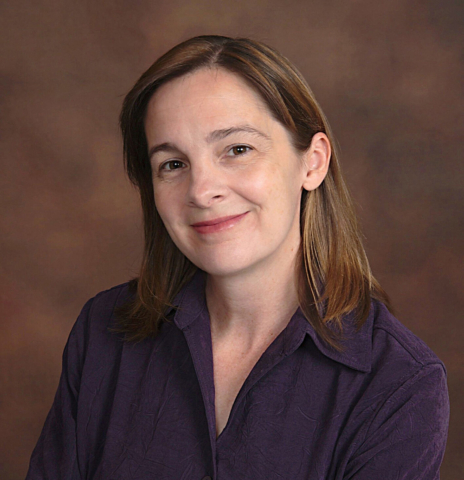
“It is always busy this time of the year but more so this year,” says Allison Trimarco.
The founder of Creative Capacity, an organization that partners with nonprofit leaders to solve management challenges and strengthen their missions, Trimarco is talking about helping nonprofit organizations ready financial reports and prepare for a new round of grant applications.
“The more so” is a reference to the slashing of federal support and a new uncertainty affecting nonprofit funding.
That includes the Bordentown Township resident’s list of clients: the New Jersey Historical Commission, ArtsEd NJ, ArtPride NJ, HiTOPS, Rise Community Services, Grounds For Sculpture, New Jersey Highlands Coalition, Association of New Jersey Environmental Commissions, BalletX, New Jersey Historic Trust, WheatonArts, Paterson Music Project, Trenton Music Makers, Alice Paul Institute, Princeton Symphony Orchestra, and others.
The hard news is that the cuts to the federal government’s grant-giving are going to cause some pain
According to the Washington, D.C., based Urban Institute’s February 2025, report, just four years ago the federal government provided 103,475 United States nonprofit organizations with $267 billion of charitable support.
Of that amount, New Jersey’s 2,532 nonprofit organizations received $5.7 billion, with the Mercer County region receiving the second highest amount, approximately $707 million for 213 nonprofits.
The report continues to say that the loss of government funds can put 67.35 percent of the nation’s organizations at risk of financial shortfall.
Bringing that number home, the percentage for New Jersey is 69.47. And Mercer County is at 68.54 percent — or around 146 organizations facing shortages.
While the cuts to federal funding affect all nonprofits, Trimarco says that art organizations may feel more challenge — especially since established philanthropic organizations have focused funding on programs that promote social justice or various health and education issues.
Meanwhile, United States President Donald Trump’s plan to eliminate funding for the National Endowment for the Arts, National Endowment for the Humanities, and Institute of Museum and Library Services also promises to disrupt current funding practices and put greater demand on private philanthropy.
It will also force organizations to be creative on several tiers of operations.
“I am having conversations with organizations about how changes are affecting us and how we make a difference right now,” says Trimarco. Leaders “are trying to focus on their core mission, and they are aware that disruptions to their business model are on their way.”
As Trimarco continues, it becomes clear that the current situation follows fast on another disruption, one that also forced funding challenges and new tactics for attracting audience support.
“I think it has been an ongoing process for organizations to go through the pandemic and to deliver on their mission. There has been a lot of change because of COVID,” she says.
One of those changes is how audiences and their ticket support have changed.
“I see a lot of variances; some organizations have more participation now,” Trimarco says, referencing how people found solace during the pandemic at safe outside venues, such as Grounds For Sculpture or the outdoor concerts presented by the Princeton Symphony Orchestra.
However, attendance is weaker for the more traditional arts presenters, such as venues presenting theater and dance.
As Trimarco says, the current challenge “is not about getting audiences back but to find who is our audience now, and who wants to engage, and how do we make it exciting to them and the artists.”
In other words, arts organizations need to be aware that “people are using their leisure time in different ways” and to be “offering something people want.”
Clarifying an earlier remark, Trimarco says, “I am not worried about the future of theater and music. They have been part of the human experience. There is going to be music and theater, but what will it look like?”
The answer, in part, involves the reaction of each organization’s board of trustees.
“I think they’re thinking about changing. There are questions about what are the best things that boards can do. Some of our traditional models have changed. (Nonprofit leaders) are working towards a model where organizations are directly governed by the community they serve, and there is more diversity in that than there has been in the past.
“Every organization has to ask that to determine where they want to go. What are the most important thing they can do to hold up their organization?”
Organizations should also ask about their structure or type of operation. “We have come through a period where the individual small organization was the best model. The next wave is much more interconnected and collaborative, it figures out how the infrastructure can be more collaborative and flexible, and there is more support. The more resources we have for the arts, the more is used for the arts and how the art connects to community.
“Some of the models may not be sustainable. I’m less about ‘everyone should merge’ but more on how we work together and keep going forward, (how to) experiment with shared services. Instead of letting things go, look at how to make things better.”
As an example, Trimarco uses the Princeton Symphony Orchestra’s move to partner with Morven Museum and Garden to create outdoor concerts during the pandemic, and then to absorb the Princeton Festival.
The result is that it uses resources, donors, and audiences more effectively.
Trimarco says the approach of building relationships to strengthen cultural programming is “not about guarding one’s territory, but making things better.”
Another part of the solution is in the way the staff refocuses the organization, something that Trimarco thinks was happening before the pandemic and the rise of social justice issues.
Looking at the audience, Trimarco says, expanding audiences has moved past audience development practices into developing programs that connect with people and make them want to attend.
“It may be different for people in Trenton, Princeton, and Bordentown,” she says, but one approach may be applicable. “Knowing your strengths and having a consensus about that is important: What are we doing and who are we doing it for? Strategy is everything.”
Then there are the participating artists.
“It has never been easy to make a living as an artist. And it is not a particularly great time to make a living as an artist at this time. The question is how to make sure that artists are essential today and to keep them making art.
“It is always an important time for art and culture. It is what keeps us human. At this time, when (our era) is disrupted and polarized, it is art and culture that are going to make us a civil society,” Trimarco says.
Trimarco says she is reminded how the gay community used art to move itself forward during the AIDS crisis and adds, “Art happens. Art can’t not happen. You can’t stop art.”
Nevertheless, she adds, “The core of the matter is that everyone answers to an audience. If a painting is bad, no one will look at it.”
Returning to funding, Trimarco says that the Arts and Cultural Renewal Fund, a state initiative launched in response to COVID, focuses on the idea of unrestricted funding for arts projects.
Some sources award funding for a specific or targeted project. However, that project also depends on general operations excluded from the specifics of that grant but which require funds to ensure the project can continue.
“The next big thing for a funder is to understand that unrestricted funding makes good art. (The funding organization) can look at the good things that are happening and say, ‘I’m glad to be on the team.’”
For herself, Trimarco says her work with nonprofits comes from her own journey.
Born in New York City and raised in Long Island, she came to New Jersey when her Merrill Lynch employee father was transferred to Plainsboro.
A 1989 graduate of West Windsor Plainsboro High School, Trimarco later earned a B.A. in theater at Smith College and then a master’s in arts management from Carnegie Mellon University in Pittsburgh.
“I was originally a stage manager and got interested in how organizations ran,” she says about her work.
As she writes in her biography, she was the managing director for Scrap Mettle SOUL Performance Project in Chicago, increasing its ticket sales by 75 percent and its organizational budget by 40 percent during her tenure. She also managed programs and public relations for one of the largest suburban public libraries in Illinois, participating in a successful $20 million campaign that funded a complete renovation of the library.
While in Pittsburgh and Chicago, she began a relationship with her husband, playwright and former Passage Theater associate artistic director David Lee White. They moved to New Jersey to be near her family and settled in Bordentown 25 years ago.
About her work, Trimarco says, “I like thorny projects, how to get things done, and how to engage the community. Most people who graduated with me went to LORT [League of Resident Theatres, a collective bargaining association of nonprofit regional theaters] theaters. I am interested in how people experience art and how it comes together as a community force. Art can happen anywhere and so that part of it interests me. Really accessible art interests me.”
Thinking of the challenges today, Trimarco adds, “Something I am saying to my clients is that when everything changes, your strategy has to change. The secret of success is to find out what your strengths are and go with that. What are the best things about us and what can we rely on ourselves for and go forward with that.”
She also has some thoughts about strengthening the arts, especially in a culturally rich region such as the Princeton/Trenton area.
“We live in complicated times, but the good news is that supporting art is easy. Go see stuff. If you want things to be happening, you have to go for it. Get off the couch. Go to things that you think you are going to enjoy and hopefully enjoy it.”
She also has a message to community members and leaders. “Communities can maximize how they support what is happening. Public art is great. Integrate things into the life of the town. Pass a minor variance for public art. Let interesting things happen in town and be proud of it. Rather than saying, ‘We had never done this before,’ be in favor of trying it.”
For more on Allison Trimarco and Creative Capacity, visit creativecapacity.net.