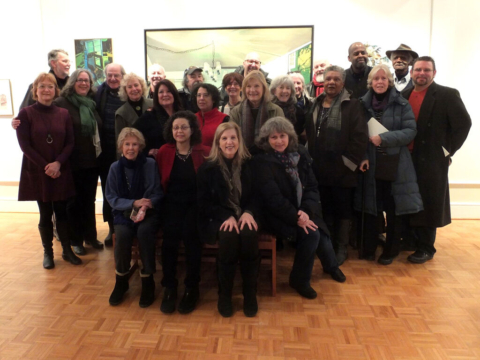
Nationally known Trenton-based painter Mel Leipzig was a founding member of the regionally important Trenton Artists Workshop Association, currently commemorating its 45th anniversary with an exhibition at the Trenton City Museum.
Leipzig, who penned the following statement several years ago, will be speaking with Trenton Downtowner and U.S. 1 Preview Editor Dan Aubrey about the founding of the organization at the Trenton City Museum on Sunday, November 12, at 2 p.m.
The program follows a Saturday, November 11, event where some of the 90 artists participating in the exhibition will be on hand to discuss their work and the organization.
Here is Mel Leipzig in his own words. He begins recognizing the contributions of Mercer County Community College, where he taught for 45 years:
From the beginning in 1979 the connection between TAWA and Mercer County Community College has been very strong.
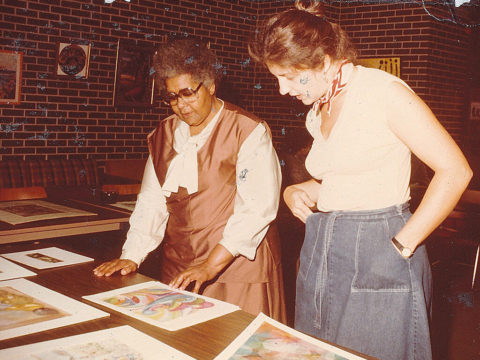
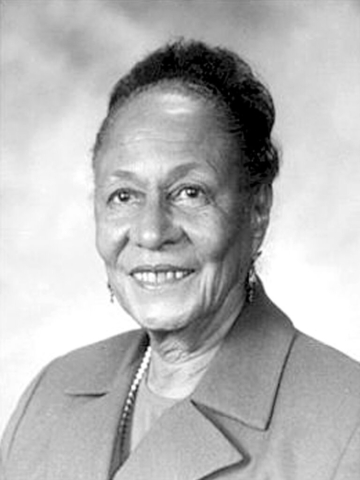
The idea for TAWA, a Trenton-based arts organization that would be a great benefit to the city of Trenton, started with two women, Dr. Mary Howard, PhD, who was the first provost of the Kerney Campus, and Latta Patterson, who was in her 60s and had gone back to school to take art classes at Mercer County Community College.
Both women were African American. Howard was a highly energetic, cultured administrator with tremendous enthusiasm for the arts. It was she who came up with the original idea of an organization of Trenton area artists. Patterson, a mother of by then adult children, had gone back to school to develop her skills as an artist. Latta was a more quiet woman, but she was a dynamo. She had taken my painting class at Mercer, and she approached me with the idea of contacting artists. I embraced the idea with enthusiasm.
Mercer County Community College had originally been an art school, The School of Fine and Industrial Arts founded in the 19th century. That eventually became Trenton Junior and then in 1967 morphed into Mercer County Community College. Sam Willig was the first chairman of the art department at Mercer. It was he who created the Advertising Design Program and the photography classes that were taught by Bill Barksdale. He also hired me to teach painting and drawing.
In the early 1970s, Linda Pochesci, a recent graduate of our fine arts program, asked Sam Willig if she could have an exhibition of her paintings at Mercer. It was that request that gave me the idea that we should have annual alumni shows during the summer. Sam agreed, and so we had alumni shows. By 1979 that allowed us to have a large list of names of former students.
I was able to use this list to contact former students about this organization and because of Mary Howard, we were able to do the mailing through the college.
Unfortunately, Howard, who was the first president of TAWA, was going to leave MCCC. In the summer of 1979 I had a very good painting class that included Gina Bellando, Terri Corboy (now McNichol) and Mary Yess. I mentioned in class that the new arts group needed a president, and Mary Yess, another terrific dynamo, took the position. Latta Patterson remained in the position of vice president. We were now in business and we had a name. Mainly through the efforts and support of Molly Merlino we were able to convince Ben Whitmire, the director of the then recently opened, Trenton City Museum at Ellarslie, to allow TAWA to have several one-man shows in the four galleries on the second floor of the museum. There was great enthusiasm and good newspaper coverage for these shows.
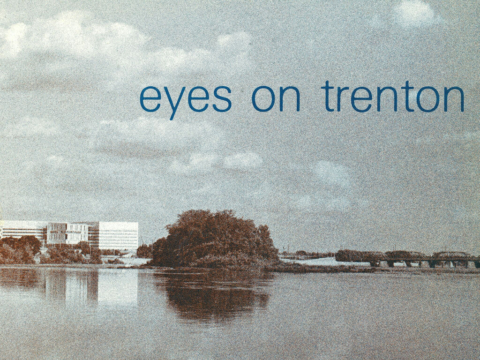
In late 1979, influenced by the famous exhibition “Harlem on My Mind,” I presented TAWA with the idea that we do a visual arts exhibition that would celebrate the artists of the capital city of Trenton and the surrounding area. It was accepted. Fame De Leo came up with the name for the project, “Eyes on Trenton.”
Latta Patterson informed me that painting was not the only art form and that we should include music, dance, theater, opera, and poetry — all the arts — and so we did. It was two years in the making. Dan Aubrey and I coordinated the events. We had plenty of help. Mary Yess and Kay Majofsky, who was by then vice president, wrote grants, and Liz Roszel and Helmut Kunst designed the logo. We had exhibitions at several sites including the New Jersey State Museum and the Trenton City Museum at Ellarslie, the Jewish Community Center, Trenton Psychiatric Hospital, and City Hall.
Poetry printed on plastic was included in the exhibition. Pablo Medina, a teacher at MCCC and now a noted author, and Dan Aubrey coordinated the poetry. At the Original Trenton Coffeehouse, run by Dan Aubrey and Don Massara, in the basement of the First Methodist Church we sponsored a play by the noted Trenton dramatist, Don Evans and the first play done at the Mill Hill Playhouse was “Good Friends” by Lou Revesz. Classical pianists Marion Zarzeczna and Lois Shaffer and the blues singer Barbara Trent performed to packed houses at the War Memorial and the auditorium of New Jersey State Museum. The festival ran from September 4 to October 25, 1981.
The openings at the New Jersey State Museum and Ellarslie on September 4 started the festival. John Hanley, the president of MCCC, loaned us two large passenger vans to use as shuttles between the two museums that night. Over a thousand people attended that night. “Eyes on Trenton” consisted of over 50 events.
One of the last events was performances of the opera “Transatlantic” by the early 20th century Trenton composer George Antheil, who was adored by the Dadaists. When Vivien Raynor, art critic of the New York Times, gave a very positive review for the exhibitions at the State and City Museums, she used a photograph of a city building by Don Reichman, a professor at MCCC, to illustrate the review. Everyone, including politicians joined in the enthusiasm for “Eyes on Trenton.”
After “Eyes on Trenton,” Mary Yess stepped down from her non-paying job, president of TAWA, to become the paid director of the Princeton Art Association, following the retirement of Mary Ward. The then-mayor of Trenton, Art Holland, who was an ardent enthusiast for Trenton, was so impressed with TAWA’s achievements that he wanted TAWA to take over the no longer used Sears warehouse in downtown Trenton and turn it into an art center.
Since TAWA was an all-volunteer organization, it was beyond the capability of the organization. Mary Yess, who as I mentioned earlier was a terrific dynamo, as the new director the Princeton Art Association was able to convince the Board of the PAA to move into that space in Trenton. She was aided by Susan Hockaday and Judy Brodsky and encouraged by (artist and TAWA president) Randal Salewski, who lived in the Mill Hill district of downtown Trenton, to make the move. That is the connection between TAWA and the PAA.
After Mary Yess, Dave Orban and Randal Salewski, became presidents of TAWA. Both were MCCC graduates.
I must make mention of the fact that Tom Malloy, the Trenton watercolorist, known as the Dean of Trenton Painters, was in a spiritual sense, a man who unified and encouraged everyone. Also Molly Merlino was a tremendous, always helpful, presence. Molly influenced her husband, Senator Joe Merlino, to have September/October 1981 declared “Eyes on Trenton” months in the State Senate.
After “Eyes on Trenton” the next big project that TAWA took on was the TAWA Soviet Exchange. Credit for this truly enormous undertaking must go to Gary Saretzky, a photographer and former student at MCCC of the charismatic photo teacher, Bill Barksdale.
It was Gary, somewhat influenced by the Trenton businessman, Shelley Zeiger, who came up with the idea of an exchange of exhibitions and artists between TAWA and the Soviet Union.
It was he who contacted the Union of Soviet Artists, which made the exchange possible. He was aided by Irene Goldman, who is fluent in Russian.
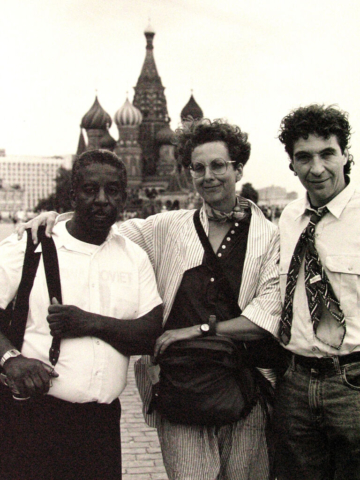
The TAWA-Soviet Exchange covered a period of over two years, 1989 and 1990. TAWA sent an exhibition of over 90 works by TAWA artists to Moscow, chosen by three jurors, Zoltan Buki, curator of fine arts at the State Museum, the painter Lois Dodd, and Tom Malloy. We also sent six artists, three women and three men, who included Joy Barth and Judy Brodsky and three MCCC art professors, Anne Bobo, Jim Colavita, and Lou Draper. This group was also chosen by a jury of three, Irene Goldman, myself, and Gary Saretzky.
The group stayed for six weeks, traveling to various parts of the then-Soviet Union. Rob Girandola was in charge of moving our exhibition from Germany into the Soviet Union by truck. The Soviets then sent a group of artists from various parts of the Soviet Union, which are now all independent states such as Azerbijan and Belarus, to Trenton, including an exhibition that was shown at the Trenton City Museum.
The Soviet artists were housed in TAWA members’ homes. They were given tours of New Jersey and New York galleries. They visited the studios of Leon Bibel and George Segal. They loved their stay in America and would have liked if we would have repeated the exchange with them in the future. It should be noted that all the costs for their trip and for things to buy in America was paid by the Soviet government. All the costs for the shipping of TAWA’s art was paid by TAWA. We had two huge fund raisers, complete with Russian food, one at ETS and the other at Mercer County Community College. We were able to raise over $40,000.
After the excitement of the TAWA-Soviet Exchange, I became less active in TAWA’s affairs. I wanted to devote more time to doing my own work.
Aubrey J. Kauffman was the highly capable president of TAWA at the time of the TAWA-Soviet Exchange. He was president of TAWA from 1987 to 1997. In 1995 he organized the project, “Trenton Takes, 24 Hours In Trenton,” which included works by 24 photographers done during a period of one month. Aubrey, one of New Jersey’s finest photographers, was a student of Bill Barksdale at MCCC.
I cannot speak of the accomplishments of the presidents who came after Aubrey, because my involvement with TAWA was very slight. When Tricia Fagan became president of TAWA she organized the 25th Anniversary Exhibit and book publication. Tricia Fagan is one of the strongest arts advocates in Mercer County.
I became involved again with TAWA, when Dan Aubrey became the guiding force in the organization. In 2012, he organized the exhibitions “Trenton Makes” held in two sites, one the Trenton City Museum and the other in a New York gallery in Chelsea. Those shows were juried by the art critic Gerry Haggerty and gave many TAWA artists the opportunity to show for the first time in New York.
Liz Roszel Aubrey is now president and is continuing with creative ideas for maintaining the organization. It should be noted that Liz was an art student at Mercer County Community College. With that I end this essay, mostly of remembrances.
Meet the TAWA Artists, Saturday, November 11, 1 to 4 p.m., and Talking TAWA History with Mel Leipzig and Dan Aubrey, Sunday, November 12, 2 to 3 p.m. TAWA at 45 on view through December 3. Free.
Trenton City Museum in Ellarslie Mansion, Cadwalader Park, Trenton. Open Friday and Saturday, noon to 4 p.m., and Sunday, 1 to 4 p.m. 609-989-1191 or www.ellarslie.org.