Monuments, by their nature, are meant to convey a certain permanence: a lasting tribute to a person or event from the recent or distant past. “Slow Motion,” the exhibition currently on view at Hamilton’s Grounds For Sculpture, calls that connotation into question.
“Slow Motion,” guest curated by the Philadelphia-based Monument Lab, considers the life cycles and material possibilities of monuments through works using unconventional materials and processes that expand the boundaries of contemporary sculpture.
“At GFS, we believe that exhibitions can become a catalyst for transformation across the organization, while reflecting our commitment to present the works of contemporary sculptors who reflect the greater world, challenge perceptions, and inspire,” said Gary Garrido Schneider, executive director of Grounds For Sculpture. “Collaborating with a guest curator and project partner such as Monument Lab infuses new perspectives and supports innovative approaches to curating, while presenting new voices and ideas.”
Founded in 2012, Monument Lab is a nonprofit public art and history studio that cultivates and facilitates critical conversations around the past, present, and future of monuments. For “Slow Motion,” the nonprofit selected five artists to participate and respond to the exhibition’s central question, “how do we remake our relationship with monuments?”
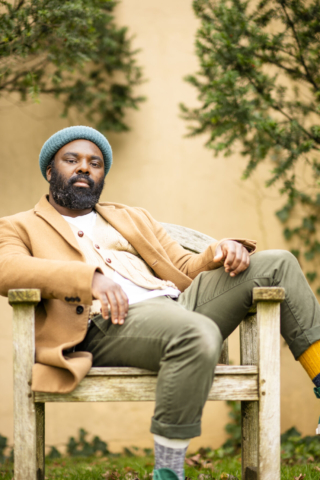
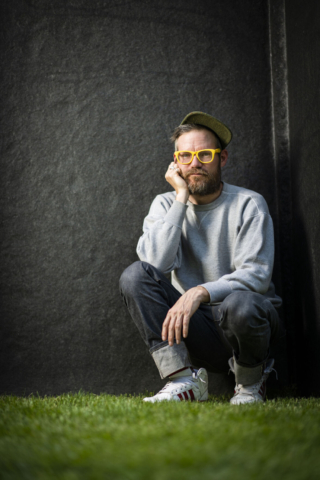
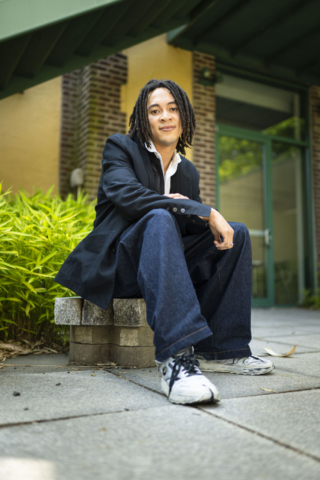
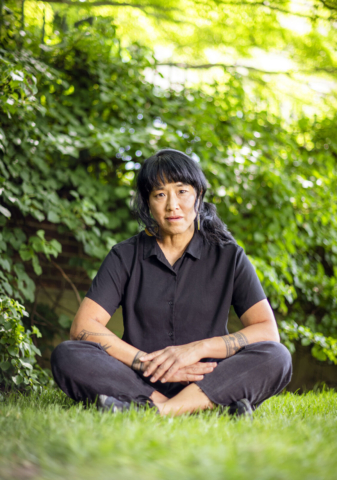
The artists were chosen based on several key criteria: use of unconventional materials; ability to embrace playfulness in their creative practice; and the incorporation of accessibility, inclusivity, and equity lenses in their work. The featured artists are Billy Dufala, Ana Teresa Fernández, Colette Fu, Omar Tate, and Sandy Williams IV. Each artist’s work underscores how materials are not just a medium for monumental work; materials carry meanings themselves, functioning as symbols of specific places, memories, scents, and feelings.
“We’re thrilled to work with and learn from these five artists, whose interdisciplinary practices have long experimented with the materialities and temporalities of public memory. Their boundary-pushing artworks for this exhibition inspire visitors to reorient themselves in how they relate to monuments, to collective memories, and ultimately, to each other,” said Patricia Eunji Kim, Monument Lab curator of “Slow Motion.”
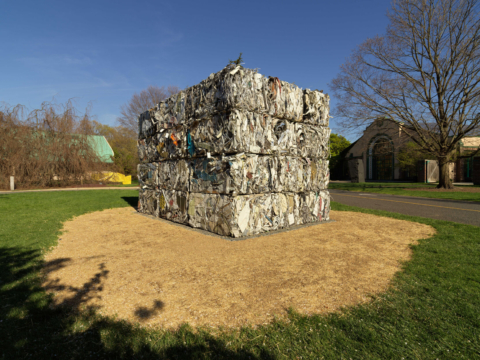
Billy Dufala is an interdisciplinary artist in Philadelphia and co-founder of Recycled Artists in Residence (RAIR). Dufala’s practice offers a playful and critical approach to the twin problems of material waste and exploitative land use. Future Futures, a site-specific sculpture made of recycled aluminum bales, is a temporary monument that functions as both a material commodity and a staged “performance.” Following the closing of the exhibition, the sculpture will be dismantled and these materials will be reintroduced into the commodities market.
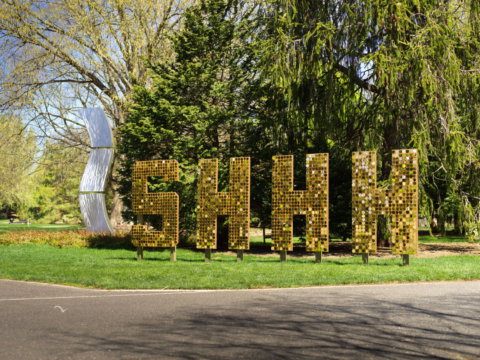
Ana Teresa Fernández is a multidisciplinary artist originally from Mexico, now based in San Francisco, who will exhibit her work SHHH. This 7-foot-high series of letters is covered in 1,800 suspended golden acrylic mirrors, which both react to and reflect back their surrounding environment. SHHH is a monument to the silence of cultures and habitats as sea levels rise and coastlines disappear, a future memorial to what will inevitably be lost.
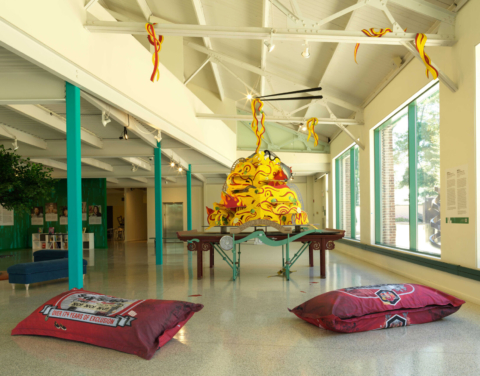
Colette Fu is an artist and a paper engineer born in New Jersey and based in Philadelphia, best known for the creation of popup books. For this exhibition, Fu will create Noodle Mountain, a large-scale pop-up book that illuminates the long history of noodles, a complex culinary connection to experiences of immigration, labor, and collective identity formations in the Chinese diaspora. In her work, Fu has long considered the material life cycles of archives and experimented with the materialization of stories and memories through non-conventional practices.
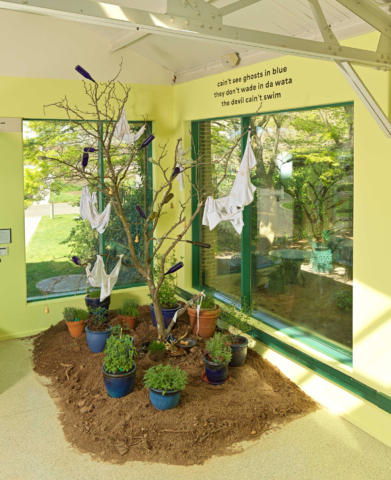
Omar Tate, who is well-known for his culinary creations, identifies as an artist who uses food as one of his many mediums. His work is rooted in the values of nourishment and the reclamation of Black food traditions and cultural aesthetics that can be experienced through his Philadelphia-based grocery and catering business, Honeysuckle Projects, which Tate co-owns and operates alongside his wife, Cybille St. Aude-Tate. For “Slow Motion,” Tate works within the culinary spaces of GFS to design an experience that speaks to the way that smells, taste, and sight can be poetic entry points to shared memories.
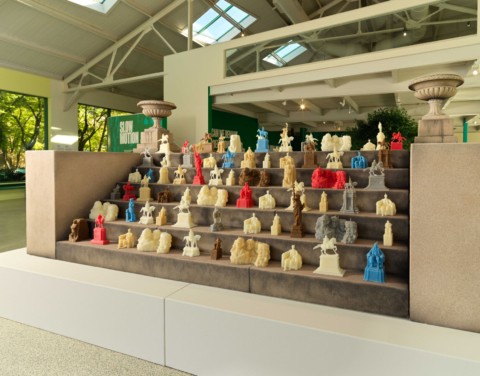
Sandy Williams IV is a multidisciplinary artist who created new work for this exhibition connected to their Wax Monuments series. In this ongoing project, recognizable public monuments that are made in traditional and durable materials are recast in wax and positioned on a stage inspired by the steps from the Lincoln Memorial. These monuments, which normally convey a sense of permanence and immutability, will be periodically melted throughout the exhibition. This iteration of Williams’ work offers an approach to public memory that “hold[s] space for disenfranchised public memories and visualiz[es] frameworks of emancipation and shared agency.”
As visitors experience the exhibition, they will be invited to slow down and re-examine how they might remake their relationships with public monuments. Monument Lab will prepare an engagement space within the exhibition to explore key themes addressed in this project, offering opportunities for active participation and reflection.
Slow Motion, Grounds For Sculpture, 80 Sculptors Way, Hamilton. Open Mondays through Thursdays, 10 a.m. to 5 p.m.; Fridays through Sundays, 10 a.m. to 9 p.m. $25. Timed entry required. www.groundsforsculpture.org.