As June’s annual observance of LGBTQ+ Pride Month comes around, so can an influx of confusion or misunderstandings in relation to issues affecting individuals in the community. Older generations may have a hard time adjusting to this rapidly changing landscape, which is why the Princeton Senior Resource Center, a nonprofit organization, is looking to clarify the world of possibly unfamiliar terminology and attitudes.
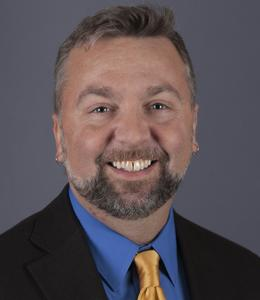
In a free Zoom workshop held on Wednesday, May 18, at 10 a.m., PSRC will team up with professor of social work Brent A. Satterly from Widener University to present “Pride in Context, How to be a LGBTQIA+ Ally in the History of Pride,” which is built on learning, sharing information, and promoting unconditional support in the spirit of acceptance.
The programming at PSRC is primarily geared towards adults aged 55 and older in the greater Princeton area, but its classes, activities and planning resources are available for those in surrounding counties, including families. Online registration for Satterly’s presentation can be found at princetonsenior.wufoo.com/forms/pride-in-context.
While Satterly will touch on topics such as sexual orientation and gender identity, history is going to be a key element in the presentation. The professor explains that learning from the past is the only way to not repeat it, particularly by talking “about the ways that oppression and privilege manifest themselves in the here and now within [that context].”
Satterly received his bachelor’s in psychology from Eastern University, his master’s in social work from Bryn Mawr College School of Social Work and Social Research in Pennsylvania, and a Ph.D. in human sexuality education from the University of Pennsylvania. He has not only been teaching for more than 25 years in topics such as family therapy and human sexuality, but is an experienced, licensed clinical social worker for the state of Pennsylvania.
In addition to being an openly gay man who lives in Haddon Township, Satterly is a “total geek” whose love for fantasy, sci-fi and Halloween can be seen in his drag queen persona. At the first Haddon Township Pride last year, wearing enormous rainbow butterfly wings at the event he later calls a “huge, resounding success,” Satterly married these important educational materials with the parade festivities.
Satterly’s brother-in-law, Dr. Drew Dyson, is the chief executive officer of PSRC. He reached out to the professor directly, wanting to bring those teachings to the Princeton nonprofit’s audience.
The enduring value of the workshop, Satterly says, is illustrated by his own examination of LGBTQ+ issues from before the Stonewall riots occurred in 1969, a coverage of the uprising itself, and then onto the present day.
In what Satterly calls the quote-unquote “start of the U.S. American gay revolution,” the New York City police raid on the Stonewall Inn in Greenwich Village turned into violent civil rights demonstrations against officers who had arrested, beat, and harassed members of the LGBTQ+ community, as well as employees of the bar, in resistance that lasted more than six days.
The rebellion was in response to rampant mistreatment and legislation that penalized “the solicitation of homosexual relations,” as the website Britannica wrote in 2021, and especially in this case, one “that authorized the arrest of anyone not wearing at least three articles of gender-appropriate clothing.” The protests brought public attention to the widespread discrimination that LGBTQ+ individuals faced, eventually launching modern movements such as the first gay pride marches.
Satterly says that a key method in never returning to that time period is to continue advocacy efforts, especially in a wave of new anti-LGBTQ+ policies and sentiments. NBC reported in March that “nearly 240 anti-LGBTQ bills [were] filed in 2022 so far, most of them targeting trans people,” while Florida Gov. Ron DeSantis signed the colloquially termed “Don’t Say Gay” bill into effect that same month — the latter is designed to prevent the discussion of sexual and gender identity in school settings.
Also at the forefront are conversations on reproductive health and the right to abortions.
“It is not lost on me that the current political discourse that’s happening around the possible overturning of Roe v. Wade, which is predicated on the right to privacy, could mean setting the stage for overturning Obergefell [v. Hodges],” Satterly says, referencing the Supreme Court case that legalized same-sex marriage in the United States.
“Any ally we can get, we want, at any age,” he says. “Being an ally just doesn’t mean that you become aware of something, it also means that you not only take action, but accountability, maybe ways in the past that you’ve hurt people, and learning about that and figuring out how to make amends or make that right, and then opening your mouth when you hear homophobic or transphobic jokes. That happens all the time, like online and in social media, in person, in classrooms and hallways, workplaces, and things like that.”
“One of the things we know about prejudice is that people fear what they don’t understand. Or when they don’t understand something and they’re afraid of it, often, it translates into violence,” Satterly explains. “It’s not just queer kids getting thrown out of their homes, which they still do, by the way.”
The American Bar Association reported in February that “LGBTQ homeless youth comprise up to 40 percent of the homeless youth population in the United States.” This means, as Satterly notes, supporting political actions behind “anti-queer legislation like the Don’t Say Gay law [or] the anti-trans bathroom bills” feel like the opposite of proper allyship.
“There are hundreds [pieces] of anti-queer legislation that have been proposed across state governments, across this country. Few people recognize that that kind of thing is happening, and a huge voting block in that regard, are seniors,” he says.
For Satterly, these issues hit close to home.
“I will tell you that in many ways, my grandparents saved my life as a kid. It was a safe haven for me to go [to], they lived right around the corner from us, and it was a big part of it. So I’m completely committed to working with seniors in that regard,” he says, bringing up another anecdote from years ago.
In her own process, Satterly’s mother-in-law, who has since died, came to terms with the reality of being there for her loved ones in the LGBTQ+ community.
“One of the things that she learned, that she communicated to me and to other friends who had queer kids, is ‘You have two choices. You either love them or you lose them.’ That’s it. Love translates into action. It’s not just words,” he points out, bridging that connection into “what happens on the street,” social media, home, and voting booths in terms of change.
This can be done, as Satterly clarifies, by challenging people to go to a school board meeting or check non-discrimination policies for details on sexual orientation and gender identity, calling it “a whole micro to macro perspective.”
LGBTQ+ seniors can also be left out of conversations, which made a moment Satterly had in his drag persona all the more meaningful. An older woman brought her wife to her first parade, so Satterly greeted the newcomer with open arms.
“I turned to her and said, ‘Well, honey, welcome home, where have you been? We missed you,’ and she burst into tears, just put her head on my chest and wept. It was soul filling. The reality of it is that everybody deserves to have a safe space,” he says.
Satterly does not take his ability to influence lightly, nor does he dismiss the effect that becoming educated, thus learning from prior mistakes, can have on society. Inclusivity has no age — now, as June is around the corner, learning about these subjects is easier, and more pertinent, than perhaps in any other month of the year.
“I always think it’s a privilege to teach. I admit that there’s a part of me that’s really terrified that we have not learned from our history, and we’re going to continue to repeat the kinds of things that we’ve seen in the past that have oppressed, and even jailed people, here in this country,” he says, noting that his message is as follows: “Celebrate who you are. Be authentic. Be yourself. Life’s just too short to not do that, whether you’re 15, 75, 85, 95, or 105. Grab your rainbow flag and go to a march, go to a Pride Parade this June, and if it’s your first one, be respectful, and just maybe open your mind. Who knows, you might open your heart a little bit too.”