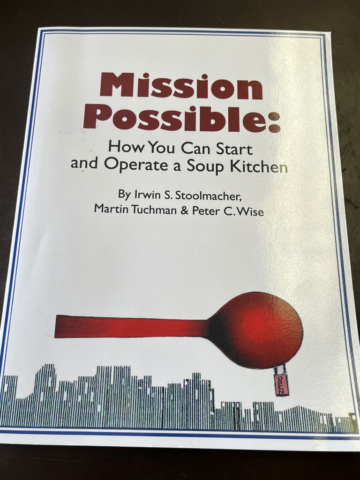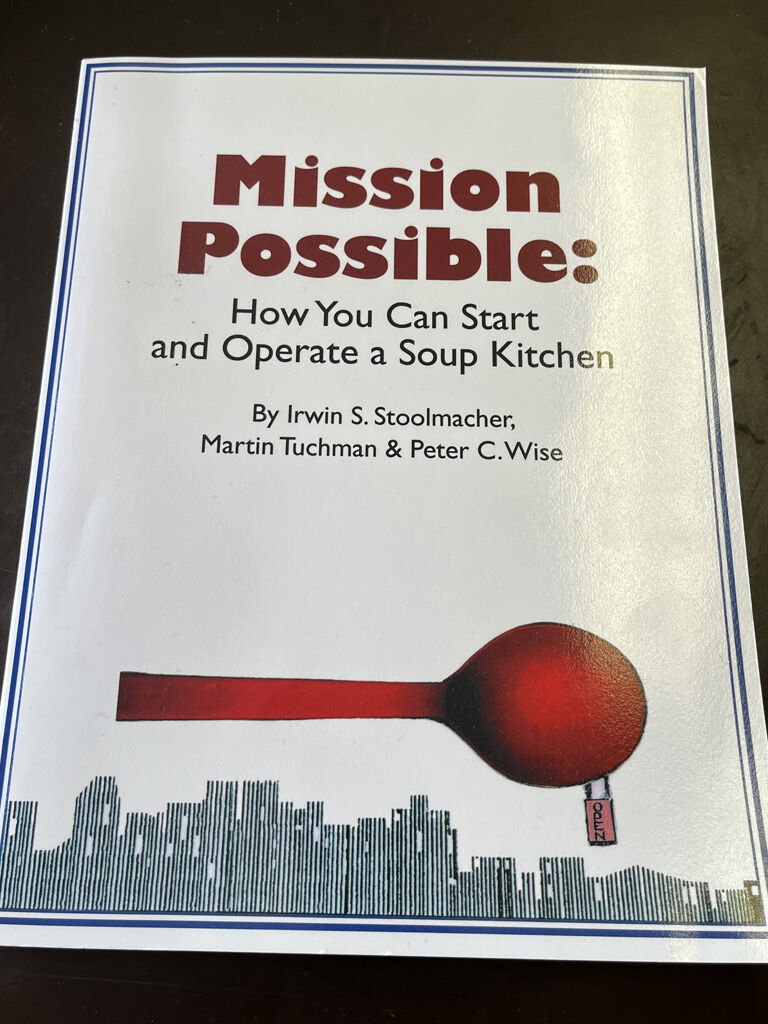
In 2011, Marty Tuchman, Peter Wise, and I wrote “Mission Possible: How You Can Start and Operate a Soup Kitchen.” The book is based on our combined 55 years of experience working with the Trenton Area Soup Kitchen (TASK). It is a book with a simple purpose — to spur the development of new soup kitchens to help reduce food insecurity both domestically and internationally. The book is now available for the first-time worldwide on Amazon as an e-book link for $2.95 with all the profits going to TASK.
According to the U.S. Department of Agriculture (USDA), some 34 million Americans, including 9 million children, are food insecure. The term is used to describe people who suffer from a lack of sufficient food for a healthy life style and are chronically hungry.
Generally, those who are food insecure are forced to skip meals because they don’t have enough money to buy food. Food-insecure households, on occasion and out of necessity, must choose between meeting basic needs such as housing, health, child care, and purchasing nutritionally adequate food.
The number of Americans facing chronic hunger has increased during the past year because of the double whammy of high inflation and the end of pandemic benefits squeezing many household budgets. Low-income households of color, often led by single mothers, tend to have higher rates of hunger and food insecurity due to historic and structural racism and discrimination in economic opportunity, employment, education, and housing.
Around the world, more than 828 million people do not have enough of the food they need to live an active healthy life! Worldwide one in every ten people goes to bed on an empty stomach each night. Of those 828 million people, some 283 million people are acutely food insecure.
The devastating consequence of a lack of nutritious food includes an increased risk for chronic health conditions such as diabetes, obesity, heart disease, hypertension, and mental health disorders. Children grappling with food insecurity are sick more frequently with chronic illnesses like asthma and anemia and behavioral problems like hyperactivity, anxiety, and depression. Further, they suffer from a higher rate of physical, developmental, and cognitive impairments, resulting in lower academic achievement than their peers.
The scope of the hunger problem domestically and internationally is enormous, but there are tools available to those seeking to ameliorate the pain and indignity of hunger. Domestically, the USDA offers a range of hunger and nutrition programs designed to meet the needs of the most vulnerable and underserved. Feeding America, the nationwide network of more than 200 food banks, provides more than 5.2 billion meals to over 46 million people through its hunger relief programs, food rescue and disaster response. And internationally, the United Nations World Food Program, the largest humanitarian organization in the world, provides food to 100 million people in 80 countries.
Further, at the grass-roots level in countries throughout the world there are thousands upon thousands of emergency food pantries, homeless shelters and soup kitchens that provide food and other services to those who need it.
Today’s soup kitchens are very different from those of our grandparent’s generation — ladling out soup from large, steaming pots to long lines of unfortunate people. They are now more accurately called community feeding centers — central hubs of services for those who are food insecure. An example of this new-type of soup kitchen is TASK.
TASK is a non-sectarian nonprofit that has been operating since 1982 with a four-fold mission: to serve ample, nutritious meals, to help patrons to lives of self-sufficiency, to improve quality of life for all who come through its doors and to advocate on behalf of those impacted by food insecurity and poverty.
Its doors are open six days a week to all, no questions asked. All who come are treated with respect and “radical hospitality.” TASK is an incredibly busy place which provided 415,000 meals this past year at its central location and through 34 community meal sites.
TASK also offers an adult education and work preparedness program, ID services a intensive case management program, a creative arts program and a culinary arts job training program.
While TASK, by itself, cannot solve the root causes of hunger, it does represent a very significant response to the problem and the enormous negative ramifications of food insecurity.
“Mission Possible” was written to provide practical information to anyone interested in starting a soup kitchen either in the United States or elsewhere in the world. Among the topics covered are: how to raise funds, how to acquire and safely handle food, and how to recruit volunteers.
The book contains 14 chapters organized in a chronological fashion and includes five information-packed Appendices. Each chapter is composed of two sections followed by a list of tips and guides to some of the more subtle operations of a soup kitchen. The book will take you from very conceptual considerations to detailed instructions on the most common challenges you will face.
To learn more about the book, go to the website www.startasoupkitchen.org.
Irwin Stoolmacher is president of the Stoolmacher Consulting Group, a fundraising and strategic planning firm that works with nonprofit agencies that serve the truly needy among us.