Research meets the real world at Princeton University’s Innovation Forum, an annual competition and networking event in which researchers in the sciences and the humanities share their projects with the potential for commercialization or other societal impact.
The conference takes place Friday, September 29, from noon to 4 p.m. in the Frist Campus Center Multipurpose Room. The event is free to attend, but registration is required. Visit kellercenter.princeton.edu/events/innovation-forum-2023.
The day’s agenda consists of opening remarks, a keynote address, and eight presentations: four from researchers in STEM fields, and four from researchers in the humanities. The top presentation in each field, as determined by a panel of expert judges, will be announced at the end of the day and awarded $30,000 in prize money.
Opening remarks begin at 12:30 p.m. with Andrea Goldsmith, dean of the School of Engineering and Applied Science and professor of electrical and computer engineering; Naveen Verma, professor of electrical and computer engineering and director of the Keller Center; and Cornelia Huellstrunk, executive director of the Keller Center.
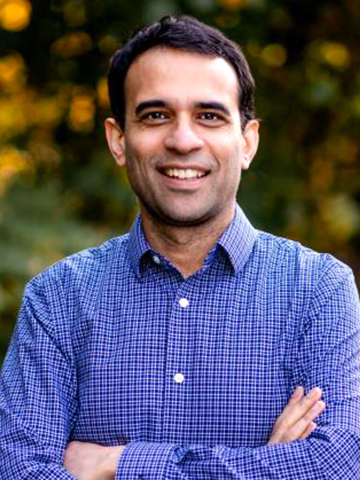
Following the STEM presentations, Manish Bhardwaj will deliver the keynote address at 1:30 p.m. Bhardwaj directs the Keller Center’s Design for Innovation program, which awards grants to Princeton faculty to turn their research into real world impact. He is also the CEO of Innovators in Health, an organization that provides healthcare to the rural poor in India.
The projects being presented are as follows, with descriptions provided by the researchers and the Keller Center:
ArQitech, by Wei Tang, graduate student in computer science, is “a software platform that combines quantum and classical computing” and “ offers significant runtime advantages over purely classical computing, and requires much less quantum resources than purely quantum computing solutions. The software platform has broad applicability in optimization, finance, and high performance computing.”
Mechanism-Enabled Discovery Platform, by engineering consultant William Brown, is technology developed in Princeton’s chemistry department with the potential to enhance scientists’ understanding of viral infection and vaccine delivery. The platform “combines two state-of-the-art technologies: 3D multi-resolution imaging (3DMRM) and nanoparticle valency sorting . . . Combining them allows the user to gain mechanistic insights by direct observations of nanoparticles interacting with live cells. The nanoparticle could be a biological, a virus, a lipid nanoparticle (LNP), or an exosome.”
PAMI Wound Care, by staff research physicist Shuik Yatom, “is a device tasked with promoting efficient wound care, targeting chronic and persistent wounds. The device is based on plasma-activated mist (PAMI) technology, where a liquid (saline with possible admixtures) is turned into mist and subsequently passed through a tube section where the mist is exposed to a low-temperature, low current discharge. In this manner, the mist is “activated,” i.e. infused with reactive chemical species, produced by plasma in a humid environment. Open-air plasma is a potent source of reactive oxygen and nitrogen species, generated by the dissociation of air and water vapor molecules by the energetic plasma electrons … Plasma-activated mist is guided through the tube onto the wound area, effectively reducing biofilm on the wound and killing bacteria, presumably via oxidative damage.”
PumpKin, presented by Katie Silpe, uses technology developed in Princeton’s Department of Molecular Biology to ensure the continued nutritional value of breast milk that is pumped and then frozen for later use. PumpKin “is a dissolvable tablet that can be easily added to breast milk prior to freezing. By acting as a milk conditioner, the tablet ensures that frozen breast milk maintains the same nutritional fats, essential nutrients, proteins, and taste that it had at the time of expression.”
Agile Ethics, by Steven Kelts, a lecturer in the University Center of Human Values, aims to build awareness of the moral and ethical pitfalls of technological work. The program “brings together technical skills development through coursework with moral awareness through interactive role-plays. Agile Ethics role-plays can be plugged into any computing course, anywhere in the country or across the world. Techno-moral decision-making skills are reinforced by simulating the development of products using the tech taught in class.”
Empowering Korean Language Learners, by Ho Jung Choi, senior lecturer and Korean language program director, uses virtual reality to enhance language instruction. “By exploring Virtual Reality (VR) technology as an innovative approach, we have created an authentic and experiential VR learning environment through the support of the Magic Innovation Grants, dedicated to promoting digital humanities and fostering innovation in education. This innovative pedagogy aims to engage learners in virtual cultural and linguistic immersion, promote active participation, and foster multilingual connections within and beyond the Princeton community.”
Nuclear Princeton, by Ryo Morimoto, assistant professor of anthropology, “ innovates interdisciplinary, self-reflexive, and decolonial approaches in the social sciences and humanities by connecting teaching, research, and student activism. By centering on thus far silenced Native perspectives on science and technology, the project explores Princeton’s legacies in nuclear science and technology and its ongoing roles in making the world irreversibly radioactive. In doing so, the project invites Princeton faculty, staff, and students to reckon with our collective responsibility for the long-term environmental effects of the current practice of science and technology “in the Nation’s Service and the Service of Humanity.” The project uses diverse visualization technologies, including but not limited to a web-based GIS platform, “re: earth, animation, and data physicalization to make the invisible legacies of nuclear materials visible and tangible.”
Rhythm Bath, by Susan Marshall, professor and director of dance at the Lewis Center for the Arts, is “an immersive and inclusive dance performance-installation … created in conversation and collaboration with The Institute on Disabilities at Temple University and members of the neurodiverse community. Traditional performance-viewing rules often demand that audiences are seated, quiet and still — requirements that exclude many neurodiverse people and others. What if these rules were reimagined? Rhythm Bath builds on Marshall’s 30+ years of dance-making and is informed by her life with her adult autistic son. Conceived in consultation with neurodiverse advisors and audiences, Rhythm Bath seeks to offer an inviting space connecting audiences and performers via rhythm and synchronous movement and further aims to create a level playing field in which a certain way of being in — or controlling — one’s body is not privileged.”