Think it would be cool to be able to predict the future?
In the dog-eat-dog corporate arena, the ability to predict the future (or, more importantly, the ability to convince your CEO that you can predict the future) isn’t just cool; it’s a skill that reputations and careers are built on.
That’s why many large corporations rely on their chief technology officers, or CTOs, highly compensated gurus also known as oracles, who use their own secret brand of sorcery to advise CEOs on how to steer the corporate ship through as-yet uncharted waters.
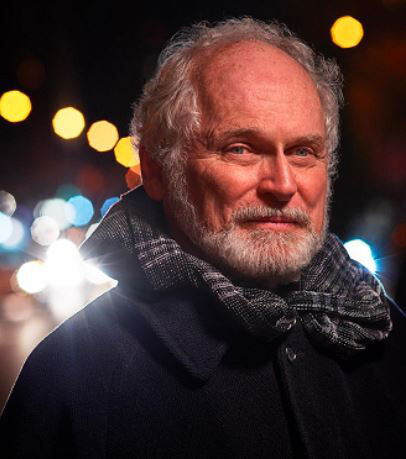
But what if the oracle was suddenly and unexpectedly facing an unknown future? That’s the premise of “The Oracle,” a dramatic comedy by Princeton-based playwright, author, and former ETS chief learning officer T. J. Elliott, and veteran journalist, author, and Wall Street Journal humorist Joe Queenan. The play opens on Wednesday, May 18, at Theater for the New City, 155 First Avenue, in Manhattan.
This is Elliott’s fourth collaboration with Queenan. “Joe and I met in Tarrytown (NY) in the ’80s,” Elliott says. “We were in a Sunday morning basketball league of out of shape old guys, and our families became friendly and we spent holidays together.”
Elliott notes that he had moved to New York and had been writing plays on his own, some of which were produced off-Broadway, until the demands of marriage, raising a family, and moving up through the ranks of several major corporations put his pursuit of success as a playwright on the back burner for a time.
“Then in 2012, I was diagnosed with prostate cancer, and when you tell people you have a later-stage diagnosis like that they’re sympathetic,” he says. “Queenan was completely unsympathetic and said ‘Well you have to start writing plays again!’ I didn’t right away, but I wrote some other things that I wanted to write. He approached me again in 2017 and said ‘If you’re not going to do it by yourself, we’re going to do it together.’”
How did Elliott and Queenan come to write “The Oracle”? “The cast members assumed ‘The Oracle’ must have been my idea, since I’ve spent so much time in the corporate world,” says Elliott. “Joe didn’t. Joe reported on the corporate world for years, but he’s very proud to say that he’s never held a corporate job, but I did. I held corporate positions from 1985 until I left ETS in 2020, moving further and further up until I became chief learning officer at ETS.
“But the play was Joe’s idea. He wondered what would happen if there’s an Oracle, somebody who a company relies upon to tell them what they need to pay attention to, but then one day the CEO brings in a younger rival? What happens in that event?
“But it’s not just based on my years at ETS. I was hired by ETS because I was consulting with them and, at that point, I’d had well over 100 consulting clients, a lot of different experiences, but always with the chief executives. And the thing that surprised me was that your assumptions about how that someone made it to the top usually turned out to be wrong.
“I’d observe two people and think that one knows everything about this business, but the one who isn’t that well versed would leapfrog over the other one, because they were much better at persuasion, at selling themselves, at understanding corporate politics, which does have comic potential.”
Elliott relates that a consulting stint as a leadership development trainer for employees who displayed the potential to be senior executives gave him insights that he drew upon when developing “The Oracle.” “It gave me an opportunity to look at wave after wave of people, one of whom went on to become the CEO of ETS, another the COO of ETS,” he says. “They were nowhere near that level when they went through leadership development training.
“One of the things I had to emphasize was to have a sensitivity to the importance of politics in corporate life, not to think of it as a dirty word, or as a good word, but simply to think of it as a mutual reality that is the pursuit of interests. So when you’re trying to solve a wicked problem, and you talk to one executive and hear one story, and then talk to another executive and get a completely different story, you have to ask yourself how much their political aims enter in to what you heard.
“And so in this play ‘The Oracle,’ the politics of it and — spoiler alert — the failure to understand the politics by at least one character — are critical.”
Recalling lighthearted yet cynical looks at the corporate world like the Broadway musical “How to Succeed in Business Without Really Trying” and the British and American TV versions of “The Office,” does Elliott believe that the corporate world is a rich vein that hasn’t been mined enough?
“There are the ones that you mentioned and then there are more recent entries set in the business world like ‘Succession,’ or ‘Halt and Catch Fire,’” he says.
“When I watch them, there are certain things that resonate. I see more reality in ‘Halt and Catch Fire.’ Whereas in ‘Succession,’ people are acting crazy, there’s a lack of reality, situations that can’t happen. In real life there’s a board of directors that’s going to stop you, a newspaper article that will expose you, whatever.
“But there’s also the soul-sucking experience that I think we capture in ‘The Oracle,’ of people being turned around,” he continues. “There’s one character that says ‘The first thing I was told when I started here was that there are no rules’ and the other character replies ‘For you there are rules, for them there are no rules.’”
It seems fair to conclude that mining both the comedic and dramatic potential the of the maelstrom of corporate sturm und drang that Elliott describes is what propels the plot of “The Oracle.” “On the one hand the experience is traumatic, going through a shift in their consciousness, even a shift in their identity,” he says. “On the other hand it’s funny, because, like Chaplin’s Little Tramp, the system is out to get them.
“All of us in the corporate world as I’ve experienced it have had our moments of being like ‘Lucy in the chocolate factory’ where the stuff is going to keep coming at us, and at the very moment when we think we’ve at least managed to bamboozle them into thinking we can manage it they say ‘OK, speed up the line.’”
The Oracle, Theater for the New City, 155 First Avenue, New York, New York. Wednesday through Saturday, May 18 to 21 at 8 p.m., and Sunday, May 22, at 4 p.m. For more information and a link to purchase tickets, visit knowledgeworkings.wordpress.com.