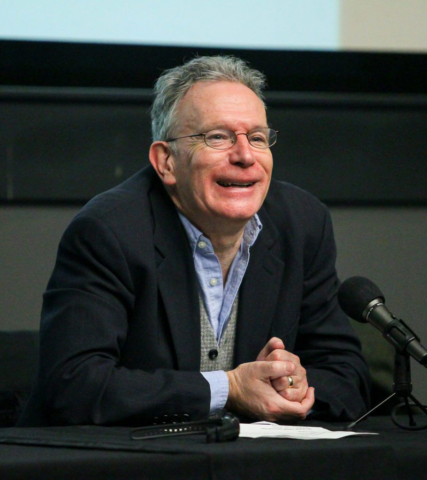
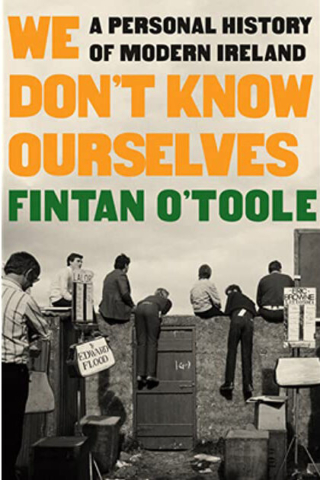
Irish journalist, author of nearly 20 books, and Princeton University professor Fintan O’Toole discusses his new book, “We Don’t Know Ourselves: A Personal History of Modern Ireland,” at a free Labyrinth Books presentation on Thursday, April 14, at 6 p.m.
Organized by years starting with O’Toole’s birth in 1958, the book chronicles changes that transformed the “Catholic, nationalist, rural” country into one described as “unbounded, shifting, physically on the move to that outside world.”
In the following excerpt O’Toole sets the tone of the era as well as his thoughtful and witty chronicle released by Liveright Publishing:
Two days before I (was born), the committee of the Dublin Theatre Festival, which was due to be staged in May, decided to drop “Bloomsday,” a planned adaptation of James Joyce’s “Ulysses,” from its programme. “The board, it is understood, felt that recent ‘adverse publicity’ which had followed the expression of disapproval by the Most Rev. Dr. McQuaid, Archbishop of Dublin, made the production of ‘Bloomsday’ inadvisable.” McQuaid, one of the most powerful figures in Ireland, had made his displeasure known by refusing a request from the organizers to have the opening of the festival marked by the celebration of a special votive Mass.
The author of the adaptation, Alan MacClelland, was particularly disappointed because “I had the play vetted by an authority on moral dogma and I was advised on any blasphemous passages, which I naturally agreed to cut.” Hilton Edwards, who had been due to direct the staging at the Gate Theatre, said that he was “not surprised’ because” as always there has been a rigid censorship of plays, as of everything else.” He accepted the decision with resignation — “All right. I am no rebel. If the people of this city think it is not for them, I am not upset.” He added the festival would now “end up in the kind of silly joke for the rest of the world that most things have that happened here. Everyone will feel very smug and very pure here, and they will be wrong as usual.”
Sean O’Casey, whose new play “The Drums of Father Ned” had also been dropped because he refused to make alterations, had a similar response: “The dropping of the plays will be subject of ridicule all over the world.” Over the weekend, Samuel Beckett withdrew three mime plays and a reading of his radio play “All That Fall” from the festival in protest at the Archbishop’s interventions against O’Casey and Joyce. Within a few days, the entire festival would be “postponed” — in effect abandoned.
There was, though, one deliciously farcical little afterpiece. It emerged that the Lord Mayor of Dublin had been advised by his (Catholic) chaplain that there was nothing objectionable about staging “Ulysses,” since it was “a story known to everybody.” This was taken to suggest that there might, after all, be some little tinge of liberalism within the church. But “It didn’t become clear until much later that he was confusing Homer’s Ulysses with that of James Joyce.”
Fintan O’Toole presents “We Don’t Know Ourselves: A Personal History of Modern Ireland,” Labyrinth Books, 122 Nassau Street, Princeton, April 14, 6 p.m. Free. Online and in person with COVID protocols. www.labyrinthbooks.com.