While the Trenton-Princeton region can claim to be home to designs by one of history’s great landscape designers, Frederick Law Olmsted, two other historically important designers worked in Trenton — and bring additional esteem to the city and region’s cultural and historic resources and something else to celebrate.
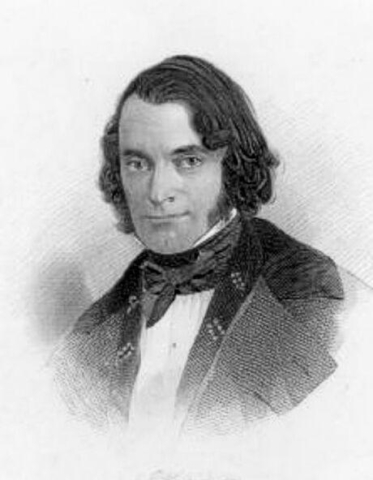
One is Andrew Jackson Downing, considered the individual who launched the American landscape design movement.
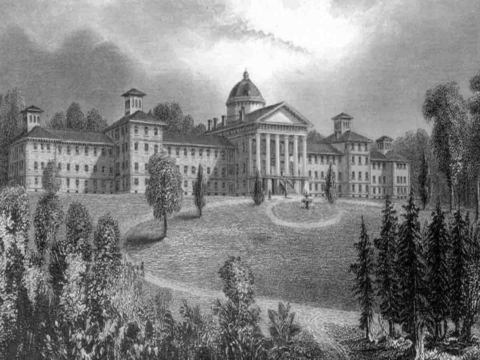
He is also the designer of the original grounds for the Trenton Psychiatric Hospital.
“The architectural theorist Andrew Jackson Downing (1815–1852) was a prominent advocate of the Gothic Revival style in the United States and a proponent of the formation of a clear aesthetic canon in American architecture and design,” begins a statement from the Metropolitan Museum of Art in New York City.
It continues with, “Born and raised in Newburgh, New York, he was a prolific writer on architecture, landscape, and interior design. His early essays were the first contributions by an American on these topics and his ‘Cottage Residences’ (1842) was the first American book on rural architecture. A supporter of the development of ‘appropriate’ and useful aesthetics, Downing called for an aesthetic particular to the American landscape. His ‘Architecture of Country Houses’(1850) included extensive designs for houses and interiors, many by architect Alexander Jackson Davis (1803–1892).
“In 1850 he formed a partnership with Calvert Vaux and opened what was to be a thriving practice in Newburgh. Frederick Clarke Withers (1828–1901) joined the firm during its second year. Downing died in a steamboat accident on the Hudson River in 1852, but his ideas continued to exert an influence through his books, the ongoing publication of his magazine The Horticulturalist and Vaux’s ‘Villas and Cottages’ (1857).”
Trenton Historical Society materials notes the following about the New Jersey State Hospital Historic District occupying much of the Trenton Psychiatric Hospital’s approximately 100-acre campus in Trenton and Ewing Township:
“The hospital was founded in 1848 at the urging of Dorothea Dix and was first known as the New Jersey Lunatic Asylum. It was the first institution established in New Jersey for the mentally ill. The hospital today includes an extensive campus with large, primarily stone buildings constructed from the mid-19th throughout the 20th centuries amid beautifully landscaped grounds. Noted Philadelphia architect John Notman and nationally significant landscape designer Andrew Jackson Downing were responsible for the property’s original plan. The historic district buildings include the main hospital, a cafeteria, a laundry, a firehouse, a shop, a laboratory, a powerhouse, the gatehouse and several residences for the Superintendent, the Commissioner, 12 doctors and a nurse’s dormitory.”
While Dix had known about Downing’s work in Washington, DC, the designer’s engagement is connected to Thomas S. Kirkbride, the Philadelphia-based mental-health reformer and planner Dix charged with establishing the Trenton hospital.
Kirkbride and Downing shared a belief that nature could be restorative, reflected in Downing’s thought that “many a fine intellect, over-tasked and wrecked in the too ardent pursuit of power or wealth, is fondly courted back to reason, and more quiet joys, by the dusky, cool walks of the asylum, where peace and rural beauty do not refuse to dwell.”
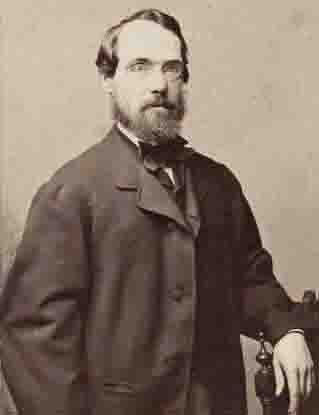
The other important designer is the above mentioned Calvert Vaux (whose name rhymes with talks).
According to art historian Francis Kowsky and professor at the state college in Buffalo, New York, where Vaux also created designs, “One of the least appreciated pioneers of the American park movement is Calvert Vaux (1824-1895), a man who collaborated with both Andrew Jackson Downing and Frederick Law Olmsted.”
As noted above, Vaux accepted Downing’s invitation to work at his firm and assisted in the preparation of plans for various projects, including the public park between the Capitol and the White House.
After Downing’s death, Vaux soon relocated to New York City, where he spent the rest of his life.
As Kowsky notes, “Like the Hudson River School painters, several of whom were his friends, Vaux always maintained a deep love of nature. To Vaux, landscape architecture was a branch of art.
“In 1857, Vaux asked Olmsted to join him in the preparation of a plan for the Central Park competition. Vaux appreciated Olmsted’s administrative abilities, but he must also have recognized in him a kindred spirit as far as artistic feeling was concerned. This historic collaboration, which resulted in the winning ‘Greensward’ plan, was to be the first of many that took the two men to the forefront of their new profession.
“At Central Park, Olmsted must have learned a great deal from the superior knowledge of architecture and landscape design that Vaux possessed. By Olmsted’s own admission, Vaux was responsible for the numerous structures that were erected there to enhance the pastoral mood and encourage the public’s use of the park.
“Vaux’s partnership with Olmsted lasted until 1872. Olmsted, who had no formal training in either architecture or landscape architecture — nor, apparently possessed any artistic abilities — must have learned much along these lines from his association with Vaux. And while one might not subscribe to the opinion of Vaux’s friend Parsons, who believed that the contributions of Vaux to the American park movement outweighed those of Olmsted, there is much evidence to support his contention that ‘Mr. Olmsted was a leader of men, a man of magnetism and charm, a literary genius,’ but hardly the creative artist that Vaux was.”
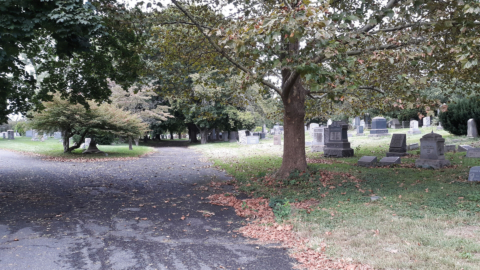
When the Riverview Cemetery Company was enlarged late in the 19th century, Vaux was commissioned to design the layout for the additional space.
While the hospital grounds are closed to the general public, the Riverview Cemetery is open, and visitors are invited to walk the grounds and visit a regional treasure.
Riverview Cemetery, 870 Centre Street, Trenton. Open daily, 8 a.m. to 4:15 p.m. For more information see October 13, 2021, U.S. 1 story “History and Chills Come Alive in Regional Cemetery” or visit riverviewcemetery.blogspot.com.