
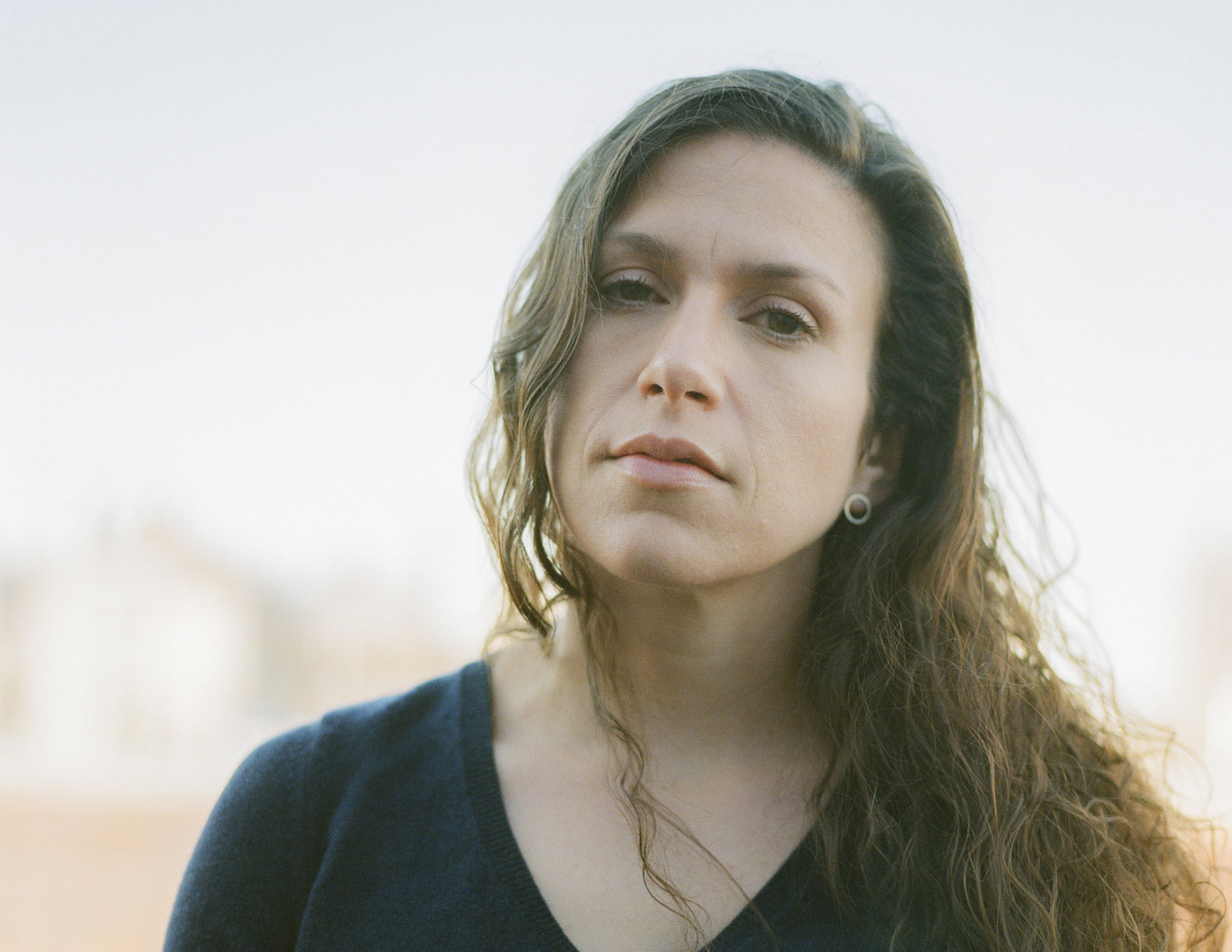
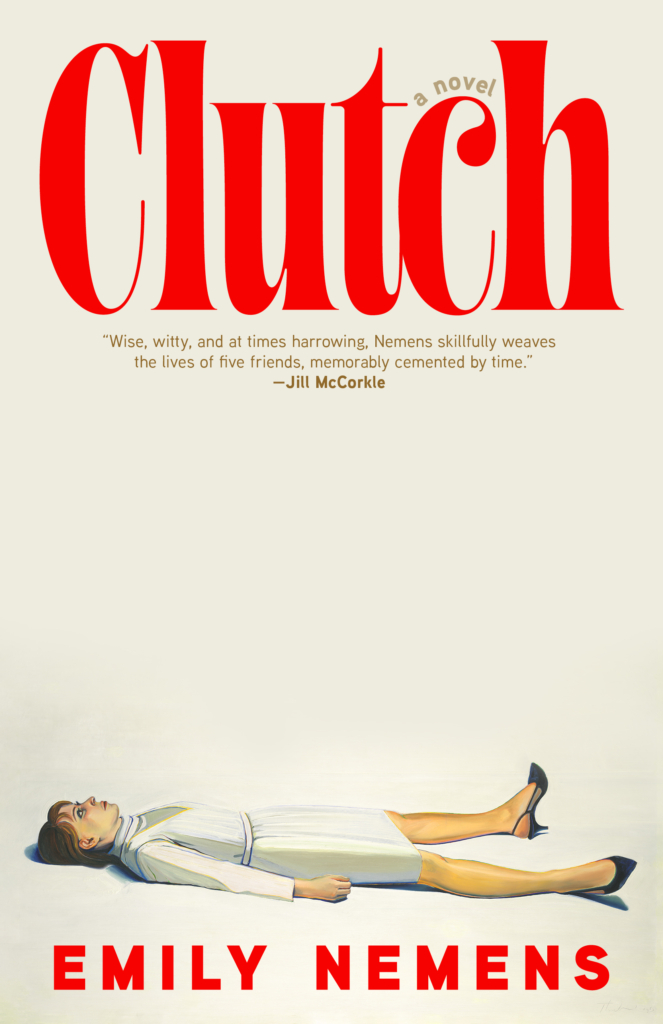
Emily Nemens is a writer’s writer. Drawing on personal experience and interests, her new novel, “Clutch,” has been celebrated as a must-read by The New York Times Book Review. She is currently on a publicity tour for “Clutch,” with a stop at the Brooklyn Book Festival on Sunday, Sept. 27, and at the Princeton Public Library in conversation with New Jersey debut author Alyson DuTemple on Wednesday, Oct. 28.
Nemens was previously an editor at the well-known literary magazines The Paris Review and The Southern Review. She began as an illustrator but found her real strength in writing essays, short stories and, now, her second novel.
Following the acclaim of her first book, “The Cactus League,” which follows a multitude of characters during Major League Baseball spring training in Arizona, her second novel, “Clutch,” has drawn accolades with the story of a small group of college friends who really do stay in touch as they grow and face adult challenges.
What came first for you, drawing and painting or writing and the associated disciplines?
As I recall, some of my earliest school projects were graphic novels—I remember making a little comic book in elementary school about astronomy with this Beaker-like narrator—so maybe they were always tied together? Though I was a few inches away from getting a fine arts degree and my mother steered me back to a liberal arts college; she wanted my education to be well-rounded.
I studied art and art history as an undergrad, and my first editorial jobs were in museums, but I’m glad that I took courses all over campus—physiology for premed was not “fun” per se, but it informed a big drawing project and just recently came up again in a story.
Do you still make art or has writing taken over?
Writing has pretty much taken over. At Brown we had great studio space; when I first lived in New York in my 20s, I worked in a gallery basement accessible by a trap door. That was unsustainable, so I swapped out these big messy oil paintings for watercolors and drawing, figuring “at least it’s portable (and nontoxic).”
I still have a bunch of drawing supplies, but between my writing, reading, and teaching duties (I teach in the low-residency MFA program at Bennington College), I hardly ever get out my paper and pens. This conversation is a reminder to get back to it!
In your first book, “The Cactus League,” you balanced a whirlwind of characters blowing in and out of the frame against the backdrop and pressure of professional baseball. Are sports a passion or baseball in particular?
I’ve always been a big baseball fan—I grew up watching my hometown Seattle Mariners. The Mariners have a famously bad franchise history (they’re the only active team to never have been to the World Series), so I had to find other things to love about the game—your eye could drift from athletic performance and competition to the other storylines.
My dad and I started going to spring training in the mid-1990s—not every year, but often enough that I absorbed the rhythms of the place, and I was fascinated to clock how Phoenix changed over the decades.
But even if the Mariners were a perennial powerhouse, it wouldn’t change the fact that I’m most interested in how baseball (or any team sport) can be a microcosm of what’s going on in the larger culture. The specificity of spring training baseball gave me a way to write about these big ideas, like camaraderie, competition, and fandom, but also societal issues, like class, urban sprawl, and the Great Recession.
Growing up in Seattle, how was going to school on the East Coast different? Did it spark new paths or character studies for your writing?
I am a proud product of Seattle Public Schools, so going from that to Brown on a partial scholarship (I also had loans and several work study jobs) was a real eye-opener. I understood class in a new way and saw the “starting on third” phenomenon up close, and that’s certainly informed my writing, “Clutch” in particular.
The five friends in the novel have this “equalizing” experience of going to school together, living on the same residential hall, eating in the same dining hall, etc., but then have very different career trajectories, shaped by ambition but also by their support network.
Of course, there were also the academics, which blew my mind in the best way: I had no concept of art history as a discipline until Brown, and I fell in love with it. I think cultivating a capacity for visual language—thinking about how to describe a painting, and how those individual pieces of art reflected larger shifts in culture—has forever informed my creative writing.
What fight or struggle do you have regarding your writing and art?
I edited full time at literary magazines (“The Paris Review,” “The Southern Review”) for over a decade, and during that time it was really hard to find time to write—I was just grabbing little chunks of time where I could (I joked that I didn’t go to brunch for three years).
Now that I’m primarily writing and teaching, time is generally less of an issue… but not this year! I had something like thirty-five book release events for CLUTCH this spring (including six in NJ), and getting to where I needed to go for each program felt like a full time job. It was very hard to write during the prolonged road trip.
The last month of summer has been a respite, and I started on some new projects, but I’ll get another chance to try to write on the road as I have several book festivals this fall.
Do your years as an editor make you a better writer or make you tend to be a more careful, thorough writer?
My first drafts are as messy as anyone’s. I firmly believe there’s no such thing as a bad first draft, you just have to get some ideas down, and then the fun stuff starts.
I don’t know if I’d call it “careful” as much as “rigorous”: I’m an inveterate reviser, and I am better at doing that—whether it’s careful polishing work or doing a drastic overhaul, and basically starting with a new rough draft—because of all the editorial work.
Is a book tour interacting with readers exciting, terrifying or somewhere in between?
Both! I used to have a lot of fear of public speaking, but I’ve gotten better at that over time. I was lucky to see a lot of friends and family on tour, but what was even more special were the strangers at events and in the signing line.
One young woman told me she’d never had an author sign a book before; an older woman told me it was the first time she’d gone to a book event. I felt so honored that people took a chance, and took an evening, to see me and hear about “Clutch”—it’s a real leap of faith.
Also, nearly all my events were hosted by independent bookstores, and I loved going to shops and meeting booksellers in all these different cities!
Are the locations used in “Clutch” places you have lived or are familiar with?
There are five friends living in four cities (NY, Austin, Chicago, and San Francisco), and they meet in Palm Springs to open the book. My first New York apartment was a lot like Carson’s Brooklyn loft in the book, but otherwise all my research was based on personal travel over the years.
I’ve done a girls’ trip to Palm Springs, and while I wish I could’ve researched there for months, I got the color I needed from a long weekend (and plenty of internet research).
A writer I know who lives in Palm Springs read the book and said, “You captured it exceptionally well, so much so I was surprised not to see myself walking by.” What a kind endorsement! I think it boils down to the fact that I love writing about place, and I have a slightly preternatural recall for it.
With the Marilyn Monroe sculpture noted in “Clutch,” are you giving a local Mercer County, New Jersey, shoutout?
Well, you know that Seward Johnson sculpture was installed in Palm Springs, and did cause some controversy. But yes, I wanted to call it out in “Clutch” because of the local connection—I absolutely love Grounds For Sculpture.
How much of writing fiction is researching the details so the writing is seamless?
I am a big fan of research, but I learned early that it can slow me down. So I try to plow ahead with character development and plot, and I’ll flag things I need to come back to.
I first figured this out when I was writing a story about Tommy John surgery. I knew I needed to know more about the surgery, but I didn’t want to lose the heart of the story by getting bogged down by medical details.
So I had a first draft, and a whole psychological journey for the pitcher, before I did a deep-dive on the procedure, and could surgically (pardon the pun) insert the specifics I needed to make it authentic.
How do you know when your part of writing a novel is complete, before submitting it to your editor?
I’ve learned over time that I’m a very iterative writer, and also an impatient one. So I’m several drafts into a project before it feels like it’s up to snuff and I want to share it with my agent.
But here comes the impatience—I usually should do a few more passes before it’s really ready for primetime. Of course fresh and expert eyes help with that, and I’m very grateful for my agent’s and editor’s feedback—we were tightening up “Clutch” until the 11th hour—but I’m learning to be more patient and even more rigorous before I let new writing out into the world.
What are you working on now? Do you have a short or long list of projects?
As I said, I was really in promotion mode this spring, but I am working on some new stories—the most recent appeared in the Oxford American last month.
I lived in Baton Rouge for most of a decade, before my second stint in NY and now NJ, and I find the place fascinating. Short stories get a bad rap, but I absolutely love the form, and particularly the opportunity they offer to create this kaleidoscopic view of place.
Website: emilynemens.com, Instagram: @emilynemens