
A horse once headed for slaughter surged through traffic, scaffolding and parked cars on a Manhattan street, carrying a New York City mounted police officer in pursuit of a woman accused of stealing a purse.
The horse was Kelly, formerly known as EP Great Drive, a registered Standardbred rescued in 2020 by the Standardbred Retirement Foundation.
That moment, captured on video April 19, showed exactly what Judy Bokman has spent decades trying to prove: Retired Standardbreds are not throwaway horses. They are smart, steady and capable of remarkable second acts.
SRF saved Kelly from a Pennsylvania “kill pen.” After being given time to rehabilitate and heal, he was adopted by the New York City Police Department and given the name Kelly, after a Staten Island police narcotics officer killed in the line of duty.
The chase took the officer and horse around West 72nd Street and Columbus Avenue, through traffic, sidewalk scaffolding and parked cars before the woman was apprehended with help from a witness, according to media reports.
The moment stood out because NYPD mounted officers are typically deployed for crowd control or observation, not arrests, according to media reports. Kelly, however, stayed calm and responsive as Officer Kyle McLaughlin rode him through the noise and confusion.
As SRF noted at the time, “His trusted partner stood quietly in the street, composed, as if it were just another day on the job. The officer’s brave and stellar capture was one that deserves every accolade.”
As a result of the arrest, McLaughlin was promoted to special detective.
“When I need a lift during the day, I’ll just play that video, because it’s such a tremendous video of courage and bravery and a good level head on board and a really terrific police officer,” said Bokman, founder and executive director of the Standardbred Retirement Foundation.
Over the past 37 years, the Standardbred Retirement Foundation has helped more than 6,000 horses, many of which were at risk of slaughter.
Millstone resident Judith Bokman was 30 when she founded SRF, an organization dedicated to rehabilitating and rehoming retired harness racehorses. Today, SRF is headquartered at Walnridge Farm in Cream Ridge, with about 80 horses on-site.
Active in 30 states, SRF is the largest adoption program dedicated to Standardbred horses in the United States. It has satellite farms in Kentucky, New York, North Carolina, Oklahoma, Pennsylvania and Virginia.
The Standardbred is an American breed used in harness racing, where horses pull a driver in a sulky. The breed traces its roots to the English thoroughbred Messenger, brought to the United States in 1788, and all Standardbreds descend from his great-grandson, Hambletonian 10.
The term Standardbred refers to the requirement that a horse run a 2-minute, 30-second mile to qualify for the breed’s registry, which was established in 1879. Standardbreds can reach racing speeds of 25 to 35 mph.
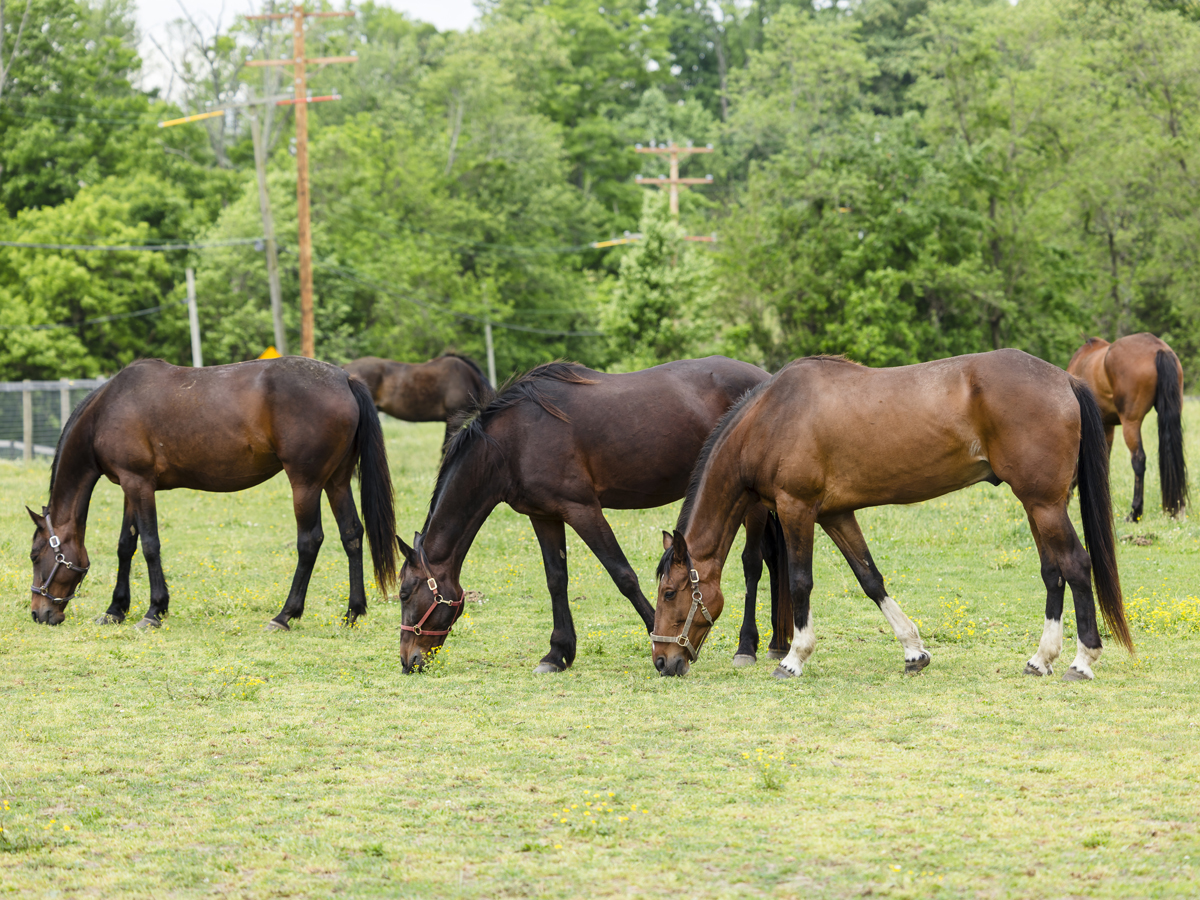
When Bokman started SRF, few Standardbreds had a career beyond racing or the breeding shed, other than becoming Amish transportation. Many ended up at low-end auctions, where they were often sold for slaughter.
Horse people outside the Standardbred industry did not consider the animals suitable as riding horses. Today, the generally calm temperament of the Standardbred has won many fans, and the horses are considered versatile family and trail horses.
SRF played an important role in establishing the Standardbred as a suitable riding and pleasure driving horse. Their unflappable nature makes them a good choice for mounted police units across the country.
Other Standardbreds rescued by SRF have gone on to mounted police units in cities including New York, Newark and Miami. Others have appeared in films, competed in show jumping and lived out their lives in therapeutic or traditional riding programs.
Bokman promotes the versatility of Standardbreds, emphasizing their easy-to-work-with nature and excellent manners. She dubbed them “the Brainiac breed.”
The horses are usually good with children and a favorite of older riders seeking safe horses for the trail. For those who enjoy showing, there are Standardbred divisions at many local shows.
The National Standardbred Show, held each September at the Horse Park of New Jersey, features riders and drivers from across the country competing in a variety of disciplines, from Western to English and dressage to driving.
Bokman got started in harness racing by owning horses with her uncle. She met her husband, equine veterinarian Steve Bokman, at the racetrack when he was working for the veterinarian she used.
At the time, she was a flight attendant and traveled constantly. She felt her frequent absences were not good for her dog, and Steve offered to take him because he had recently had to put his own dog down.
The rest is Standardbred history. Perhaps not surprisingly, the couple is also involved in dog rescue.
As an owner, Bokman got a view of racing from different angles. She saw that many Standardbred racehorses eventually ended up at slaughter. That led her to start SRF in 1989, along with Paula Campbell, wife of Harness Racing Hall of Fame driver John Campbell.
Its mission statement reads, “Our heartfelt mission is to rescue horses from the threat of slaughter, secure loving homes with the distinctive commitment to lifelong follow up and guardianship. We tirelessly promote a universal understanding that horses require a lifetime commitment of enduring care.”
There is no typical day at SRF for Bokman. An ordinary day consists of checking on 80 equines, organizing volunteers and showing horses to potential adopters.
Every week, she estimates SRF rescues six to eight horses, although sometimes there are as many as 12.
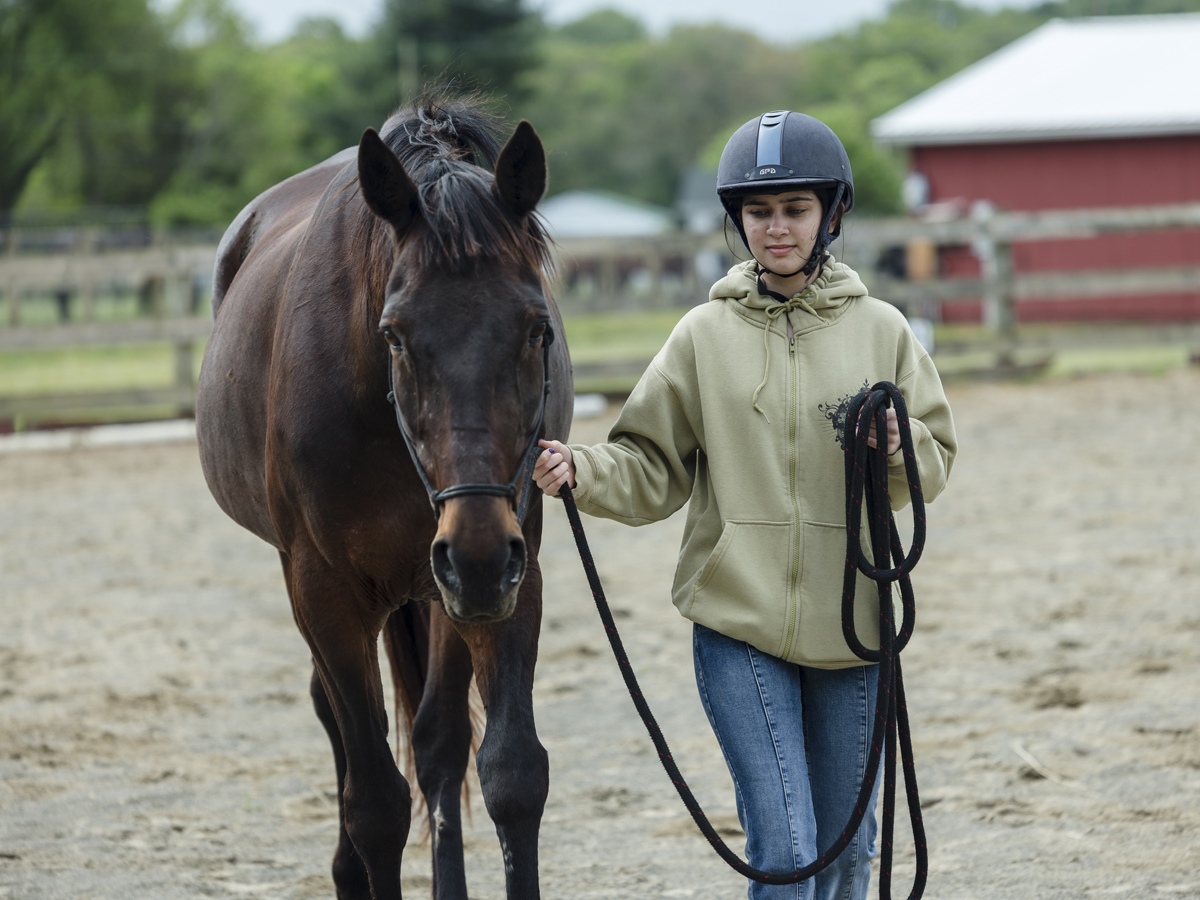
“We have to communicate with the pens where these horses are being held by slaughter brokers. We frantically must raise funds to purchase the horse so it doesn’t ship to slaughter. We are always reaching out for support and donations. Our social media is very important to help these animals,” she said.
Transportation between the pens and a quarantine facility must be arranged.
“Most of them go right to a vet, because you can’t really count on what the pen is telling you about their condition,” she said.
While Dr. Bokman is not usually at the SRF facility because he has his own busy practice, he is available to consult by phone almost daily.
If there is a situation with a horse, whether in New Jersey or as far afield as Oklahoma, SRF gets photos to him and descriptions of what is going on. They lean on him for advice about treatment or whether the horse needs to see a veterinarian immediately.
While Judy Bokman did not start SRF as a partnership with her husband, in many ways it has become that.
Another memory close to her heart involves her son Brett, who now lives in Montana. Brett has always been a cowboy at heart, partial to quarter horses. He is also interested in Civil War history and participates in reenactments.
One day, he planned to go to a reenactment with a friend who did not have a horse available. Brett let the friend ride his quarter horse, and he borrowed an SRF horse to ride.
When he came home, he could not stop saying how perfect the Standardbred had been.
“Next weekend, he’s coming back from Montana, and three SRF horses are going to a Civil War reenactment in Virginia,” she said.
SRF relies heavily on individual donations, as it receives no funding from organizations like the ASPCA, according to Bokman. The need for fundraising is continuous.
SRF does not own a farm but pays for boarding and leased locations throughout the United States. Donations provide most of the organization’s funding, with additional support coming from casino nights, golf outings, harness racing organizations, grants and merchandise sales.
The organization currently houses 487 horses across sanctuaries in several states and needs a farm of its own to better manage its sanctuaries.
Those wanting to adopt a horse must fill out the application available online and pay a $20 application processing fee. They must send photos of their farm or boarding facility. The adopter must agree to having their veterinarian complete SRF’s veterinarian follow-up form semiannually, generally combined with spring and fall inoculations.
An SRF representative will call to review the application and gain more insight into the adopter’s horse experience and the type of horse they are seeking.
Once approved, the adopter can select a horse appropriate for their needs. SRF asks for a donation of between $1,000 and $4,000, based on the individual horse and its abilities. Companion horses unsuitable for riding do not require an adoption donation.
An SRF horse can never be bred, used for embryo transfer, raced, sold, used for commercial purposes or given away. SRF looks for lifetime homes.
If for some unforeseen reason an adopter can no longer provide good care for the horse, the adopter is required to find another loving home that must first be approved by SRF. If they cannot find such a home, the horse must be returned to SRF.
SRF is also in search of foster or companion homes for horses no longer able to do any riding or driving. Under the Companion Horse Assistance Program, known as CHAPS, SRF provides up to a $350 annual reimbursement for preapproved veterinary care performed by a licensed veterinarian.
Volunteers are always needed. For more information on donating, volunteering or adopting, visit adoptahorse.org.
