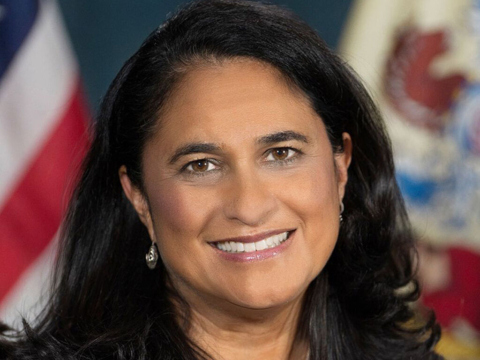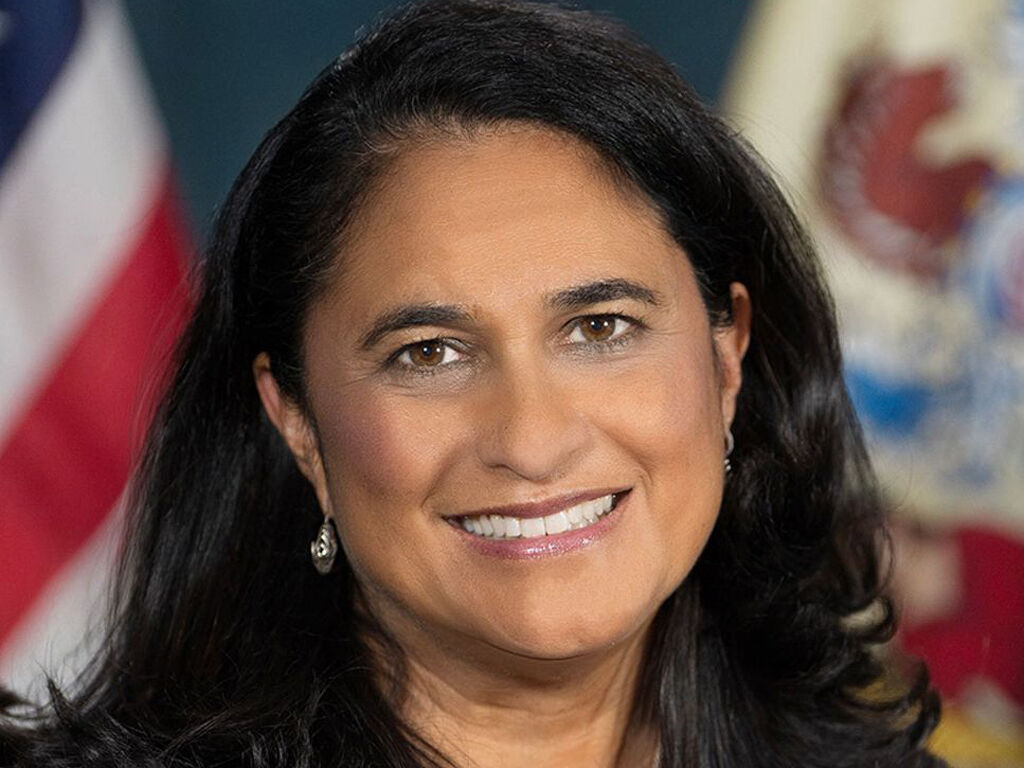
New Jersey’s first chief operating officer will discuss efforts to modernize state government, improve efficiency, and strengthen New Jersey’s business climate during an upcoming Mercer Executive Leadership Council breakfast program.
The Mercer Executive Leadership Council will host a breakfast featuring Kellie Doucette on Thursday, May 21, from 8 to 10 a.m. at Trenton Country Club, 201 Sullivan Way, West Trenton.
Doucette serves as New Jersey’s first chief operating officer, a newly created role designed to oversee day-to-day operations across state government and lead initiatives focused on efficiency, transparency, and accountability within the executive branch.
According to event materials, Doucette works closely with the governor’s cabinet to modernize state processes, coordinate cross-agency collaboration, and improve operational performance while supporting efforts to make life more affordable for New Jersey residents.
The event is expected to focus on steps Gov. Mikie Sherrill’s administration is taking to improve the state’s economic competitiveness, streamline operations, and strengthen cooperation between government agencies and the business community.
Doucette brings a background that spans healthcare policy, actuarial science, political strategy, and congressional operations.
Before taking on her current role, she served as executive director of the Sherrill-Caldwell gubernatorial transition and previously spent more than six years as district director for then-Rep. Mikie Sherrill’s congressional office in New Jersey’s 11th District.
In that role, she oversaw district office operations, constituent outreach, and coordination with local officials across dozens of municipalities, often working on issues involving infrastructure, economic development, flooding, public safety, and workforce concerns.
During a recent appearance on *The 92 Report* podcast, Doucette described her philosophy of public service and government operations as rooted in responsiveness and execution.
“We had this great term that the congresswoman coined that I love, which was to be ‘ruthlessly competent’ in our jobs,” Doucette said in the interview. “We were really determined to do things differently and to make sure we were there just simply doing the work, putting our heads down and serving our constituents.”
She said her team focused heavily on responsiveness and practical problem-solving rather than political conflict.
“We did the best we could to approach community leaders with an open mind, be responsive, respectful and gracious,” Doucette said. “I think what I’m most proud of now from that time, when I look back, is that people really felt seen in a way that they weren’t always used to from government.”
According to event materials, Doucette’s responsibilities as chief operating officer include helping coordinate transformation initiatives across state government and improving communication and collaboration between agencies.
Those themes were also reflected in her podcast discussion, where she emphasized the importance of bringing together stakeholders from different sectors and political backgrounds to solve problems.
“It really just takes leaders to make it a priority, and having those leaders put people in place that they trust to execute their vision in the community,” Doucette said. “Trying to figure out how we can get people talking to each other and back to a focus on good governance is something that I just feel really passionately about.”
Doucette also discussed how her years working in congressional district operations gave her a close-up view of the business and manufacturing landscape in New Jersey.
“We had a really strong manufacturing economy here, and a lot of pharma in our district,” she said. “We would go around and visit these different companies, and they were places that I had driven past for years. You would go into them, and it would be this amazing company that was doing groundbreaking work.”
She said those visits often focused on understanding how government, educational institutions, and private employers could work together to support long-term economic growth and workforce development.
“We would always have these conversations with them to understand, why are you here, what’s keeping you here, and what do we need to do to make sure that stays true in the future?” Doucette said. “We would bring in representatives from local community colleges or educational institutions so the visit wasn’t just about a photo opportunity. It was about how everybody comes together and learns more about the company and thinks about what that means for our economy moving forward.”
Event materials describe Doucette as someone with experience in both government and the private sector.
Before moving into politics, she worked for years as an actuary specializing in disability and long-term care reinsurance markets in both the United States and Bermuda. She earned a degree in economics from Harvard University and completed her Associateship of the Society of Actuaries.
In the podcast interview, Doucette reflected on how her career path evolved from actuarial work into public service and political operations.
“I increasingly felt like I needed a change,” she said. “I realized I couldn’t do everything at once and also figure out what I wanted to pursue. Honestly, it really found me.”
She said her move into politics was motivated in part by frustration with the direction of national political discourse and a desire to contribute constructively.
“When something isn’t sitting right with us, we feel the need to try to figure out how to change it,” Doucette said. “I started volunteering on campaigns for local government office, and that eventually led me into congressional politics.”
During the interview, Doucette also described how bipartisan relationships with local officials became an important part of her work in New Jersey’s 11th Congressional District.
“We pivoted to trying to figure out how we could build the bridges that we needed to do our job effectively,” she said. “It was really important to the congresswoman and to me that everybody understood that we were there for everyone.”
She said many of the most meaningful projects involved cooperation among elected officials, agencies, educational institutions, and businesses.
“It just takes patience,” Doucette said. “If you get all the right people in the room, and you get them in there with the right attitude to really try to think about how you’re collectively going to change something, you can actually make progress.”
The Mercer Executive Leadership Council breakfast is expected to explore how those same ideas about operational efficiency, cross-agency coordination, and stakeholder collaboration are shaping the Sherrill administration’s approach to governing and economic development.
The program will also provide attendees with opportunities to network with regional business leaders and public officials.
Register at princetonmercerchamber.org