Now in its third year of annual events, Princeton University’s Princeton Innovation initiative is continuing its commitment to discovery with a free, online “Engage” conference meant to highlight the spirited successes of new research and projects done through, or with assistance from, the institution.
The event on Thursday, November 3, from 8 a.m. to 6:15 p.m. appeals to a variety of groups, with faculty, students, investors, stakeholders, and representatives from accelerators and agencies all invited to attend for a chance to hear the area’s progressing scientific wisdom.
Networking jump-starts the Engage 2022 conference, which is followed by speakers and panels throughout the day’s schedule.
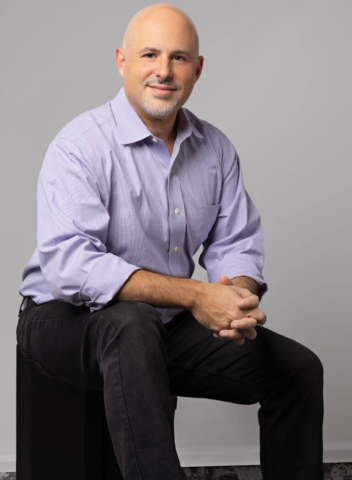
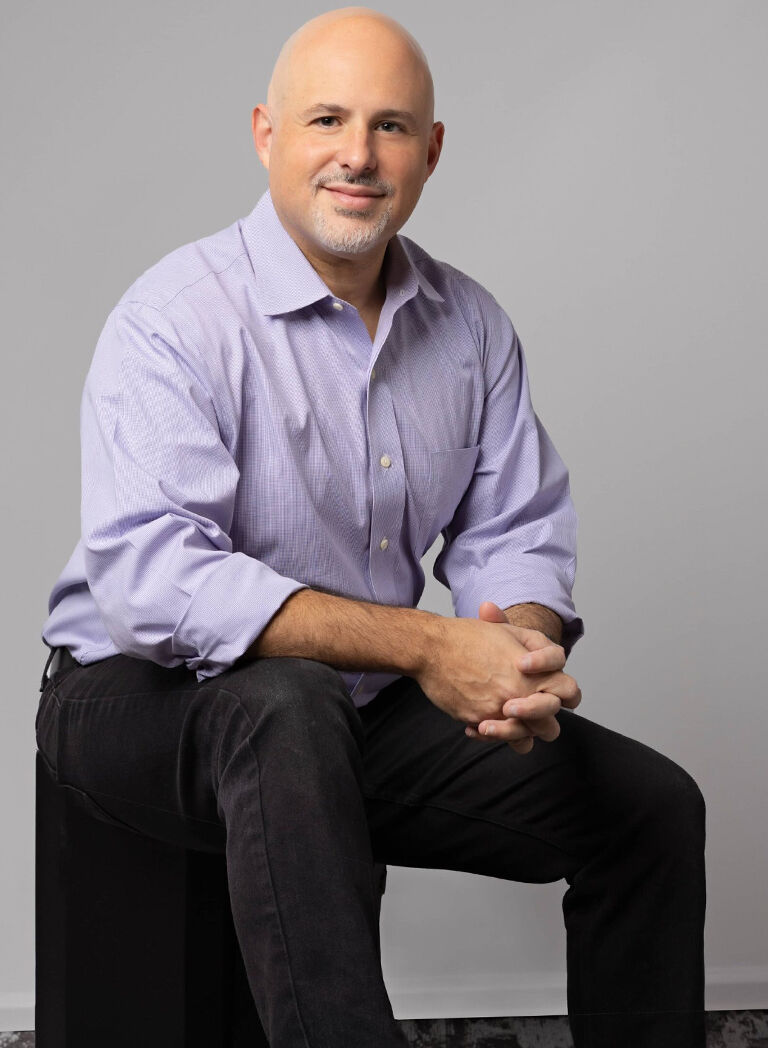
Zemer Gitai is a professor of molecular biology at Princeton University, where he has been teaching since 2005. He will discuss in “Novel Tools for Finding Novel Drugs” about how “the Gitai lab has developed approaches that enable discovery of new drugs with novel mechanisms of action and are using these methods to discover new antibiotics that our society desperately needs,” from 2:10 to 2:25 p.m., according to the online agenda.
The conference’s slogan, “from benchtops and desktops to innovations and impacts,” directly correlates with Gitai’s research; he has taken “new technologies” from the University’s Gitai Labs to his work at ArrePath, a local drug discovery spinout company he founded during the pandemic.
On October 12, the Office of the Dean for Research announced that Gitai was the “2022 Dean for Research Award for Distinguished Innovation…for a new drug-discovery platform that searches out drug candidates with unique or novel mechanisms of action.”
The same article says that as a startup, ArrePath “has announced a seed round of $20 million to advance its proprietary, machine learning-based platform for discovering new classes of anti-infectives.”
After being honored at the Celebrate Princeton Innovation event on October 13, the Engage conference will see Gitai participating in the annual event for the first time as he takes the science of cells to center stage.
“[Gitai] Lab primarily studies bacteria, how they interact with the world and our bodies, and how we can affect those interactions, for example, with antibiotics,” he says, often addressing topics such as the organisms’ self-organization and relationships with hosts in his research.
“[ArrePath] basically attempts to use new technologies to develop new antibiotics with the hopes that we can really exploit the power of antibiotic research to both find new antibiotics, and to advance drug discovery in general,” Gitai adds. “There’s a real societal need for antibiotics.”
“This is a really important problem that we are facing as a society, that bacteria are becoming resistant to the drugs that we already have to combat them. That is something that people always talk about as being on the horizon, but it’s already here,” he continues, bringing up the CDC’s 2019 AR Threats Report, a study that states “more than 2.8 million antibiotic-resistant infections occur in the United States each year, and more than 35,000 people die as a result.”
This has led to the use of the term “silent pandemic” for cases of antimicrobial resistance, because while the scale is reminiscent of COVID, Gitai says, the lack of public knowledge has experts fighting battles that remain largely in the shadows.
“To combat this, what we need are new antibiotics that will work against bacteria that have already evolved resistance to our existing antibiotics,” he explains, which is where ArrePath comes in to addresses the question of “‘how can we develop novelty in drug discovery?’”
“Everybody wants drugs that are effective, but the real key for us is, can we also find drugs that are novel and unique and distinct from what already exists in the market?” Gitai says. “I would argue that what the field historically has done is basically trying to always find the best possible drug, the one that is the most potent, the most effective and then try to go from there,” he prefaces. “Our big twist is that we have ways of prioritizing not what’s the most potent out of the box, but rather, what’s the most unique, what’s the most novel? Then, we tried to optimize and improve it from there.”
Gitai says that in a field driven by innovative ideas, balance is essential.
“There often needs to be a trade-off between innovation, and, let’s say, pragmatism or productivity, at some point — especially if you’re a business. You need to actually get something done. If you’re always trying crazy stuff and shooting for the moon, then sometimes that means you have to be okay with failure,” he explains. “The more innovative it is, the riskier it is, which of course then means that there’s a higher chance that it won’t work.”
At Princeton University, Gitai says that there is a “very high tolerance for failure,” because that is the nature of conducting research. But the trickiest aspect, he adds, comes from the need to translate that “wild west” thought process “into a business context.”
“You do need to de-risk things and put some boundaries on the risk. You have investors and they want a return on investment, and you have employees, and they need security; so, balancing that need for progress, and showing continuous progress, with still the desire to innovate and do something exciting,” Gitai says.
In his case, Gitai says, that’s where startups can be “a great middle ground” for bridging the findings to the science’s actual implementation in products. “That’s really what the startup space is about, is taking these ideas that hypothetically, we know could work, and actually turning them into a reality that will actually help people.”
Prior to his current position, Gitai received his bachelor’s in biology from MIT and a Ph.D. in cell biology from UCSF, then “became a postdoc in the lab of Dr. Lucy Shapiro at Stanford University where he pioneered the study of the MreB actin-like cytoskeleton in Caulobacter crescentus,” according to his Princeton Scholar bio.
Gitai is also the recipient of the National Institutes of Health (NIH) “Director’s Pioneer Award, the NIH New Innovator Award, the NIH Transformative Research Award, the Beckman Young Investigator Award, and the HFSP Young Investigator Award.”
Driven by a love for biology, he says, the desire to help others became more than just a “cherry on top” like his prior scientific discoveries; Gitai says that he wanted to lean into that feeling, one that evolved over the pandemic and resulted in the creation of ArrePath.
Rather than just track the function of bacteria, he aims to take his research, then apply those ideas to the real world with the goal of “innovation in the sake, in the name of, helping people — of making a product that will be useful [and] in this case, hopefully save someone’s life when they need an antibiotic.”
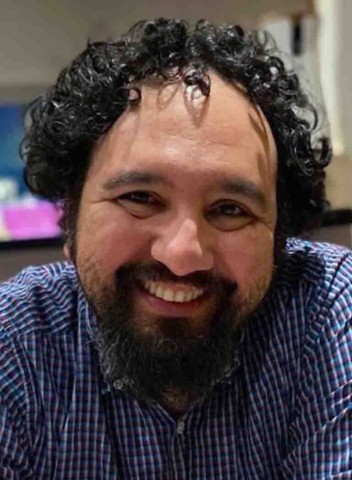
One of the panels, held earlier in the Engage Conference from 10:55 to 11:40 a.m., is “DEI in Innovation and Research,” which includes speakers like Arturo Dominguez of the Princeton Plasma Physics Laboratory. Dominguez, the head of the science education department, has worked with the facility for more than a decade after falling in love with the role’s focus on public engagement.
The Montgomery resident says that PPPL hosts community workshops at the K-12, undergraduate, and faculty level, and while DEI has always been involved in some form, such as in the “Young Women’s Conference,” PPPL has “really recognized the importance of DEI in workforce development and have incorporated it more and more fully” in their mission.
When tailoring their programs to Minority Serving Institution (MSI) faculty members, for example, the lab “introduce[d] them both to plasma physics itself, but to experiments that they can take back to their institutions and engage with their students in plasma,” Dominguez says. “The focus is to get to them earlier, and to let them know about fusion and plasma itself.”
Dominguez is originally from Bogotá, Colombia, where he attended the National University of Colombia before transferring to the University of Texas at Austin. After getting his bachelor’s there, he received his Ph.D. in experimental plasma physics from MIT, with his postdoc at Princeton Plasma leading into his current position.
At the panel, Dominguez will be talking about PPPL’s programs as they pertain to “engaging with historically marginalized communities in our field,” adding that “in truth, we would like to maybe get to some best practices,” if the time for the discussion allows.
He continues that the conference’s theme, engaging, “is only the tip” of the issue, because “cultural competence has to be developed within the staff” so that those working in the field can “establish healthy, welcome communities for students.”
“It’s really an exciting time for fusion. There’s a lot of innovation happening,” Dominguez says, adding over email that “We’re getting close to commercialization; this is the time where we really have to engage with other communities and make sure that we have broad community input, and that we have a truly representative workforce of the U.S. I think it’s really important that DEI is front and center in these times.”
Similarly, Gitai acknowledges and thanks the Princeton community and the Princeton Innovation Center BioLabs for their contributions in elevating Princeton to the “entrepreneurial hub” it has become in the last few years.
“I am very enthusiastic about the growing number of entrepreneurs and startups in the area, and the growing support and infrastructure from the university, the state, pharma — there’s really a lot of interests in the area that [have] really been very helpful in facilitating a lot of this,” Gitai says. “There was a reason that we had the choice to place [ArrePath] physically, anywhere, and I think that many of my colleagues, their startups are in Boston or San Francisco or something like that, and we very consciously chose to keep it here in Princeton.”
Gitai explains that the proximity makes it quite “nice to be close to home,” but even more so, “it’s exciting to be part of this growing entrepreneurial sense, so I am both appreciative of that, and a cheerleader for it. I’d love to see even more.”