The Jersey Devil made me do it — that is, write last year’s lengthy article on the books, films, music, and art inspired by one of the state’s most popular legends.
And while I covered a lot of territory, I missed something significant.
But thanks to U.S. 1 writer Susan Van Dongen I was set straight and learned about an unusual work connected to the legend.
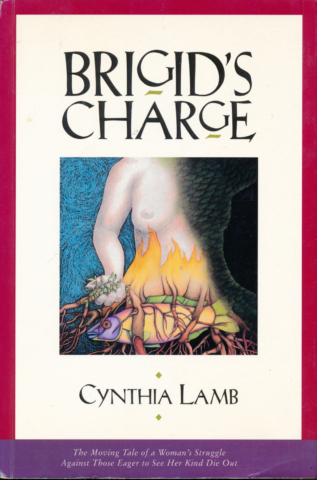
It is Cynthia Lamb’s book “Brigid’s Charge,” a name and title that provided no obvious clue related to New Jersey’s favorite mythic monster. In fact, Brigid figures large in ancient Celtic and Irish Catholic legends.
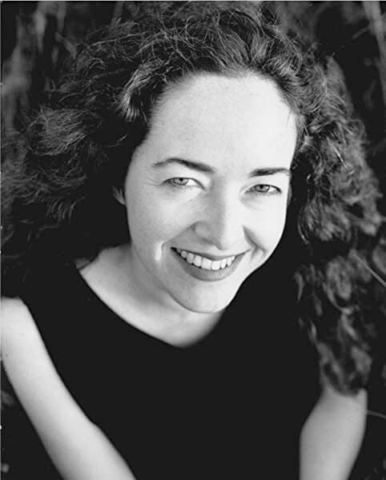
However, Van Dongen, previously of the Philadelphia Inquirer, had interviewed Lamb when the book originally appeared in 1997 and filled me in on an important piece of information: Lamb was a descendant of the woman who literally and figuratively birthed the legend.
As the story famously goes, in 1737 a worn and distraught “Mother” Leeds cursed her 13th pregnancy and bore a child that transformed into a winged monster that is said to still haunt its New Jersey Pinelands birthplace.
As with most legends, there were actual people and names connected to the story.
Following up my colleague’s advice, I found a copy of the book and, having already read several Jersey Devil books involving killings and gore, prepared myself for more of the same.
Instead I found something unexpected.
“Brigid’s Charge” is a novel where a writer shows serious attention to style and historic detail to tell the story of a young woman’s 18th-century passage from England to an unsettled New Jersey colony where she starts a challenging new life with a husband she has never met in an atmosphere haunted by religious ideology and superstition.
It is the latter that encircles the main character and provides the writer to mix her story with fact and fancy, mundanity and mystery.
Here’s an example where Lamb writes about the ship carrying Deborah — aka the eventual “Mother” Leeds — to Burlington, New Jersey, and its stop at its first destination, the “thriving seaport” of Philadelphia: “The ship approached the wet wooden posts of the wharf. Deborah noticed a girl of about 14 standing just outside the flurry of dock workers. She wore a dark blue gown and white apron. She held a basket and was staring at Deborah. The Willow docked with a dull thud and a long deep scraping sound which scattered gulls form the post.
“The girl reached into her basket and took out a foot-long fish that flashed rainbows as it flapped slowly in her hands. She held the almost-dead fish overhead for a few moments, then threw it into the water. After wiping her hands on her apron, she saluted Deborah and ran quickly away.”
Such dream-like flourishes appear throughout the book and help the reader connect to the ancient goddess.
In Lamb’s story, Deborah’s grandmother was a practitioner of the ancient women-charged health and spiritual traditions and secretly shared them with her granddaughter, despite Christian England’s attempt to squelch such practices.
In turn, the granddaughter secretly nurtures her female-centered spirituality and sensuality while living among Quakers and puritanical Protestants.
The above magical moment also helps connect Deborah to the devil legend that lingers over the story and ambiguously appears at the book’s conclusion — a satisfying moment that never veers from a carefully orchestrated mood and shows the legend being born in the minds of those looking for such demons.
As I read the novel, I kept connecting it to my past studies in American literature, especially the spell-like narratives found in classic American stories that used allegory and ambiguity.
Nathaniel Hawthorne, however, is most apt. The writer used the fact that his great-great grandfather was a judge in the Salem Witch Trials to create his famous novel “House of the Seven Gables,” dealing with the curse of a Salem family involved with trying a warlock.
In the afterword of “Brigid’s Charge,” the Atlantic City-born Lamb notes that she was 10 when she first heard about the family connection and “was struck not only by the humor with which family regarded the Leeds Devil, but the pride. My aunt affirms that the creature was universally known by our family name until declared the state’s demon in 1939 and its moniker changed to the Jersey Devil.
“I was always proud, too, of the family connection, as well as curious. Most stories about the legend have focused primarily on the child — which makes sense — but the salient question for me has always been why Mother Leeds was accused (of being a witch).”
That curiosity led her to study literature, the Salem Witch Trials, and goddess-centered religions.
My curiosity about a member of the Leeds family adding such a chapter to the Jersey Devil legend prompted to call her at her California home.
When asked about hearing the stories, Lamb says, “My dad was in the navy so I moved around a lot. When my dad was in Vietnam I lived with my grand mom and mom in Absecon. That’s where I heard all the stories.”
The tales she heard seven miles from the alleged birthplace of the Jersey or Leeds Devil, Leeds Point, eventually grew in the back of her mind, and she began to wonder about the family and while researching discovered another legendary link that found its way into the title.
“When I did the research on the Leeds line, I found they’re descended from the Brigintine — an ancient tribe where Brigid was worshipped. So, it is the ancestral line,” she tells me.
About the creating and stylizing the book with an 18th-century sound, picked up from literature and writing classes at Mills College, Lamb, who runs a ghostwriting business, says the book “went through a hundred drafts. There are two different levels. One was on the historical side. I knew what I was doing was going to be out there for people, and I wanted it to be taken seriously. I trained as a journalist and wanted it to be historical.
“I could use secondary sources, but it was pre-internet and needed to go back to a source document. If I couldn’t find the source I checked facts three times. Wherever I could I took it back to the source document. I wanted the research to be impeccable. I wanted it to be taken seriously. If the research was impeccable, there would be credence to the fiction. My intention was to write about what happened. But there is no truth that anything happened. So that was on the nonfiction end. If there was a fact I used it. There were facts I changed, but if I could find a fact I used it. What that created was jigsaw puzzle with a lot of pieces — that’s where I created the fiction.
“On a craft level, I learned how to write a novel through this book. I went over it over and over. I read it aloud. That’s where you can hear when it’s wrong.”
Another element in the book were her own literary influences. “I was reading Toni Morrison’s ‘Beloved’ at the time,” she says. That book had a big impact on me and the book. I don’t know where and how. But I know that it had a big impact on me when I was writing this book. I also read a lot of 18th-century literature and that’s how I internalized the voice.”
Additionally, she says, “The magical realism of [Gabriel Garcia] Marquez was an influence” and “I loved Hawthorne and devoured him at Mills. I have no doubt that he was an influence” —just as he was an influence on Morrison’s “Beloved.”
Lamb says her approach to writing the book was to not use an outline and “be in the position of the reader. I liked to be surprised.”
That includes allowing moments to present themselves, such as the girl with the fish. “I think it was just one of those things that came to me, and it felt right. A lot of times I didn’t know what some things meant and then later find out.”
In this fish’s case, she says it suggested sacrifice, “a kind of woundedness. The symbology is special to numerous religious.”
Other moments offer historically accurate depictions of daily life, such as when Deborah and her indentured Irish servant — a sister in spirit and a physical lover — clean a chimney by dropping a goose through it, or when the family clears the brush and trees as their wagons move from the town of Burlington and pass through the Pinelands and across the state to the place now known as Leeds Point.
Lamb says her writing process usually started with a question regarding history — such as how people ate meals — and researched until “something would click. So, I would write a fictional scene. And then I would write beyond that. Then I would research until something clicked and then I would write the fiction. It was a circular process going back and forth. It was interesting to me, and I enjoyed it. I did not know the ending of the book when I started.
“It took me about five years to have a full draft. I would write the first part over and over again. It took another five years to revise and polish it. And then it finally came out. All told, it was 10 years.”
She says she chose the title because it “was best for the novel — and not making a marketing decision. It created a small and more enthusiastic pool of readers. If I had devil in the title, I wouldn’t be able to do that.”
About her writing career, Lamb says, “I made peace with the fact that I am one of those writers who only did four novels and has a day job to write my novel habit. I am more interested in creating something that lives on its own. That still speaks to people — that people like it. That’s the most important thing. That it moves people still. It doesn’t get any better than that.”
Obviously, the devil made her write the book and is there for all to see in the details.
Brigid’s Charge is published by Bay Island Books and available on Amazon, eBay, and other sites.