Much change is afoot at Rutgers University’s Zimmerli Museum in New Brunswick, where the new year is starting with a new chief curator as well as five new exhibits opening in the coming weeks.
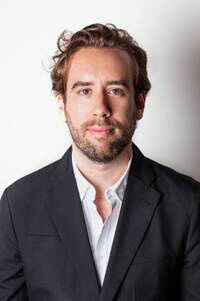
Jeremiah William McCarthy was named chief curator, effective January 6. In this role, McCarthy oversees the museum’s curatorial department and assumes responsibility for its scholarly and artistic program while managing the development of the museum’s permanent collection and exhibitions.
“It’s a great honor to take on this leadership role at the Zimmerli,” said McCarthy. “The Zimmerli’s mission to use art as a tool to educate, inspire, and challenge resonates deeply with me. I am thrilled to lead and empower the curatorial team to advance an experimental program that is diverse, accessible, and academically rigorous.”
Prior to the Zimmerli, McCarthy served as chief curator at the Westmoreland Museum of American Art in Greensburg, Pennyslvania. There, he organized several exhibitions, including “Frank Lloyd Wright’s Southwestern Pennsylvania,” in collaboration with Fallingwater’s senior director of preservation and Collections Scott Perkins, which was the most attended exhibition in the museum’s history and traveled to the National Building Museum, Washington, D.C., where it is currently on view.
His most recent exhibition “Anila Quayyum Agha: Interwoven,” on view through January 5, 2025, will travel to three museums following The Westmoreland’s presentation. The exhibition’s accompanying catalogue, to be published in March by Dancing Foxes Press, is the first monograph to date of this important Pakistani-American visual artist.
Under his leadership, The Westmoreland transformed its permanent collection galleries into dynamic, rotating displays and diversified its holdings of American artists through strategic acquisitions by Berenice Abbott, Anila Quayyum Agha, Charles Atlas, Isabel Bishop, Elizabeth Catlett, Nick Cave, Dorothy Dehner, Milt Hinton, Toshiko Takaezu, and Walasse Ting, among others.
Prior to his work at The Westmoreland, McCarthy was consulting curator for The Pocantico Center of the Rockefeller Brothers Fund. There, he co-organized “Inspired Encounters: Women Artists and the Legacies of Modern Art” (2022–23), the inaugural exhibition of the campus’s new David Rockefeller Creative Arts Center in Tarrytown, New York. Prior to his work for the Rockefeller Brothers Fund, he served as Curator at the National Academy of Design and Associate Curator at the American Federation of Arts.
“Jeremiah brings to the role of Chief Curator an extraordinary range of talents. His brilliance as an exhibition maker is matched by his broad scholarly knowledge across historical and contemporary art,” said Maura Reilly, director of the Zimmerli Art Museum. “His expertise in American art and passion for audience development will be invaluable to us. I am thrilled to partner with him on the artistic vision for the Zimmerli’s future.”
McCarthy has also worked in the curatorial and education departments of The Metropolitan Museum of Art and the Solomon R. Guggenheim Museum, and he was an inaugural teaching fellow at The Frick Collection, New York. He was born in New York City and received his bachelor’s degree from The Macaulay Honors College at CUNY and his master’s in art history from Hunter College.
The first new exhibits that will open under McCarthy’s tenure begin on Wednesday, January 22. Another major exhibit, “Indigenous Identities: Here, Now & Always,” opens Saturday, February 1.
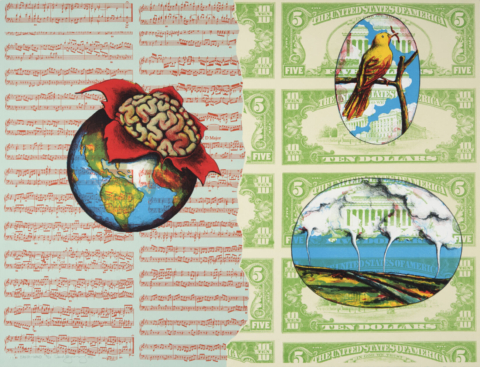
“Shifting Perspectives on Environmental Crisis,” on view from January 22 through July 31, is part of a new interdisciplinary minor, “Creative Expression and the Environment.” According to museum materials, “Using a variety of media (painting, drawing, photography, sculpture, and collage), the works on view provoke questions about one’s relationship with the environment, both human and non-human, natural and built. The idea of environment is elastic in these objects, encompassing an acute awareness of natural phenomena and social histories.”
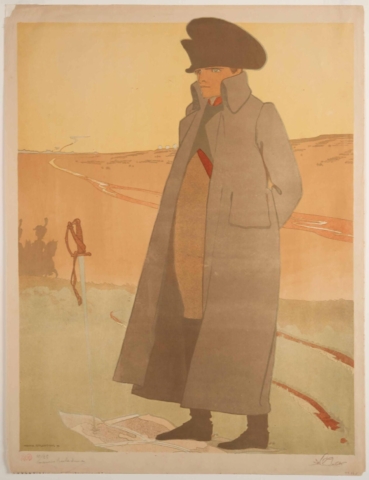
Also on view through July 31 is “Napoleon: A Visual Legacy of Power.” The leader in the post-French Revolution era at the turn of the 19th century known for his military conquests was a frequent subject for painters and printmakers during his lifetime. This exhibit explores continuing depictions of him after his death in 1821.
Per museum materials: “In the decades following Napoleon’s removal from power in 1815, Napoleon’s image endured in French art and popular culture, featuring works that both celebrated and satirized his towering and ongoing presence in the French imagination. This exhibition explores images of Napoleon made after his death, revealing the ways art is intertwined with history and can be used to reinforce or challenge accepted narratives.”
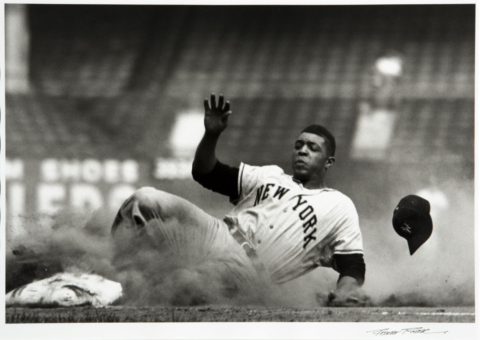
“An Eye for Photographs: Gifts from Anne and Arthur Goldstein, also on view through July 31, features works from a set of nearly 100 photographs donated to the museum by the late collectors.
The Zimmerli exhibit, according to museum materials, “features thirty black and white photographs from the late twentieth-century including a rare, early self-portrait by Robert Rauschenberg, and one of Hannah Wilke’s performalist self-portraits with Donald Goddard from her series ‘So Help Me Hannah.’ These works emphasize the role of photography within the larger context of avant-garde art, and are accompanied by portraits, landscapes, views of the city, scenes of everyday life, and photographs by artists who use the camera to invent new realities beyond the everyday.”
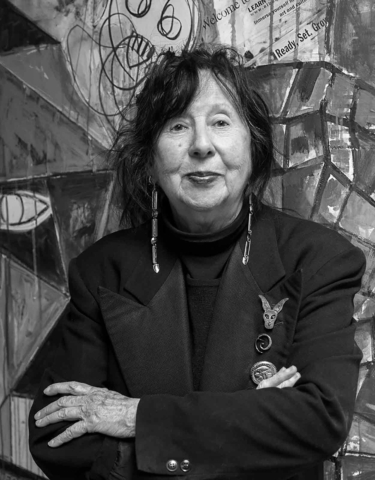
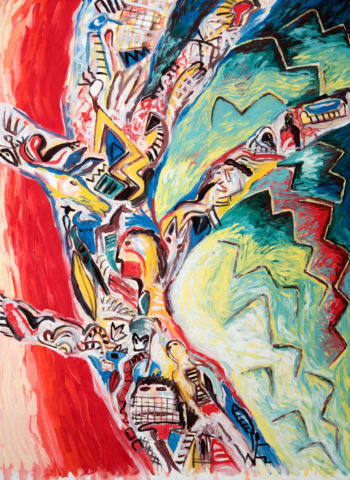
“Hope with Humor: Works by Jaune Quick-To-See Smith from the Collection,” on view through December 21 in conjunction with “Indigenous Identities: Here, Now & Always,” features prints and paintings by Jaune Quick-to-See Smith, the curator of “Indigenous Identities,” from the Zimmerli’s permanent collection. The exhibit she is curating is a survey of contemporary Native American art in multiple mediums, and her own works on view alongside it “honor Indigenous survival and resilience with both wit and optimism,” per museum materials.
“Indigenous Identities” comprises more than 100 works, from beadwork and jewelry to video and painting. The exhibit shows the significance of identity in artmaking through the diverse practices of 97 artists, representing more than 50 distinct Indigenous nations and tribes across the United States.
An opening program for “Indigenous Identities” takes place Saturday, February 1, from 5 to 8 p.m., featuring a conversation between artists Neal-Ambrose Smith and John Hitchcock followed by a reception.
Zimmerli Art Museum, 71 Hamilton Street, New Brunswick. Open Wednesdays and Fridays, 11 a.m. to 6 p.m.; Thursdays, 11 a.m. to 8 p.m.; and Saturdays and Sundays, noon to 5 p.m. Free. zimmerli.rutgers.edu.