Princeton U. Team to Lead AI-Driven Semiconductor Development
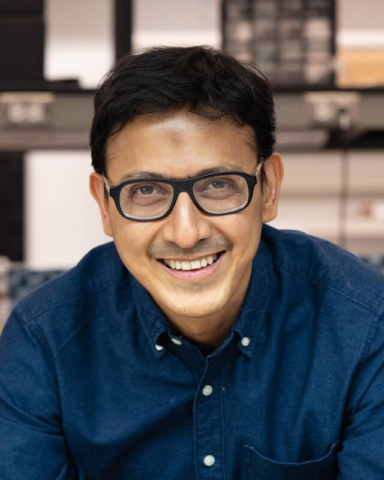
With a grant from the National Semiconductor Technology Center, Princeton University electrical and computer engineering professor Kaushik Sengupta will lead a joint government-industry effort using AI to develop advanced semiconductors for wireless communication and remote sensing.
The chips have essential applications for wireless networks, satellite communication, self-driving cars, and smart health care technologies. A team under Sengupta’s leadership will focus on automating the design of chips that allow electronic devices to communicate with each other and with the physical world.
The grant of nearly $10 million was announced on May 28 by the National Semiconductor Technology Center, a public-private consortium managed by the National Center for the Advancement of Semiconductor Technology, or Natcast.
“Fundamental research leading to technology breakthroughs has fueled U.S. innovation for decades,” said Andrea Goldsmith, dean of Princeton’s School of Engineering and Applied Science, in a press release. “The visionary research proposed by our Princeton team will transform technology in wireless communications and sensing. This project is an outstanding investment by Natcast to ensure U.S. leadership in these important fields.” Goldsmith has served on a number of corporate boards and co-founded two wireless communication companies.
“Embracing AI for radio frequency design is paramount for maintaining the United States’ leadership in technological innovation,” Natcast CEO Deirdre Hanford said in a news release. “Leveraging AI not only accelerates our research capabilities but also ensures the U.S. remains at the cutting edge of communication infrastructure.”
Wireless chips are essential for devices to personal laptops to satellites, but creating chips that can keep pace with demand for ever-faster communications is expensive and skilled labor intensive. “If you could get to a point where the manual labor-intensive aspects of design can be automated out and you can start discovering new architectures or new functionality, there lies a window of opportunity,” Sengupta says.
Current approaches are limited by the bounds of human imagination, he explains, but using artificial intelligence can instead allow researchers to work backwards from the desired outcome to optimize circuit designs.
In addition to Mengdi Wang, associate professor of electrical and computer engineering at Princeton, who will contribute to the team’s artificial intelligence and machine learning research, the team will include experts from the University of Southern California, Drexel University, Northeastern University, and industry partners at RTX, Keysight and Cadence. Senior leadership from Qualcomm, Skyworks, Texas Instruments, Nokia Bell Labs, Ericsson and Maury Microwave will form the advisory board.
The Princeton-led team was one of three teams selected by Natcast for this round of funding; the other two will be led by Keysight Technologies and The University of Texas at Austin.
Rider Joins 10-Year Mission to Map the Night Sky
In June, the first results from the most ambitious mapping of the night sky in human history finally arrived.
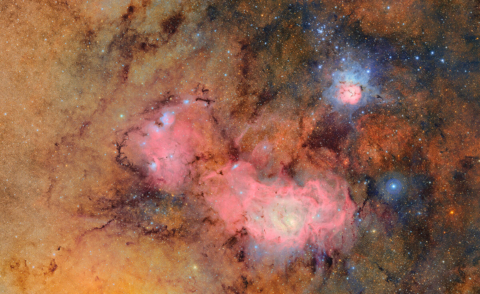
The Vera C. Rubin Observatory released detailed images of galaxies, nebulas and thousands of previously undiscovered asteroids.
Gathered over only 10 hours of observations, the photographs were a tiny preview of the observatory’s just launched 10-year mission to produce the most complete map of the universe ever.
Rider University is part of a global coalition supporting the project, formally known as the Legacy Survey of Space and Time (LSST).
As part of the LSST Discovery Alliance, Rider joins about 30 other institutions committed to helping the project reach its potential. Participation in the alliance also opens up research opportunities for students.
Dr. John Bochanski, an associate professor and the chair of Rider’s Department of Computer Science and Physics, has been connected to the long-gestating project since he was a graduate student at the University of Washington more than 15 years ago.
“Now that Rubin is functional and working well, it’s a very exciting time,” he said. “There is certainly Nobel Prize-winning potential for this project, which was designed to go after the biggest questions in physics.”
From a mountaintop in Chile, Rubin will scan the sky every night for 10 years. With the world’s largest digital camera (similar in size to a Mini Cooper and boasting a resolution of 3.2 billion pixels), the observatory will ultimately create an ultra high-definition time-lapse record of the universe.
The images it captures will create a vast treasure trove of data for scientists to mine. Countless discoveries await, including answers to some of the universe’s biggest mysteries.
Scientists hope Rubin will elucidate the nature of dark energy, a force pushing the universe apart, and dark matter, a theorized form of matter that would explain how galaxies hold together, as well as assist in the search for a potential ninth planet in our solar system.
“There are signs that there might be another planet out there, and if it is, Rubin should be able to see it,” Bochanski said. “That would change how we place ourselves in a galactic context.”
Bochanski is no stranger to searching the vastness of space for new discoveries. In 2015, he led a team that found the most distant stars ever observed in the Milky Way.
He says he is excited about the way LSST has been designed to democratize the data it generates, empowering scientists of all stripes to push knowledge forward.
“I’ll be recruiting undergrads to help with research, and for Rider students interested in data analysis, this will be a great tool,” Bochanski said.
“They will have access to the same data served up to top-tier researchers,” he said. “One of the great things about Rubin is that they’ve put a lot of effort into making sure that many different universities can get involved. Giving a lot of people access to data makes this project special.”
Bochanski’s connection to Rubin also has a personal side. He once met the observatory’s namesake, Vera Rubin, an astronomer who reshaped science’s understanding of the universe with her pioneering discoveries in the 1970s.
After taking inspiration from her, he says he is hopeful the $800 million observatory, which was jointly funded by the U.S. National Science Foundation and the U.S. Department of Energy’s Office of Science, will inspire a new generation of scientists and citizens alike.
“I hope we continue to dream big about answering fundamental questions about our place in the universe,” he said.