You are most likely reading this paper without putting any effort into it, skimming articles at will and reading those that interest you. But if you’re dyslexic, just getting through a simple newspaper article can be a challenge.
Dyslexia is a learning disability marked by difficulties with reading. The term covers a wide variety of specific problems. A dyslexic person might have normal intelligence, but great difficulty reading anything. There is no single cause of the disorder, which can arise from visual, processing or attentional problems.
Although dyslexia is usually brought up in the context of schools, the disorder is not cured by getting a high school diploma. Adults who have dyslexia tend to be able to read, but take longer than non-dyslexics, and they can also have trouble writing. People continue to struggle with dyslexia as they build their careers — just ask Steven Spielberg, Whoopi Goldberg, and Charles Schwab, all of whom are dyslexic. They were all diagnosed as adults, long after they were successful in their fields.
Estimates for the number of people who are dyslexic vary wildly, from 1 to 30 percent of the population. Even at the low end, that constitutes millions of Americans, most of whom have to find a way to deal with their disability in the workplace.
Spielberg, Goldberg, and Schwab were able to show their talents despite being dyslexic, and dyslexia advocacy organizations hope that more companies can make room for dyslexic people in their workforces. Learning Ally, a nonprofit dedicated to supporting dyslexic people, and Friendship Circle of Greater Mercer County, a Jewish organization for special needs people, are hosting a series of dyslexia simulations in hopes of building empathy between non-dyslexic people and dyslexics.
The first of the series will be held Monday, January 27, at 7 p.m. at Learning Ally’s headquarters at 20 Roszel Road. The free, hands-on workshop will let adults experience the challenges and frustrations faced by dyslexics, by simulating reading and writing exercises in a third-grade classroom, but manipulating the text so that it is just as difficult to read as normal text is for dyslexics. There will also be professionals on hand to discuss how dyslexia has affected their careers. For more information, go online to learningally.org or call 609-520-7984. A second workshop will be held Tuesday, February 6.
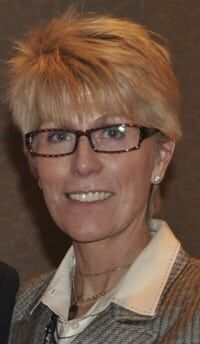
One of the professionals at the event will be Christine Ranaghan, vice president of outreach and program development for Learning Ally. Ranaghan grew up with severe trouble reading, only learning of her disability at age 35 when she took her daughter to get tested for dyslexia. Her difficulties with reading did not stop her from getting a bachelor’s degree in teaching and working as fourth-grade teacher for several years.
However, Ranaghan says, her reading difficulties held back her dreams to a great extent. In the late 1970s, when she was in college, her trouble with a statistics course prevented her from pursuing a higher degree in psychology, which had always been her goal.
“If, when I was young, I had the resources that are here today, my life would have been different,” she says. “I am severely dyslexic and that still plagues me in aspects of my life.”
Ranaghan grew up in Bayonne, where her father was a lawyer and her mother a homemaker. She was a bright kid, but struggled with putting words together, sounding them out phonetically. Her writing was, and still is, filled with malapropisms, although the underlying ideas are sound. “I thought I was stupid,” she recalls. “I was always slower in class.”
Despite these challenges, she graduated from Chestnut Hill College in Philadelphia with a bachelor’s in education and a psych minor, with hopes of going on to a career in psychology. However, daunted by grad school admission requirements, she went into teaching instead.
As an elementary school teacher, and still unaware of her dyslexia, Ranaghan found her struggles with reading turned out to be a kind of strength. She was able to empathize with the children who had trouble with reading, and believes she was able to connect with a number of children because of it. She also found creative ways to explain concepts to them without relying on textbooks, at one point making an archipelago out of play-doh to demonstrate a geography concept.
On the flip side, she struggled to prepare her lessons, often spending hours on tasks other teachers were able to complete in a short amount of time.
Ranaghan went on to other jobs, including work as a secretary, an administrative assistant, and a hospice worker. It wasn’t until 1999 that she got back into the professional world, applying to work as a director of educational outreach for what was then known as Recordings for the Blind and Dyslexic.
Mark Brugger, head of parent support services, says the organization has found a way to use Ranaghan’s talents while working around her reading troubles. “I always know if Ranaghan has been using a computer because the text will be blown up. She literally reads one word at a time, blowing up each word,” he says.
Ranaghan says she is not good at working with databases or spreadsheets, taking hours to do something a better reader could accomplish in minutes. In a less understanding environment, these weaknesses could obscure her strengths in the eyes of a manager. However, Ranaghan says, Learning Ally has “accepted the things I cannot do.”
Brugger is effusive in his praise of Ranaghan’s talents. She has great intuition, he says, and can connect very well with the group’s clients. “She’s highly empathetic with parents and everyone else, because she’s been there,” he says. “Some people are very good politicians — they have that people sense — and Chris has a fabulous people sense. That’s an important skill, particularly for an agency like ours.”
Ranaghan says her employer’s attitude makes all the difference.
That’s why Learning Ally has recently made a change to its dyslexia simulation workshops. It has given those workshops in the past, but they have been aimed at parents. Now, the agency is opening them up to corporations, and encouraging staff to come in and see what it’s like to have a reading disorder, in hopes that employers will create workplaces that are better able to take advantage of the talents of dyslexic employees.
“When you are able to work in an environment, be it this environment, or any job where your difference is accepted, that brings out the best in a person,” Ranaghan says.