It’s a common winter occurrence: when snow or ice is in the forecast, the roads take on a white hue long before any precipitation has fallen as public works crews spread a layer of salt to help melt any accumulated snow or ice and keep motorists safe. But what happens to that salt once it has done its job and is washed off the roads by the melting snow?
“Attention — Drains to River: The As-SALT on Our Freshwaters” is the next talk in the Delaware River Greenway Partnership’s Heritage Lecture Series, taking place via Zoom on Wednesday, February 12, at 7:30 p.m.
The nonprofit Delaware River Greenway Partnership (DRGP) sponsors lectures about different aspects of the Delaware River’s cultural, recreational, and natural resources and heritage. For more information or to view the free lecture, visit delawarerivergreenwaypartnership.org. Past lectures can be viewed on the organization’s YouTube page, delawarerivergp.
Millions of tons of salt are applied to roads across the country every winter to melt snow and ice for safe travel. Effective as that m ay be, New Jersey Department of Environmental Protection data show that salt levels in many of the state’s freshwater bodies exceed acceptable limits — harming aquatic ecosystems, endangering wildlife, and polluting drinking water sources. Salt also corrodes roads, bridges, and vehicles, leading to costly infrastructure repairs.
NJ Salt Watch was launched in December 2020 by The Watershed Institute in Pennington to monitor the effects of winter road salting on freshwater streams and lakes. Since then, about 550 volunteers have collected more than 3,000 chloride measurements across New Jersey, helping to fill in gaps in our understanding of the extent of this issue.
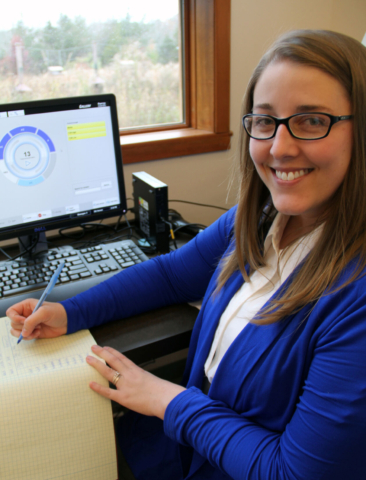
In this lecture, Erin Stretz, assistant director of science at The Watershed Institute, discusses road salt use in New Jersey and how it impacts freshwater resources. She shares NJ Salt Watch data and explore chloride trends in relation to changes in weather and land use.
She also discusses solutions for municipalities, property managers, and homeowners to reduce their salt footprint.
Stretz leads the New Jersey Watershed Watch Network, a cooperative program of The Watershed Institute and the NJ Department of Environmental Protection that bridges the gap between regulatory agencies and dozens of community water monitoring programs throughout NJ. She has specialized in New Jersey water quality for 15 years, beginning in 2007 as an Americorps NJ Watershed Ambassador for the Crosswicks Creek watershed.
She joined The Watershed Institute in 2011 to coordinate the StreamWatch volunteer water monitoring program and continued as the assistant director of science in 2016, training thousands of volunteers along the way. She holds a professional science master in environmental science with a focus on water resources from Oregon State University and a bachelor of science in Geographic Science from James Madison University.
Stretz is also on the board of trustees for Bingo’s Foundation, the no-kill cat shelter in Bucks County where she volunteers with her husband, Adam.