February’s observance of Black History Month signifies a time for national appreciation of the community’s contributions and historical impact. The Princeton Mercer Regional Chamber of Commerce invites its members to an event honoring African American figures of innovation with a speaker whose latest project seeks to recognize them.
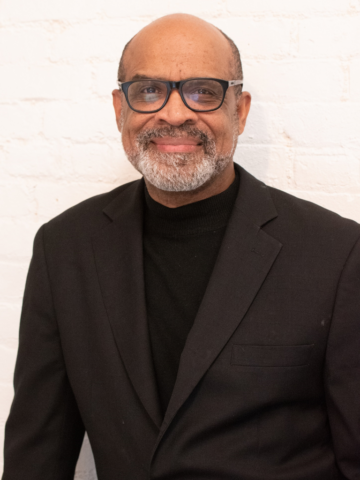
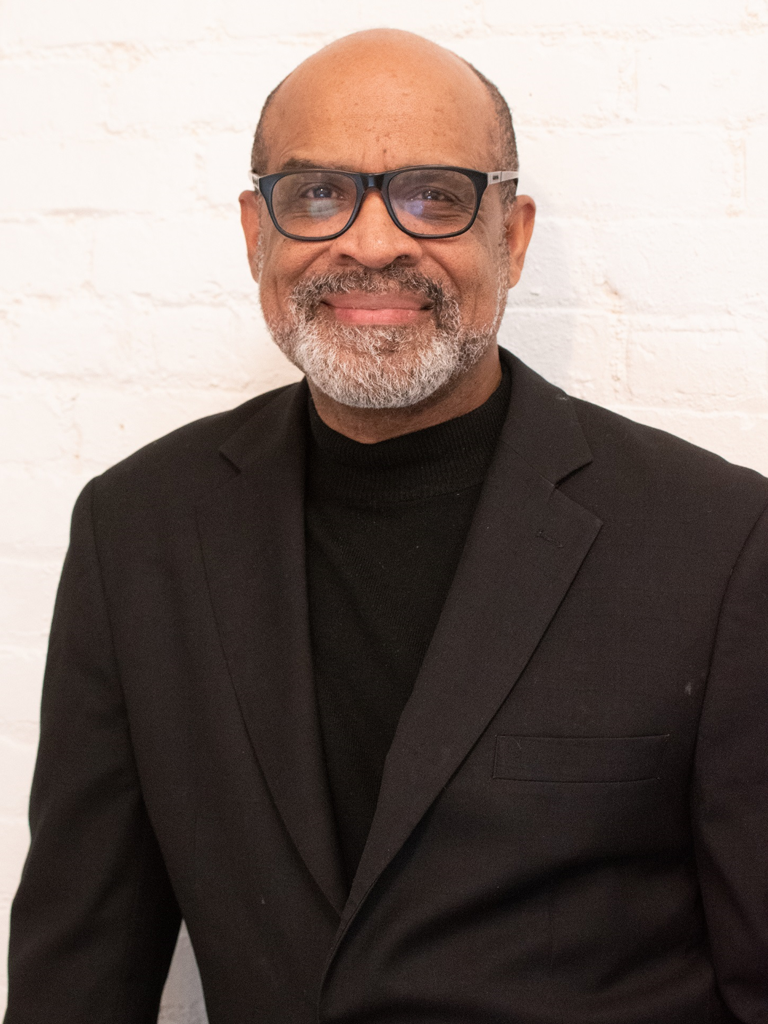
James Howard presents “Seizing the Moment: One Man’s Mission to Design & Build the Country’s First Museum Dedicated Exclusively to Immortalizing the Pioneering Genius of African American Inventors & Innovators for the Past 400 Years” at PMRC’s monthly membership luncheon, which takes place on Thursday, February 2, from 11:30 a.m. to 1:30 p.m. at the Princeton Marriott at Forrestal. Cost: $85; $60 members. Register at princetonmercerchamber.org.
Howard is the executive director of the Black Inventors Hall of Fame Museum, a nonprofit virtual museum “devoted to immortalizing African Americans whose noteworthy inventions have improved lives yet gone unnoticed,” according to his biography at the University of Texas at Austin. An inventor himself who has “some 300 products with 18 patents,” Howard is also a lecturer, design historian, industrial designer, entrepreneur, and educator.
During the day’s event, the PMRC website states, Howard plans to “provide an overview of 400 years of African American invention” and “explain why seizing the moment now is critical for black and brown youth in this country.”
As of now, BIHOF’s museum has no physical location, but by sharing the stories of inventors such as Granville T. Woods and Gladys West, the organization hopes to construct a 31,000-square-foot facility, the Black Inventors Hall of Fame Museum and STEAM Learning Center, in Newark.
Howard adds that American industry, which “critically pursues STEM in its attempt to hold its number one status in the world of innovation,” must keep inclusivity in mind. According to its website, bihof.org, BIHOF is currently asking for donations to help realize this future location, complete with a “theater, Metaverse library, startup incubator, and a Legends Hall featuring the top Black inventors of the Golden era in this country.”
The PMRC event begins with a networking reception and continues with a buffet lunch before ending in the late afternoon. Erin Klebaur, the president of the Lambertville-based marketing agency Imbue Creative, is this month’s “Champion for Business,” a designation awarded at each monthly luncheon.
In his biography on the BIHOF website, Howard explains that as someone in his position, he is “honored to have the privilege of bringing a broad and detailed awareness of the important work of African American inventors, artists and innovators who have inspired and forged ahead against tremendous odds and adversity.”
For about four years, Howard has been lending his expertise on the topic of design thinking at Princeton University’s Keller Center for Innovation while running a production company with similar ambitions — and a name — to the museum. Headquartered in Wharton, Morris County, Black Inventors Hall of Fame Films currently creates documentary content.
BIHOF Films’ “The Gathering” was even an official selection in the 2022 International Black & Diversity Film Festival. The three-part series, according to FilmFreeway, is described as the story of “how legendary Black toy and game inventors come together for the first time in Washington D.C. for a historic occasion — to share their secrets to succeeding in an industry that all but overlooks them.”
Howard elaborates on the BIHOF website that “African American inventors [have] a sad history of being lost or simply overlooked. Far too often, historical accounts forget to mention the incredible achievements of Black inventors.”
“This nonprofit was founded to recognize and tell the story of African American greats such as George W. Carver who in 1941 was referred to as ‘The Black Leonardo’ by Time Magazine for his prolific contributions in the field of agriculture. Yet, nearly 80 years later, Carver was all but ignored by Time in its list of top 100 American inventors of all time. It is time that exceptional inventors are immortalized by being inducted into the Black Inventors Hall of Fame,” he adds.
Howard received his bachelor’s and master’s of fine arts in industrial design from the University of Illinois at Chicago, where, according to a spotlight from his later employer, the County College of Morris, his “first brush with success was with a custom-designed biofeedback system he created to help children with cerebral palsy develop head control” as his thesis project that both “won an international design award and landed him his first job.”
He then established Howard Design Agency, attracting Fortune 100 corporations like Coca-Cola as clients, and, after 15 years in business, shifted his attention to education. Once he arrived at CCM, Howard spent about two decades as an assistant professor in charge of the design program.
Again ready for something new, Howard followed up his time as an instructor with the founding of Entrepreneurial U, a private career school that bills itself as “Morris County’s first school of design thinking” and offers workshop courses on the subject.
In addition to these responsibilities, Howard is a restaurateur who founded Morristown’s “Cosy Cupboard Tearoom,” which, according to search results, is temporarily closed.
The eventual plan for BIHOF, the website explains, is that each year the organization would announce new inductees, thus using the website as a platform to “include and highlight notable advancements and projects from academia, manufacturing and agriculture to advancements in medicine and the sciences.”
“Our goal is to identify entrepreneurial leaders who have invented and produced groundbreaking technological advancements that improve the quality of life around the world,” the page continues.
The Future Black Innovators Initiative and the Young Innovator’s Mentors Alliance will be two of the BIHOF’s other future initiatives. These programs “will serve as the building blocks that are necessary to cement our commitment to keeping the story of Black innovators, past and present, relevant,” according to the organization.
But the greatest hope, Howard is quoted as saying to PMRC, is that “the BIHOF Museum will serve as an inspiration to black and brown youth throughout the country,” adding that “today’s [underserved] youth are poised to take up the baton and help the country win the innovation race.”