The state of toxic site remediation and redevelopment in New Jersey today can mainly be traced to one incident in Gloucester County in 2006. An old industrial parcel fell off the state’s list of toxic sites when the company hired to clean it went bankrupt. Eventually, the township, thinking all was cool, sold the property to an opportunistic developer who built a business there.
And all would have lived happily ever after had it not turned out that the site was a former thermometer factory that had dangerously high amounts of mercury in the ground and that the business built on this poisonous ground was a daycare center called Kiddie College.
The fallout was bad enough for even then-DEP Commissioner Lisa Jackson to call the state’s labyrinthian and arcane way of doing environmental business “broken.” In 2009, having modeled a plan on one enacted in Massachusetts in 1993, New Jersey introduced what would become the Licensed Site Remediation Professional program. A year ago LSRP, which is designed to streamline the process of getting sites toxic cleaned up, finally became a real thing in New Jersey. But is it doing any good?
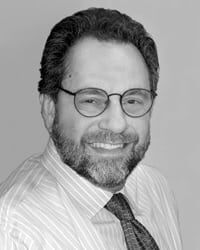
Jorge Berkowitz, a senior associate at Langan Engineering in Trenton and LSRP program board member, says yes. Even if he admits, “I’m biased.” Berkowitz has organized a policy briefing for PlanSmart NJ called “The LSRP Program, A Year Later” that will take place Thursday, September 12, at 8 a.m. at the College of New Jersey. Cost: $65.
Speakers include Andrew Robins of Sills, Cummis, & Gross P.C.; Steven Senior of Riker, Danzig, Scherer, Hyland & Perretti LLP; Dennis Toft of Wolff & Samson; David Farer of Greenbaum Rowe Smith & Davis LLP; Norm Spindel of Lowenstein and Sandler LLP; Larry Jacobs of Wilentz, Goldman & Spitzer; Rich Conway of Schenck Price Smith & King, LLP; George Vallone of Hoboken Brownstone; Curtis L. Michael of Hartz Mountain Industries Inc.; and Ira Whitman of the Whitman Companies. Visit www.plansmartnj.org or call 609-393-9434.
For Berkowitz — whose first name is pronounced as “George” and not the Spanish version — the LSRP program has cut down on what he called the DEP’s Byzantine review process. Prior to the program, all sites to be redeveloped in New Jersey had to go entirely through the DEP. The backlog (about 16,000 to 20,000 sites) created a bramble of paperwork that took the state years to get through. “From the moment a site was identified until the moment remediation could begin, three years was not unheard of,” Berkowitz says. On top of that, he routinely saw “24-page letters listing deficiencies” from contractors and bureaucrats who nitpicked everything and anything. And these “deficiencies” were often anything but, he says. More like petty issues that could have been handled easily if the bureaucracy had been removed.
The change. Whereas once the state had to usher site remediations from end to end, the LSRP program allows certified professionals to oversee the whole remediation and report to the DEP. And by oversee, Berkowitz says, the state means “be held accountable.” Remediation professionals need eight years experience, five years (and 5,000 hours) of which need to be in New Jersey, before they are qualified to take the licensing exam. Berkowitz is on of about 520 such professionals in the state, each of which is keenly aware that violations can cost their licenses and kill their business. “It’s a pretty high bar,” Berkowitz says.
The LSRP program lets professionals use their experience and judgment, rather than some formula devised in Trenton. “The DEP’s process used to be very prescriptive,” Berkowitz says. It essentially was a list of how to do this or that, based on a model toxic site. “But what site do you use?” he asks. “Every site is different.”
Criticism? The penalties for violating environmental laws as an LSRP can be devastating. A contractor who botches a job or is caught having tried to skate something past everyone’s nose could face criminal and civil penalties, fines, loss of license, and complete loss of reputation. “The hammer,” says Berkowitz, “is pretty severe.”
This has led to an odd type of criticism of the LSRP program. “If anything, it’s that the contractors are being too conservative,” Berkowitz says. They are so worried about screwing up that they’re paying attention to everything.
Yes, there have been a few minor violations as the bugs get worked out, but nothing major. Remember, this program is not for fly-by-nights, it is for established, generally successful companies. And these professionals, Berkowitz says, take their work, as well as the main precept of the program — that all remedies must protect the health and safety of the public and the environment — seriously. Too severe a violation damages the one thing no one can get back once lost — reputation.
But is it working? The LSRP program’s main thrust is to get sites cleaned up faster. Berkowitz says that sites that might have take three years to clean are getting cleaned in half that time. Some projects have been able to only cope with half the problem while the other half goes through DEP, but, he says, even half a project is better than making no progress. No one is encouraging only halfway measures, of course, but without that regulatory labyrinth to crawl through, at least something is getting done that can be finished off later if need be. “Bottom line — there’s a lot of benefit,” Berkowitz says.
Berkowitz grew up in Warren County and now lives in Hunterdon County. In his 67 years, he says, his longest time spent outside of New Jersey is 22 days. Though his father went to college, the elder Berkowitz ran a hardware store that his son did not want to own. Berkowitz received his bachelor’s, master’s, and doctorate in environmental science from Rutgers between 1964 and 1978. He taught at Rutgers for about 10 years and served eight years as the assistant commissioner of the DEP under Governor Tom Kean in the 1980s. In 1989 Berkowitz joined Sadat Associates, where he stayed until joining Langan in 2003.
In his time, Berkowitz has learned the value of the old adage, “time is money.” For contractors looking to clean and rebuild on old urban toxic sites, he says, that’s very much true. And with the new, more discretionary procedures in place to clean them, Berkowitz has high hopes for urban redevelopment — which, he says, is pretty much all that’s left to build on in New Jersey, considering all the rural and wetlands protections in place these days.
He also has big hopes for the LSRP program. “I admit, I’m biased. I want it to work,” he says. “If we lose our credibility with the public, we’re done.”