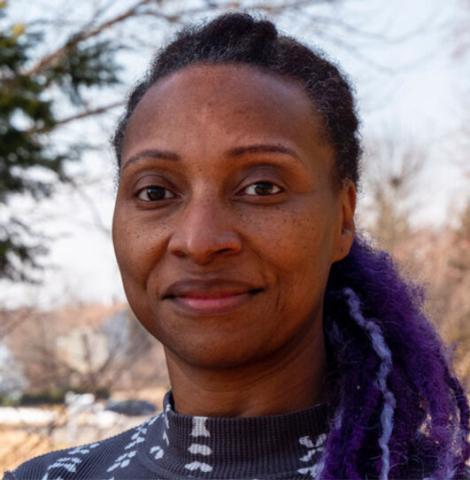
The Sourland Conservancy has announced its final “Talk of the Sourlands” of the season, “The African American’s Deep Connection to Land: Stewardship and Conflict” featuring Donnetta Johnson, the executive director of the Stoutsburg Sourland African American Museum in Skillman, described as “Central New Jersey’s first dedicated Black history museum.”
Informed by her work with SSAAM, Johnson will discuss “the African-American relationship to environmentalism, land ownership, and land loss across America and in the Sourlands” for the fifth presentation in the series on Thursday, February 8, at 7 p.m. at the First Presbyterian Church, 48 River Drive, in Titusville.
The free, hybrid event features limited in-person seating at the First Presbyterian Church, but attendees can also join remotely via Zoom. Pre-registration is required for entry. For more information or to register online, visit the Sourland Conservancy’s Eventbrite page at eventbrite.com/e/the-african-americans-deep-connection-to-land-with-donnetta-johnson-registration-795393311807?aff=oddtdtcreator.
The SSAAM was established following decades of research by Beverly Mills and Elaine Buck of the Stoutsburg Cemetery Association, a group that oversees the historic burial grounds for African American residents of the Sourland Mountains and greater Hopewell Valley region.
While the diverse natural landscape of the Sourlands alone enriches what is regarded as the largest contiguous forest in Central Jersey — spanning 94 square miles and centuries of lived experiences, including its origins as part of the Lenni Lenape’s ancestral homeland — the foundational legacy of the Black families who called the area home often went unacknowledged.
Mills and Buck co-authored the book “If These Stones Could Talk: African American Presence in the Hopewell Valley, Sourland Mountain, and Surrounding Regions of New Jersey” in 2018, and out of that came a partnership with the Sourland Conservancy, a nonprofit group dedicated to the preservation and protection of the region, into what is now the SSAAM.
The museum is housed in the historic Mount Zion AME Church at 189 Hollow Road, a one-room building that served as a community center for local African American residents “descended from free and enslaved people who lived in the Sourland region” who called the area home, according to the SSAAM website, ssaamuseum.org.
But even though the church shut its doors in 2005 due to a “dwindling” number of congregants and “fell into disrepair,” SSAAM fully restored the building in 2022, complete with its original pews, to reclaim this space so central to the surrounding Black community.
Described in a Sourland Conservancy press release as “a community leader and Hillsborough business owner who began her career as a pioneering Black woman in technology,” SSAAM executive director Johnson, sometimes referred to as Bishop-Johnson, is a native New Yorker who has been a resident of Hillsborough for more than three decades.
In addition to serving in her leadership position at SSAAM since 2021, Johnson is also the founder and executive director of the Allegra School of Music and Arts in the Hillsborough Township, a music and drama education center offering Central New Jersey-based instructional programs such as lessons, theater camps, acting workshops, and more.
According to her instructor bio on the Allegra website, Johnson’s passion for musical theater blossomed when she reviewed shows as a student journalist for the newspaper at her New York City high school, often watching live productions from the front row. Although Johnson ultimately decided to choose a different professional track and graduated from Pace University with a bachelor’s in mathematics and computer science, her love of the arts remained constant.
She then worked for AT&T, formerly AT&T Bell Laboratories, where she rose from computer programmer to software designer and eventually became a senior project manager.
In an interview with Nancy Weinberg Simon of NJ Mom in February 2021, Johnson explains her reasons for moving away from the corporate world and establishing Allegra in 1999:
“I have always been interested in the arts. So when I saw a deficit of arts education in my community, I sought to create a place that would address that deficit and marry my love of the arts and business-entrepreneurship. I started Allegra with my mother in 1999 as a ‘side-hustle’ while I still worked at AT&T,” she says. “…When I decided to leave telecom and run the business full-time, we had already proven Allegra’s value and viability in the community.”
This commitment to the creative scene continued when Johnson launched the Hillsborough Music Festival in 2009 as a way of highlighting local performers.
But just a year later, her 17-year-old son, Jonah, committed suicide, prompting Johnson to change the event to an annual fundraiser for what she called “The Jonah Johnson Youth Scholarship Fund,” also known as “My Son, Your Daughter, The Jonah Johnson Youth Scholarship Fund,” for “youth suicide prevention and mental health awareness.”
While the last Hillsborough Music Festival was held in 2019 and the scholarship fund appears to be inactive, Johnson’s advocacy efforts over the years raised thousands of dollars in grant and scholarship opportunities, including donations to the community collaborative BoroSAFE, for students throughout the Hillsborough Township Public School District. According to its website, mysonyourdaughter.org, the charity also expanded to financially support teachers and administrators interested in pursuing mental health first aid certifications.
In Rebecca Koblin’s February 2022 Montgomery News article about Johnson’s hiring at SSAAM, the then-new executive director shared that while her background is largely in the arts, she has always had a passion for learning about the stories of the past, particularly African American and women’s history.
As a theater producer interested in bringing similar unheard stories to the stage, Johnson continued in the Montgomery News interview that her “interest in preservation” began as a teenager in Brooklyn, where she lived with her mother in a 1910 brownstone.
Alongside her nonprofit responsibilities and community outreach, Johnson remains active as the vice president of the Somerset County Cultural and Heritage Commission, a partner of the New Jersey State Council on the Arts and the New Jersey Historical Commission.
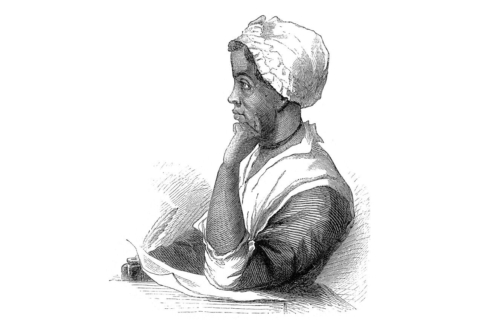
SSAAM is also hosting its own upcoming programming for Black History Month throughout February, starting with the sold-out “Meet Phillis Wheatley” live theatrical performances featuring the American Historical Theatre’s Dr. Daisy Century on Friday, February 9, and Saturday, February 10, at the Mt. Zion AME Church.
American Historical Theatre is a Philadelphia-based nonprofit organization focused on entertaining and educating audiences through “first-person performances” in which actor-historians portray key figures from the past.
All SSAAM events are free, but space is limited and participants must register in advance. To register, see the SSAAM website at ssaamuseum.org/upcoming-events.
According to the event materials on the SSAAM website, Century will be stepping into the role of Wheatley, an 18th-century poet who, “while still enslaved,” became the first African American author — as well as the first Black woman and the third of her gender overall — to publish a book of poetry, “Poems on Various Subjects, Religious and Moral,” in 1773.
As Wheatley’s Britannica biography continues, “the girl who was to be named Phillis Wheatley was captured in West Africa and taken to Boston by slave traders in 1761. She was enslaved by a tailor, John Wheatley, and his wife, Susanna. They named her Phillis because that was the name of the ship on which she arrived in Boston. She received an education in the Wheatley household while also working for the family; unusual for an enslaved person, she was taught to read and write.”
After learning English, Greek, and Latin, Wheatley published her first piece at just 13 years old, according to her biography on the Poetry Foundation website, while works like “An Elegiac Poem, on the Death of that Celebrated Divine, and Eminent Servant of Jesus Christ, the Reverend and Learned George Whitefield …” (1770) and “On Being Brought from Africa to America” (1768) brought her “international acclaim.”
According to the AHT website page for Wheatley, “The Wheatleys provided Phillis with a life and experiences uncommon to most slaves of her day. She met Benjamin Franklin, attended balls, wrote and published poetry. One poem, dedicated to George Washington, elicited a note from Washington, who said he’d visit if he came to Boston. When Washington was in Boston, he sent for Phillis and was surprised to discover the poet he admired was a black woman. Phillis Wheatley lived her life between two worlds, belonging to neither yet her poetic soul endures. The world would be less beautiful, less inspired, without Phillis Wheatley.”
Wheatley was eventually emancipated, but while the pioneering poet is believed to have written an estimated 145 works during her lifetime, much of her work remained unpublished and has since been lost to time.
According to her AHT biography, ahtheatre.org/actor-historians/daisy-century, Century is a “bio actor, historian, interpreter, reenactor, and impersonator” who is also an author herself. She began her career as a teacher, first studying biology and science education before joining AHT in 1999. Since then, Century has performed at “schools, libraries, museums, and historic sites throughout New Jersey,” portraying figures ranging from abolitionist civil rights activists Sojourner Truth and Harriet Tubman to pilot Bessie Coleman.
The American Historical Theatre performance was made possible through SSAAM’s partnership with the Princeton University Art Museum, which also sponsored the event.
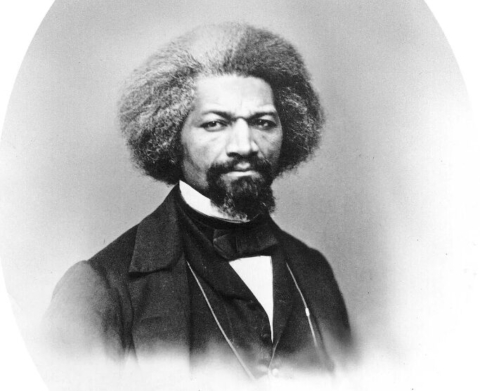
The second program is a birthday party for activist and abolitionist Frederick Douglass on Wednesday, February 14, which is also Valentine’s Day, at True Farmstead on 183 Hollow Road in Skillman. SSAAM honors Douglass’ “life and legacy” with a cake, a live “Transcribe-a-Thon,” and open hours at the museum from 11 a.m. to 3 p.m.
Born into slavery in Maryland without a recorded date of birth, Douglass observed his birthday on February 14. Known as an “orator, newspaper publisher, and author who is famous for his first autobiography, ‘Narrative of the Life of Frederick Douglass, an American Slave, Written by Himself,’” according to Britannica, Douglass “became the first Black U.S. marshal and was the most photographed American man of the 19th century.”
“Frederick Douglass, one of the most famous abolitionists of the 19th century, escaped slavery and became a key leader in the fight for emancipation,” SSAAM states, noting that “his powerful speeches, writings, and activism continue to inspire Americans in the present day.”
In honor of this, the museum invites people to bring their laptops for a group typing and research activity where participants work together on a national crowdsourced project for “Douglass Day 2024” to transcribe the “Frederick Douglass Papers: General Correspondence, 1841 to 1912” from the archives of the Library of Congress.
According to the Douglass Day website, douglassday.org, this collection “includes public letters, intimate family moments, and much more” that “show us the many versions of Frederick Douglass across so many parts of his long and storied lifetime fighting for Black rights and citizenship…during the library’s event, participants will be shown by our staff how to access digitized files from the Library of Congress and how to create machine-readable transcriptions of the hand-written documents. The resulting datasets will allow the correspondence of Frederick Douglass to be more discoverable and accessible by communities all over the world.”
In another local partnership, anyone who does not have a computer can join the transcribe-a-thon at the Princeton Public Library’s Tech Center. For more information, see the PPL page for the event at princetonlibrary.libnet.info/event/10032612.
The SSAAM and the Sourland Conservancy jointly purchased the True Family Farmstead in 2022, a structure “originally owned by a Black Union army veteran who worked as a farmer after the Civil War” before his widow “Corinda married Spencer True, a descendant of the former slave Friday Truehart,” who “had gained his freedom in 1819 and became an early African American landowner in the Sourland Region.” As stated on the SSAAM website, the couple donated the land for the church after the original circa. 1866 building burned down.
The acquired building and land are included in the master plan for the site’s “Sourland Education & Exhibit Center,” funded by grants from the Somerset County Cultural and Heritage Commission and the New Jersey Historic Trust, which will “welcome school groups as well as host educational talks, art exhibits, and other public programming,” SSAAM adds. The True Farmhouse is set to serve as an office for the two Sourlands-based organizations that co-own it.
Stoutsburg Sourland African American Museum, 189 Hollow Road, Skillman. 908-219-7809. www.ssaamuseum.org.