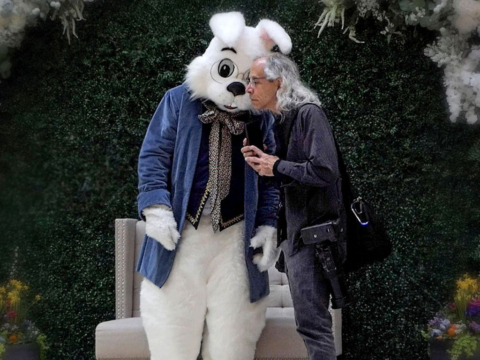
If something just doesn’t seem right lately with the The Times of Trenton, that’s because longtime photojournalist Michael (Mike) Mancuso has retired after nearly 40 years of capturing the life of a city, region, and state.
For numerous years, he was one of the Times’ eyes on the scene — and a respected one at that.
But after decades of industry upheavals, office moves, management changes, and diminished staff, he stayed with the Times and became its beating heart — one pulsing with an understanding of what the newspaper once had been and what a community needed.
It is no secret why. He was born and raised in the community and reborn in the newspaper’s photo labs – back when the paper was called The Trenton Times (the name change came in the 1980s) and digital was just a strange word.
It is also no secret for anyone with eyes that Mancuso was a master photojournalist whose technical skill enabled him to capture an image but whose artistic sensibility also capture the moment’s soul.
It was a recognition of his sense of creating more than a photo that led to the then-Chapin School curator, regional artist Dallas Piotrowski, inviting Mancuso to have an exhibition there in 2013.
That’s when U.S. 1 contributor, former New Jersey Network video journalist, and state-recognized fine arts photographer Aubrey Kauffman talked to Mancuso about his training and approach. [Note: See “A Photographer Examines His Work, Frame by Frame” from September 24.]
With Mancuso leaving our regional journalism scene, it seems a good time to revisit that interview and think about how to help develop the next generation of photojournalists who will hold our stories:
Born and raised in Trenton, Mancuso learned photography from his father, who Mancuso says was a computer programmer for the state “kind of before computers were computers,” while his mother was a homemaker.
The older Mancuso was a serious hobbyist, owned several Leica cameras, and had a darkroom in their house. By the time his son was eight years old, he had his own camera.
His early pictures, he says, were pretty much of whatever was around: family, friends, and the streets and neighborhood of his South Cook Avenue home. This laid the foundation for his life as a photographer, a connection indicated by the image on Mancuso’s press pass: a picture of him at age eight.
It was shortly after his first child was born that Michael remembered his father saying, “Mike, now that you have a kid, why don’t you get a real camera?”
He took his dad’s advice and kept a “real” camera with him on his job driving a mail truck for a contractor around Allentown, Pennsylvania. He then began taking and bringing pictures to the local Allentown newspaper, the Messenger Press. After some success there, he approached the Trenton Times, which began to use him as a part-time weekend photographer. After several years he was offered a full-time position.
Though intimidated by the professionalism of the other photographers, he decided to trust his boss’ obvious belief that he was up to the task, already proving himself during his years as a part-timer.
Working full time for the paper with long-time staff photographers placed Mancuso in a great environment for learning his craft.
He remembers how the veteran photographers — Herman Laesker (who hired him), John Pietras, Tom Herde, and Steve Zerby — were very helpful in mentoring him in his early days.
Mancuso maintained the legacy of the professionals who became his teachers and says, “a good newspaper photo communicates information to the viewer in a clean, concise way. It has depth. It’s nice if it has something visually compelling, or at least visually interesting about it, too, but if not, if it communicates, it’s effective.”
Mancuso says being a professional news photographer is not without its challenges, especially getting a picture when people are experiencing personal tragedies. “When I’m there, I have to be there. I try to project being unobtrusive. I don’t get in the way. I don’t have the attitude like I’m here to get a picture. I think everything about me projects that,” he says.
Mancuso has been a witness to change and remembers how the advent of digital photography has changed the industry. What once took hours is now almost instantaneous.
Twenty-four-hour cable news, movies-on-demand, and the Internet have not only changed the way people receive information and created competition for its delivery, it has also changed the way that people perceive the creation of images. “Photography has gotten devalued because everybody can get a decent or pretty good or excellent camera, but you know that just because everyone has a computer doesn’t mean that everyone is a writer either. But right now it seems like such a proliferation, people aren’t looking so much for quality stuff; they just want a lot of pictures, just like if you write and you just wrote down everything you said.”
While Mancuso has left photojournalism, he remains active as a wedding photographer for his own company, Life-Affirming Photography, and as a guitarist with the classic rock band “Big Chill.”
But for those reading area newspapers, The Times has changed.