The push to incorporate inclusivity has proven to be a true instrument of change socially, as well as economically, for the modern business world. Companies, now facing a labor shortage, can benefit from hiring disabled employees just as the individuals themselves do, with a mutual combination of training, coordination, and respect able to transform the workplace.
In the spirit of this, the New Jersey Business & Industry Association is hosting a Zoom webinar, “Hiring People with Disabilities: On-the-Job Training for Individuals with Disabilities,” on Thursday, August 18, from 9 to 10 a.m.
NJBIA is the “nation’s largest statewide employer association,” offering events, resources, and support for New Jersey businesses. The upcoming online engagement will explore “the benefits and process of hiring and training individuals with disabilities, and how they will help your company thrive.”
Chrissy Buteas, NJBIA’s chief government affairs officer, will be leading both the opening and closing remarks. She is also moderating the brief audience Q&A.
“NJBIA is a strong advocate for encouraging our businesses to hire individuals with disabilities. Individuals with disabilities are diverse, underutilized, loyal, and highly valued members of New Jersey’s workforce,” she said in a statement. “We strongly encourage the business community, along with all stakeholders, to participate in our upcoming webinar to address any questions employers may have about hiring someone with a disability.”
Buteas continues that “if any employer has questions about the resources available for individuals with disabilities on the job site or hiring someone with a disability,” they can email government_affairs@njbia.org for more information.
Three group panels are set to speak about on-the-job training, including Easterseals NJ, Spectrum Works, and the Community Supports Network from the Arc of New Jersey.
Registration is available online at the event’s page on the NJBIA website.
According to their website, East Brunswick’s Easterseals NJ helps provide disabled communities the “opportunities to live, learn, work, and play in their communities,” with their services open to children, families and adults — this includes preparing for and placing the latter group in the workforce by “matching program participants to local businesses and volunteer services.”
Spectrum Works was previously featured in an NJBIA event on April 1. To learn more about the Secaucus nonprofit, see the March 30 U.S. 1 story, “Spectrum Works Presents Workforce Webinar for Autism Acceptance Month,” that profiles CEO Ann Marie Sullivan.
The Arc is a nonprofit that has been “advocating for and with people with intellectual and developmental disabilities” since its formation in 1950. Now there are more than 600 chapters across the country, each corresponding to either the state or a specific area, such as a county, as well as one national Arc organization.
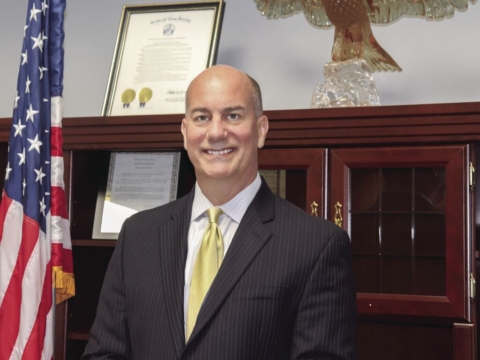
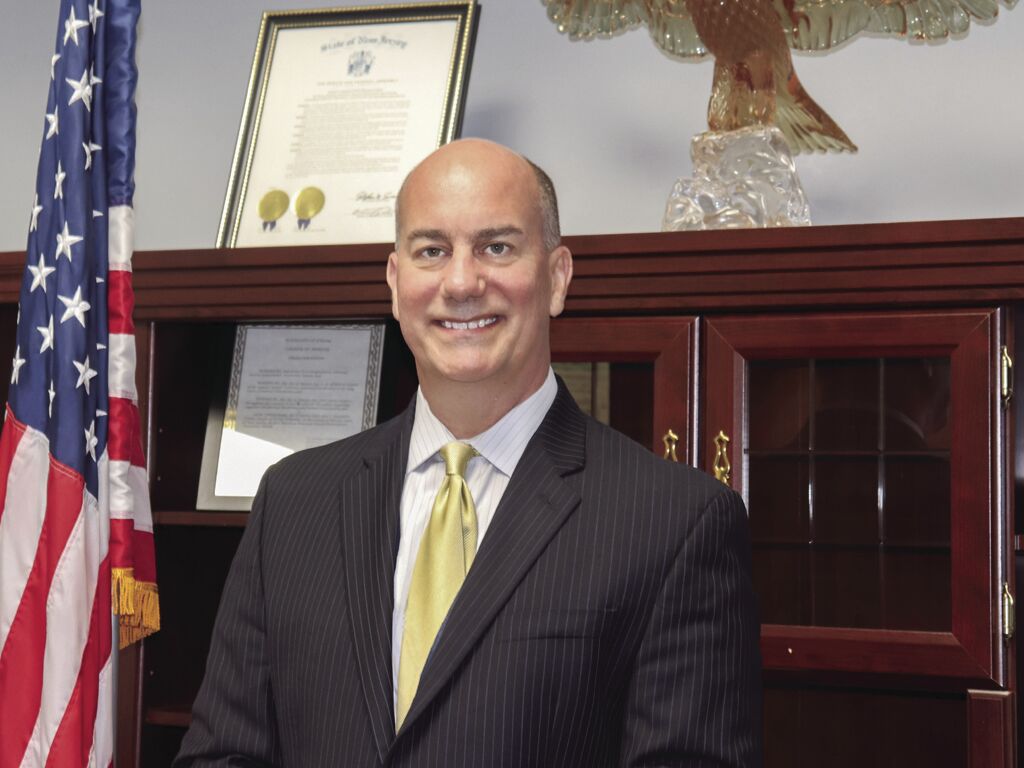
Steven Cook, the executive director of Arc Mercer in Ewing, explains that the county chapters are “autonomous as entities, but affiliated through our core mission,” as they still share a message with the state’s Arc of New Jersey headed by Executive Director Thomas Baffuto.
While Arc Mercer will be attending the webinar, Cook expects that the panel will likely be led by Baffuto’s team, whose Project HIRE mission connects disabled individuals with integrated employment opportunities.
Arc Mercer’s programming differs slightly, including day and recreational programming, as well as their 24/7 residential services, which Cook says are supported by “one of the very few dedicated health care centers for individuals with developmental disabilities in the state.”
“We see people from as far away as Cape May, and pre-COVID, before telemedicine was really allowed, people would travel that far to come to our health care center. That’s how rare it is, and how hard it is to find services,” Cook says.
Additionally, they also have developed a transportation system for disabled individuals throughout Mercer County, with “Arc Trans” providing options for wheelchairs, portable oxygen systems, service animals and more.
In late 2020, Gov. Murphy signed Bill S2517 “to assist with replicating our best practices” for other agencies, the executive director says, with the legislation effectively establishing a program for adoption and coordination.
Arc Mercer’s vocational program pairs job coaches with disabled individuals to develop or expand upon their skills, which then prepares members of the latter group for placement in a work industry. Even after training is completed, they receive additional guidance, with possible occupations including office work, janitorial, document shredding, food service, etc.
“In addition to training people to go work in the community — which is where this webinar is extremely valuable — we have built an infrastructure to create jobs,” Cook says, with Arc Mecer running social enterprises as “businesses that specialize in employing” disabled individuals throughout Mercer County.
While participants can be hired across the state, Cook says that shredding happens primarily at Arc Mercer’s Occupational Training Center (OTC) on New York Avenue in Trenton, while food service remains in the Ewing headquarters.
Cook has been executive director for 15 years, first starting as a member of the board, then board president, before his current role. Transportation is such a key factor in employment, he maintains, that Arc Mercer steps in to ensure a strong foundation is present.
“What’s important to know is that when someone has a job, having good health care, good behavioral support, and quite honestly, just getting a ride to the job, [which] is sometimes as important — and the biggest barriers — than actually finding a job,” Cook says.
The impact of the pandemic, though, was “devastating” for Arc Mercer to navigate, with many businesses responsible for supporting their program closing or shutting down completely. Because of production and supply chain issues, their fulfillment work followed suit.
Arc Mercer’s approach was more geared towards in-person than working at home because of their “hands-on environment” for job coaching, but COVID prompted them to adapt accordingly, Cook explains.
“One of our social enterprises is a janitorial company that cleans about 2.7 million square feet of office space a day with a 75 percent developmentally disabled workforce,” he says, and that group became busier than ever due to the changed COVID-19 protocols.
With new disinfectant equipment in tow, the participants came in to clean buildings and sanitize environments for others, which maintained the level of employment in that industry.
“We received much praise from the state of New Jersey for maintaining our workgroup,” Cook says. “I really think that’s something that should be applauded — not just the directors of the program who kept it going, but the individuals with special needs who showed great courage, when people were really afraid of COVID, to go into the workplace.”
While certain fields are still feeling the impacts of the pandemic, Arc Mercer’s food service program has been able to keep their skills sharp, and close to home, through nourishing their own community.
“When the restaurants all closed and everything, our kitchen was busy during that time making food for us. If you were in my building, you would see our cafe and the arcade right next to it,” Cook says, equating that community resource to the vibe of a Dave & Buster’s run by staff he commends as “courageous” for coming in despite the uncertainty of the time.
Arc Mercer is trying to look into virtual training in the future, with the same range of vocational options in their arsenal, just in different forms that may be continually “retooled” as the workforce develops, Cook says.
“I will say that a lot of people without disabilities are being asked to go back to work, and then not going back, so there’s actually a lot of employment opportunities in the workplace right now. There’s an interesting dynamic with a lot of people who just did not want to go back to work, or could not physically go back” depending on their circumstances, he adds.
“We have found a lot of companies that have changed their attitude towards the use of people with special needs in their workforce, and they’re more open,” Cook says. “Years ago, when unemployment was low and employers had a big pool of people to choose from, they did not really invest the effort or time into understanding and developing programs.”
In need of a work pool to sustain their businesses, establishments that may have refrained from dedicating resources to the hiring of disabled individuals are newly approaching groups like Arc Mercer for partnerships.
This positive surge in employment is reflected in the 2021 U.S. Bureau of Labor Statistics’ Current Population Survey (CPS), where “19.1 percent of persons with a disability were employed, up from 17.9 percent in 2020,” and “unemployment rates dropped to 10.1 percent” for the same demographic.
But that labor force characteristics study from February 24, 2022 also disclosed that “across all age groups, persons with disabilities were much less likely to be employed than those with no disabilities,” showing there is still much room for progress ahead.
“All of the workforce feel much more dynamic, and a stronger sense of culture, when they’re part of the team supporting individuals with developmental disabilities in the workplace. Their work ethic and their commitment to work, and their passion to do a job that — once they’re well-trained and supported with transportation and the support — the passion that they bring to it motivates everybody around them,” Cook says.
“That’s why I think the partnership with NJBIA and the webinar really help us; it helps employers in the short term because they have a need for workers, but in the long term, they’re going to find out that partnering with agencies like ours, or developing a workforce that is inclusive of people with special needs, will just change the culture in such a positive, dynamic way for them,” he continues.
Following the on-the-job training panel, two representatives from the NJ Department of Labor and Workforce Development are also sharing their insights. Nick Toth is the director of the Office of Apprenticeships, which oversees grant opportunities in a state apprenticeship model that facilitates learning through direct trade or industry experience.
Barbara Stockton, the program planning and development specialist of the Division of Vocational Rehabilitation, follows Toth’s portion of the event. Vocational Rehabilitation Services enables those with eligibility “to achieve an employment outcome consistent with their strengths, priorities, needs, abilities, and capabilities” via career counseling, evaluations and accommodations, per the state website.
Cook says that NJBIA’s involvement is crucial, as they understand the perspective of employers when addressing workforce challenges or accommodations. He wants business leaders across Mercer County to be inspired by the event, then take initiative to “sit down at the table” with organizations to see how they can improve.
“I think this webinar is really going to be valuable in educating employers that the process by which you build and enhance your workforce — by employing individuals with developmental disabilities — is the infrastructure is there on our side, and they build the infrastructure on their side,” he says, working in tandem to make it worth the investment.
This can entail starting a conversation about how to organize in-house work, but also contracting people out for jobs such as land maintenance. If a company lets Arc Mercer know when they are seeking help, Cook explains that he can assign people to complete said assignment.
Cook is able to customize the training of their participants to each enterprise’s positions and responsibilities, all through an active consultation with those in charge, which they have done before to establish action plans.
Arc Mercer, Cook explains, is seeking people who want to work alongside them for “one of two things; build job descriptions out that we can train people for and place them where they’re comfortable, or let us know what work you’re contracting out, and we’ll let you know what we can do.”
“If we do your janitorial, if we do your landscaping, if we do your fulfillment work, it will be no less quality-oriented than anything you’re getting anywhere else. These are things that we want to reinforce, and we’ve got to find that point person in each business,” he continues. “We need someone who’s going to be the cheerleader on the inside.”
Cook knows that just as the pandemic changed workplaces in terms of safety, communication and more, business owners are willing to “make incremental changes” if needed — and through the webinar, he thinks NJBIA can “open the door to do that even faster.”
As Arc Mercer observes the day’s exchanges from the Zoom audience, Cook is confident that their affiliated state chapter will dutifully represent their shared mission.
“[Arc of New Jersey is] an organization that not only recognizes that this is good for employers, but this [is good] for the community, and that’s a great partnership, when an organization can see such big benefits,” Cook says.
“Hiring People with Disabilities: On-the-Job Training for Individuals with Disabilities,” NJBIA, Thursday, August 18 from 9 to 10 a.m. Webinar, free. Panelists include Easterseals NJ, Spectrum Works and Arc of New Jersey.
Arc Mercer, 180 Ewingville Road, Ewing. Steve Cook, Executive Director. For more information, visit the NJBIA website, njbia.org, and/or Arc Mercer’s website, arcmercer.org.