Home Blog

Lawrence delays action on proposed data center ban measure

0

An ordinance that would prohibit data centers anywhere in Lawrence Township has been tabled by the Township Council pending further review by the Planning Board.

The amendment to the township’s Land Use Ordinance (LUO) was scheduled for a public hearing and final action at the Township Council’s Nov. 5 meeting. The proposed amendment had been sent to the Planning Board for routine review following its introduction in October.

The Planning Board was asked at its Oct. 19 meeting to determine whether the proposed amendment was consistent with the township’s master plan. The master plan outlines the township’s vision for future development, while the LUO establishes regulations to implement it.

The Planning Board declined to endorse the proposed ban, opting instead to conduct additional research. The board is scheduled to continue its discussion at its Monday, Nov. 16, meeting at 7 p.m. in the lower-level conference room.

According to the proposed amendment, a data center “constitutes a distinct, intensive land use characterized by concentrated computer-server operations and associated electrical, cooling, back-up power, security and communications infrastructure.”

The amendment states that those infrastructure demands and operational characteristics are incompatible with the township’s intended development patterns, infrastructure capacity, environmental constraints and community character.

“The LUO presently prohibits all uses not expressly permitted and the Township Council desires to eliminate uncertainty concerning whether a data center may fall within the broadly described permitted-use category,” the ordinance amendment said.

At the Oct. 19 meeting, Planning Board members debated whether the township could enact an outright ban on data centers or instead establish strict performance standards to regulate their impacts.

Planning Board attorney Ed Schmierer said it would be preferable to establish standards and designate data centers as a conditional use rather than prohibit them outright. A conditional use requires an applicant to meet specific requirements to obtain approval.

Planning Board members agreed that additional research was needed before taking a position on the amendment.

Planning consultant Beth McManus said she would prepare a report for the board to consider, possibly as soon as its Nov. 16 meeting. The proposed amendment is listed on that meeting’s agenda for discussion.

Meanwhile, a data center under construction in neighboring South Brunswick Township is facing opposition from federal and state lawmakers who are calling on New Jersey environmental regulators to halt or reject an air pollution permit for the facility, citing potential health risks to residents of surrounding communities.

U.S. Rep. Bonnie Watson Coleman, state Sen. Andrew Zwicker and Assemblywoman Tennille McCoy announced their opposition in a Nov. 9 letter, submitted on the final day of the public comment period for the proposed New Jersey Department of Environmental Protection permit.

McCoy, whose 14th Legislative District includes Plainsboro Township, called on the DEP to deny the permit because residents of her district could be affected by a project approved in another municipality.

The permit concerns the Sentinel Princeton Nurseries Data Center, a 341,000-square-foot facility under construction on Route 1 at the former Princeton Nurseries property, just across the municipal boundary from Plainsboro Township.

The draft permit covers 12 diesel-powered emergency generators, each rated at 3,620 kilowatts. The generators would provide backup electricity when the facility’s primary power supply is unavailable.

Watson Coleman and Zwicker questioned whether the DEP’s environmental review adequately accounted for the generators’ potential emissions, particularly during extended power outages or other emergency operations.

The two lawmakers acknowledged that data centers play an important role in the economy but said their increasing size and demand for electricity require closer examination.

Watson Coleman has introduced the Data Center Community Impact Act, which would authorize a federal study of the environmental, economic and public health effects of data centers, with particular attention to low-income communities and communities of color.

She also is an original co-sponsor of the federal Artificial Intelligence Data Center Moratorium Act, which would halt construction of new data centers until Congress enacts legislation addressing the risks of artificial intelligence.

Zwicker is a primary sponsor of state legislation that would require the DEP to study the environmental and infrastructure effects of data center development and prohibit construction of new facilities until the study is completed.

The proposed state moratorium would exempt projects already approved or under construction when the legislation takes effect.

In July, Gov. Mikie Sherrill signed legislation establishing a separate utility rate class for large data centers, intended to prevent the facilities’ electricity and infrastructure costs from being passed on to other customers.

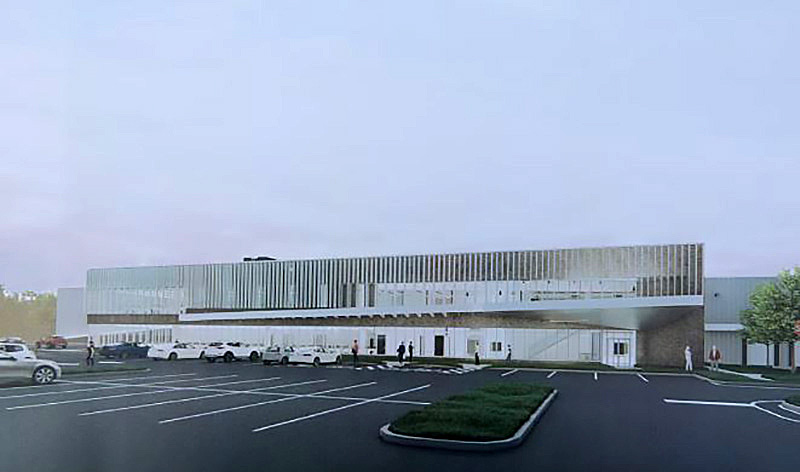
Architectural rendering of the Sentinel Princeton Nurseries data center currently under construction in South Brunswick Townhip along Route 1. The develope is Senitel Data Centers of New York City.

State to highlight economic benefits of cannabis businesses

0

The New Jersey Cannabis Regulatory Commission will highlight the economic benefits of the state’s growing cannabis industry during the New Jersey League of Municipalities Annual Conference in Atlantic City on Tuesday, Nov. 17.

The session will focus on opportunities for municipalities to generate tax revenue by allowing cannabis businesses to operate within their borders.

Representatives from the commission, the New Jersey Business Action Center and the New Jersey Economic Development Authority will discuss the financial benefits of participating in the regulated cannabis market, including local tax revenue and available state resources.

Municipalities that permit cannabis businesses can impose a local transfer tax of up to 2% on sales. The revenue can be used to support municipal priorities, including public safety, infrastructure improvements and community programs.

The commission is encouraging municipalities to consider the potential revenue as they face rising expenses and increasingly tight budgets.

Municipalities that allow cannabis businesses also retain local control over which types of businesses can operate within their borders and how those businesses are regulated.

The commission maintains a searchable database identifying municipalities that permit adult-use cannabis businesses and the types of licenses allowed in each community.

During the conference, commission officials will also provide updates on cannabis regulations, the industry’s continued growth and developments affecting municipalities.

The commission will demonstrate its Obedio data platform, which allows municipal officials to examine cannabis market data, review local tax revenue and evaluate potential economic opportunities.

The conference session will take place from 10 a.m. to 1 p.m. in Room 312. The commission will also maintain an informational booth throughout the Nov. 17-19 conference.

More information is available at nj.gov/cannabis.

For Vicki Lawrence, Mama remains a part of the family

Vicki Lawrence’s late husband used to be teased by his buddies at a local bar.

“When are you going to let Vicki retire?” they asked, as if she needed or sought his permission.

“Vicki can’t retire,” he countered. “Working is Vicki’s golf.”

“Besides, what would I do with my time?” Lawrence says by telephone from her kitchen in Long Beach, California. “My children are grown. Everything’s pretty much in control.”

And, she could have added, she has fans who know her work and want to see her. Each year, she appears in theaters across the country and attends a few Comic-Cons, both as Vicki Lawrence and as one of her best-known and most popular characters, Thelma Harper, or Mama, from TV’s “Mama’s Family” and, before that, sketches on “The Carol Burnett Show.”

On Friday and Saturday, Nov. 13 and 14, Lawrence brings her traveling show, “Vicki Lawrence & Mama: A Two-Woman Show,” to New Brunswick’s George Street Playhouse for two performances, at 7:30 p.m. Friday and 2 p.m. Saturday.

She says she opens for Mama, beginning the show by relating her life story as Vicki, then donning Mama’s famous flowered dress and spouting the wisdom TV audiences continue to hear on MeTV reruns and an oft-watched YouTube video.

“Mama has a lot of freedom,” Lawrence says. “She can comment on just about anything. The show becomes topical. I read the day’s news, and anything that strikes Mama as worthy to talk about can come up.”

Mama has been part of Lawrence’s repertoire for more than 50 years. She was 24 when, during the seventh season of “The Carol Burnett Show,” producers decided to introduce an ongoing sketch, an internal sitcom of sorts, with Lawrence, who joined the show at 18 to play Carol’s younger sister, now playing the wisecracking, take-no-prisoners mother of Burnett’s character, Eunice.

That sketch eventually became a series of its own, “Mama’s Family,” which aired for two seasons on NBC and four more in syndication, from 1983 to 1990. During that time, Mama became part of American television lore.

Lawrence says that when she first began doing “Vicki Lawrence & Mama” in 2001, just after the Sept. 11 terrorist attacks, she expected to see older audiences, people about Mama’s age, which she calculated then as the late 60s and now has moved up a decade or two.

“I was surprised when I saw the audience. In those early days, I entered as Mama from the back of the house and through the audience. I’d see people of all ages. People came with their children. I stopped at a row that was filled with young men, guys of college age. As Mama, I asked what brought them here. They told me they watch ‘Mama’s Family’ every day. It’s their break from school, their comic relief. They never miss a show.

“It turned out I had a college-age fan base. Like I said, the audience was filled with people of all ages. A lot of that is because ‘Mama’s Family’ has never stopped running. It’s on MeTV. The few times a year I put on my Mama gear and go to Comic-Cons, children know Mama and want a picture with her.”

One irony is that when Lawrence was first approached by “Burnett” producer Joe Hamilton to move “Mama’s Family” from “The Carol Burnett Show” to a separate spinoff, she said no. She didn’t want to do it.

“There were lots of reasons which, thank goodness, turned out not to matter, once the show became popular. One was on Carol’s show, I was doing the sketch with her and Harvey Korman. These are the people who put me through what I call the Harvard School of Comedy. I came from college theater to work on ‘The Carol Burnett Show.’ These people were my education. I didn’t want to do the show without them.

“Then there was my age. I was 24. Look how lasting Mama has become. Now I’m grateful. Then, I wasn’t sure I wanted to play an old woman in an old-fashioned dress that was designed to make me look heavy. I wasn’t convinced it was the right direction.”

By 1982, “The Carol Burnett Show” had been off the air for several years, but Lawrence was still receiving acclaim for playing Mama. That year, she earned an Emmy nomination for outstanding supporting actress in a limited series or special for the television movie “Eunice.”

“That was fun. The nominees that year were Claire Bloom, Judy Davis, Rita Moreno, Penny Fuller, and me. They were all in these grand dramatic parts, and I was Mama. At the ceremony, Harvey Korman sat next to me and said, ‘There’s no way you’re going to win this thing, but enjoy it.’ So I did.”

“Mama’s Family” premiered the following year, with Lawrence in the lead and a cast that included some of television’s best-known performers. Although Burnett and Korman were not regular cast members, Lawrence had Ken Berry as Mama’s son and, in the early years of the series, Betty White and Rue McClanahan, before they were each cast on “The Golden Girls.”

“I saw Betty during the time ‘The Golden Girls’ was being put together, and she told me she was expecting to be on this new show and would be leaving ‘Mama’s Family.’ What a reversal in roles! She went from being brassy on our show to being the nice one.”

Another cast member was Dorothy Lyman, who had appeared on Broadway and developed a large following as Opal Sue Gardner on ABC’s daytime soap opera “All My Children.”

“Carol was obsessed with ‘All My Children.’ We broke rehearsal every day so she could watch it. We were building the cast for ‘Mama’s Family’ when Carol pointed to Dorothy and said, ‘You need to get her.’ Imagine Dorothy’s surprise when she got a call from Carol Burnett. She was doing both shows at once. She’d be in New York all week doing the soap, then fly to L.A. to shoot ‘Mama’s Family’ on the weekends.”

The topical nature of “Vicki Lawrence & Mama” means no two performances are exactly alike. Lawrence has a basic script she developed with writer Monty Aidem, who began working with her when she had a syndicated talk show in the 1990s.

“The show and the topics Mama brings up have changed so much in the 25 years we’ve been doing it. Some things common now didn’t exist in 2001. I like the idea of being freewheeling.”

Lawrence says her career is one of the strangest and luckiest in show business.

“I never expected to be working this long, but I’m doing something I enjoy and for which I have an audience. I have no reason not to do it.”

Her career began with a fan letter and a telephone call, similar to the one Dorothy Lyman received from Carol Burnett.

Lawrence grew up in Inglewood, California, not far from the CBS studios where “The Carol Burnett Show” was produced. She had appeared in high school productions, and a newspaper mentioned her resemblance to Carol Burnett.

Lawrence took the initiative to write Burnett a letter and enclosed the newspaper clipping. Burnett was looking for a young actress to play her sister, Chrissy, in sketches on her variety show. She looked in the telephone book and found Lawrence’s father’s name.

There was a telephone call. There was a meeting. There was a job. There was a career.

Lawrence says she is taking it a bit easier lately. She used to be on the road constantly. Now, she works perhaps one or two weeks a month.

“New Brunswick will be my last date for 2026. I used to work on holidays, but now I want to spend them with my children and grandchildren.”

Like Mama, Lawrence has seen how much the world has changed.

“I am not hurrying anything, but I tell my children that before total calamity happens, I’ll be out of here. Then, I begin to feel guilty because of the mess I’m leaving them in.”

We agreed that this is one reason comedy is important.

Which leads to a funny comment. I end every interview by asking if there is anything a reader should know that wasn’t covered. Most people say, “No, I think we’ve been fairly complete.”

Vicki Lawrence said, “You haven’t asked me about the Iran war.”

We left it at that. Maybe Mama will fill in the blank.

“Vicki Lawrence & Mama: A Two-Woman Show” will be presented at 7:30 p.m. Friday, Nov. 13, and 2 p.m. Saturday, Nov. 14, at George Street Playhouse, 11 Livingston Ave., New Brunswick. Tickets range from $62 to $102 and are available at .georgestreetplayhouse.org) or by calling 732-246-7717.

Vicki Lawrence, right, brings her signature character, Thelma “Mama” Harper, to the stage in “Vicki Lawrence & Mama: A Two-Woman Show,” coming to George Street Playhouse in New Brunswick on Friday and Saturday, Nov. 13 and 14.

Shishkin shines in Princeton Symphony Orchestra season opener

The Princeton Symphony Orchestra, conducted by music director Rossen Milanov, launched its 2026-27 season Saturday, October 17, with a program of all 20th-century music by composers Joan Tower, Sergei Rachmaninoff and Béla Bartók.

The centerpiece of the concert was a dazzling performance of Rachmaninoff’s “Rhapsody on a Theme of Paganini,” Op. 43, played by renowned Russian pianist Dmitry Shishkin.

But first, we heard the “Suite from Concerto for Orchestra” (1991) by Tower. The composer spent formative years in Bolivia, where her father was a mining engineer, and has said her time in South America sparked an interest in Latin American rhythms. We could hear elements of this in the suite, particularly in the percussion section, from gong to woodblocks to marimba to snare drum.

The composition challenged the entire orchestra, but especially the skills of the principal players. Clarinetist Pascal Archer and oboist Lillian Copeland skillfully explored the various registers of their respective instruments, with fine intonation.

The PSO adeptly executed Tower’s interplay between scales, dynamics, diverse tempos and difficult solos layered within a cinematic expressionism.

Rachmaninoff’s “Rhapsody on a Theme of Paganini” (1934) transferred the frenzied solo violin work of the legendary Niccolò Paganini to the piano. The piece was premiered by the Philadelphia Orchestra, led by Leopold Stokowski, with the composer as soloist. Interestingly, its first recording was made with Rachmaninoff and the “Philadelphians” at RCA Victor’s Trinity Church Studio in Camden.

The work began quietly, with the bare bones of the theme quickly evolving into something akin to a dance around the keyboard. The slender, youthful Shishkin conveyed little emotion in his face, but his hands were full of passion and almost attacked the piano in the next variation, with the lower brass joining in. Bright, tinkling tonalities from the flutes and percussion balanced this blast of sound.

Throughout the next handful of variations, we heard melancholy, muted strings and melodies passed between the clarinet and French horn, with the harp steadily strumming underneath it all. The brass took us on a rather martial journey as Shishkin and his focused hands ran up and down the piano with sheer fluidity and utter brilliance.

The first violin introduced a gentle line, picked up by the clarinet and French horn, while the soloist calmly played. This elegant 18th variation (which Rachmaninoff humorously said was for his agent) will sound familiar to many, especially those who remember its use in the 1980 film “Somewhere in Time.”

As Shishkin’s solo playing shimmered, the full orchestra soared above, showcasing the rich grandeur of Rachmaninoff.

The next few variations had the strings buzzing while the soloist explored the keyboard’s higher notes. The piece hurried toward its conclusion with jolting key changes, more martial-sounding passages and arpeggios. A final, breathtaking piano cadenza ended the rhapsody with a bang.

Many in the audience were at the concert expressly to see and hear Shishkin, and the soloist received enthusiastic applause, enough to return to the stage for two encores: another piece by Rachmaninoff, from his “13 Preludes,” and an etude by Prokofiev. I heard someone behind me say to his friend, “simply incredible.”

Bartók is sometimes called the “Father of Ethnomusicology,” and for decades before arriving in the United States, he had devoted his career to transcribing folk music from rural villages across Eastern Europe and even North Africa.

He wanted to absorb these ethnic sounds from other cultures to weave them into his own compositions. We heard many examples of these unusual sonic textures and elements in Bartók’s “Concerto for Orchestra” (1943).

The brooding opening is actually a quote from Bartók’s opera “Bluebeard’s Castle,” with the strings sounding like eerie, disembodied voices.

Lovely flute and oboe solos rose above the darker sounds as the movement evolved into a dirgelike melody. It was easy to hear the Eastern European elements, such as peasant scales or modes.

The second movement is like a survey of the orchestra, with the individual instruments introduced by a drum. It started with oboes, clarinets and flutes and spread through muted trumpets, lower brass and bassoons. All in all, it presented the PSO’s many talented soloists, particularly in the wind section.

“Elegia: Andante non troppo” was the central third movement, which Bartók wrote to evoke a mysterious countryside by night. Glissandi and rapid arpeggios brought rustling leaves to mind, while a solo piccolo represented a lone bird and its mournful sound.

The movement’s melancholy main theme, inspired by Transylvanian funeral music, was first heard in the violas, then circulated around the orchestra.

In the fourth movement, Bartók wanted to contrast the hopelessness of free people when pitted against authoritarian politics and violence, which was happening in his native Hungary.

To accomplish this, the composer wrote a hopeful melody (played by the oboe d’amore) to represent an idealistic youth serenading his love. This winsome sound was interrupted by sneering brass and an almost comical trombone snort and slide, representing the vulgar mob.

We were jolted by the timpani and basses kicking off the final movement. The ensemble jumped into the fast-paced music, which had a dancelike quality.

Percussion led into a softer section before a reappearance of the opening theme. The bassoon soared above ghostlike strings before the full orchestra returned to a grandiose finale.

The PSO took us on a splendid journey through an orchestral masterpiece.

Rossen Milanov conducted the Princeton Symphony Orchestra’s opening concert Saturday, October 17, with pianist Dmitry Shishkin. The next PSO concerts are scheduled for Saturday, November 14, and Sunday, November 15, and feature works by Fanny Mendelssohn Hensel and Joseph Haydn. Simone Porter will perform W.A. Mozart’s Violin Concerto No. 5, “Turkish.” Call (609) 497-0020 or visit www.princetonsymphony.org.

On Ramp: Week of Nov. 11

0

Business & Career

Hightstown vendor openings. Vendors and food-truck operators can inquire about participating in the Wedgwood 120 Holiday Vendor and Senior Resource Fair Wednesday, Nov. 11, at 3 p.m. at 201 E. Ward St., Hightstown. The organizers are still accepting participants.

The fair combines holiday shopping, food trucks and senior-care resources, with tours of the residence available. Contact Beth Sholom at beth@the120residences.com to discuss a vendor or food-truck space. The updated announcement moves the start to 3 p.m.; use that time when planning participation. the120residences.com

Cybersecurity for employers. Employers can register for Cybersecurity for Employers: Protecting Your Business, Employees, and Customer Data Thursday, Nov. 12, from 9 to 10 a.m. The New Jersey Chamber of Commerce offers the free virtual program through its NJM Small Business Series.

The session focuses on protecting business operations and information belonging to employees and customers. Use the registration link in the chamber’s event calendar to sign up for the webinar. Chamber questions may be directed to 609-989-7888. njchamber.com

Practice speaking and leadership. Successfully Speak Up Toastmasters welcomes visitors to its HalloGiving meeting Friday, Nov. 13, at 7:30 p.m. in Studio 3 at Princeton Fitness and Wellness Center, 1225 State Road, Princeton.

The meeting combines the club’s communication and leadership goals with a seasonal gathering and food. People interested in becoming more confident speakers, developing leadership skills or meeting other participants are welcome; previous experience is not needed. Contact club public relations vice president Pamela Johnson at TMPamelaJohnson@gmail.com with participation questions. toastmasters.org

Workforce development roundtable. Employers can register for the New Jersey Chamber of Commerce’s Workforce Development Business Roundtable Tuesday, Dec. 1, from 8 to 11 a.m. at the National Conference Center at the Holiday Inn, 399 Monmouth St., East Windsor.

The program addresses skills gaps, work-based learning, preparation for an economy shaped by artificial intelligence, and partnerships among businesses, educators and government. Admission is $80 for members and nonmembers; credit-card transactions carry a 3% surcharge. Sign in or create an account through the chamber’s event page to register. Call 609-989-7888 with questions. njchamber.com

Corporate growth nominations. New Jersey companies with annual revenue of at least $5 million can be nominated for ACG New Jersey’s 2027 Corporate Growth Awards through Friday, Dec. 18. Companies may nominate themselves or be nominated by others.

The awards recognize innovation, business performance and growth. Eligible companies must have the New Jersey presence described in the criteria and must not have previously received ACG New Jersey’s Corporate Growth or Corporate Achievement Award. Review the requirements and submit the online nomination through the Call for Nominations page. The selected CEOs must participate in interviews, publicity and the Tuesday, June 1, 2027, awards event. acg.org/newjersey

Arts & Creativity

Comic makers and peer feedback. Artists and writers interested in sequential art and new media can join Jersey Art Meetups Wednesdays, Nov. 11, 18 and 25, from 7 to 9 p.m. at the Arts Council of Princeton, 102 Witherspoon St.

Princeton Comic Makers organizes the weekly open workshop, where participants can draw, write and develop their own projects. Peer review and feedback are available from other members for those who want them. Consult Princeton Comic Makers’ announcements or contact the Arts Council at 609-924-8777 for participation information. artscouncilofprinceton.org

Online pastel drawing. Artist Barbara DiLorenzo leads free Drawing from the Collections classes Thursdays, Nov. 12 and 19, from 8 to 9 p.m. on Zoom. The Arts Council of Princeton and Princeton University Art Museum present the sessions.

The Thursday, Nov. 12, class explores light and dark values through Martin Johnson Heade’s Newburyport Marsh. The Thursday, Nov. 19, class uses Takeda Hideo’s Moving Bonsai as inspiration for drawing trees in pastel. Register separately for each session and review the suggested materials list linked from the organizers’ class page. Live captions are available in English and Spanish. artscouncilofprinceton.org

Poetry workshop in South Brunswick. Aspiring and developing poets can bring their writing to a workshop Thursday, Nov. 12, at 7 p.m. at South Brunswick Public Library, 110 Kingston Lane, Monmouth Junction.

Participants read and review one another’s poems in a group setting. The program gives writers an opportunity to hear responses to their work and take part in the review of other participants’ poetry. Registration is required through the library’s event calendar. Call the library’s new main number, 732-204-4700, for assistance. sbpl.info

Read and discuss poetry. Readers can share classic and contemporary poetry at the Poetry Reading Group Saturday, Nov. 14, at 2 p.m. at the West Windsor Branch of the Mercer County Library System, 333 N. Post Road, Princeton Junction.

Participants read poems and discuss them together. The meeting is free and offers a group setting for people interested in poetry as readers as well as writers. Visit the group’s website for participation information and future announcements. poetryreadinggroup.wordpress.com

Share a story or poem. Story & Verse welcomes performers Thursday, Nov. 19, from 7 to 9 p.m. in the Arts Council of Princeton’s Solley Theater, 102 Witherspoon St. The November open mic has an open theme.

Prepare a story, poem or spoken-word piece lasting no more than five minutes, and arrive by 6:45 p.m. to put your name in the hat. Previous experience and advance registration are not required. Emerging and established performers are welcome. Audience members may also respond to a short writing prompt, with responses read at the microphone as time allows. artscouncilofprinceton.org

Sketch and share a potluck. The Arts Council of Princeton launches its Sketchbook Club with Sketchgiving Tuesday, Nov. 24, from 6:30 to 8:30 p.m. at 102 Witherspoon St.

The free pre-Thanksgiving sketch-in combines drawing with a potluck. Bring a snack or sweet to share and spend the evening sketching with other participants. People interested in the club can join during the gathering. Consult the event page for club information or call the Arts Council at 609-924-8777 with questions about taking part. artscouncilofprinceton.org

Trenton artist fellowship applications. Visual artists living and working in Trenton can apply for the 2027-28 Trenton Arts Fellowship by Monday, Nov. 30. Mercer County Community College and Princeton University’s Lewis Center for the Arts will select one artist for a 10-month fellowship.

The award provides shared studio space at MCCC’s James Kerney Campus and a $10,000 stipend and research fund, up to half of which may support living expenses. Applicants may not be enrolled in an institutional program of study during the fellowship. Submit a resume, a 500-word project proposal, work samples and a 150-word statement connecting the samples to the proposal through the online form. Direct questions to trentonartsfellowship@mccc.edu. mccc.edu/trentonartsfellowship

Community Connections

Volunteer at the preserve. Bowman’s Hill Wildflower Preserve is inviting prospective volunteers to contact its volunteer and visitor services coordinator about helping at the preserve, 1635 River Road, New Hope.

The preserve’s November newsletter describes volunteer work in visitor services and the Native Plant Nursery, including helping visitors choose plants and assisting with propagation. Contact Brianne Scott at volunteer@bhwp.org to discuss current roles, scheduling and how to get started. The invitation accompanies a profile of Yardley resident Catherine Beath, who has volunteered in visitor services and nursery work. Call 215-862-2924 for general preserve information. bhwp.org

Walk for safer Trenton streets. Residents can join the Trenton Vision Zero Walk Sunday, Nov. 15, gathering at 10 a.m. at the Trenton Battle Monument at Five Points. The 1.9-mile remembrance walk begins at 10:05 and returns for a moment of silence at 11.

Tri-State Transportation Campaign and Trenton Walks! organize the route along Perry and Broad streets, with stops at intersections identified in the city’s Vision Zero plan. Participants can learn about proposed safety improvements and sign the Vision Zero New Jersey pledge. Register through the walk’s online form, or contact Ashlei Tracy at ashlei@tstc.org or 484-656-8795. tstc.org

Airport holiday collection. Princeton Airport begins collecting new, unwrapped gifts and canned or boxed food Friday, Nov. 27, at 8 a.m. Donations continue through Thursday, Dec. 17, in the airport lobby, 41 Airpark Road, Princeton.

Gifts support the Mercer County Board of Social Services, while food goes to the Montgomery Township Food Pantry. Donations may be placed in the lobby’s collection chimneys from 8 a.m. to 5 p.m. during the drive. The December deadline allows county workers to arrange matches between gifts and recipients. princetonairport.com

Middle school card-making volunteers. Students in grades six through eight can volunteer to make Happy New Year cards Sunday, Dec. 20, at 2:30 p.m. at Monroe Township Public Library, 4 Municipal Plaza.

Volunteers help create and prepare crafts for library patrons to enjoy. Registration is not required for this session. The program offers a specific service activity for middle school students interested in helping at the library. Contact the Youth Services Desk at 732-521-5000 with questions about participating. monroetwplibrary.org

Youth & Family

Solve challenges with NASA data. Participants of all ages can join the Princeton NASA Space Apps Challenge Saturday, Nov. 14, from 10 a.m. to 4 p.m., with activities starting at 10:15, and Sunday, Nov. 15, from 1 to 4 p.m. at Princeton Public Library’s Technology Center, 65 Witherspoon St.

Teams use open NASA data to address 14 challenges under the theme The Next Frontier. Bring a team or find one at the event. Mentors are available, and programming experience is not required. Participation is free. Register through the Princeton local-event page on the Space Apps website. Contact local lead Venu Sri Sabbavarapu at 571-379-2829 with questions. spaceappschallenge.org

Build a miniature city. Visitors of all ages can help build Earth City Saturday, Nov. 14, from 1 to 4:30 p.m. in the Kathleen Compton Sherrerd Creativity Lab at Princeton University Art Museum on the university campus.

Participants use air-dry clay and wood to add to a collaborative miniature metropolis on a tabletop. The activity draws inspiration from Earth Shed, an exhibition at Princeton University’s School of Architecture. Stop by the lab during the workshop to contribute to the shared project. The museum and architecture school cosponsor the program. artmuseum.princeton.edu

Make jewelry and explore Lenape history. Artist Amaris Brown leads Bead by Bead: Lenape History & Jewelry Workshop Saturday, Nov. 14, from 2:45 to 4 p.m. in the Trent House Museum Visitor Center, 15 Market St., Trenton.

The free workshop welcomes adults and children of all experience levels. Participants learn about Lenape personal adornment and natural materials, then make a beaded bracelet or necklace to take home. The program marks Native American Heritage Month. Free parking is available behind the museum property off William Trent Place. Contact Sam Stephens at Sstephens1622@gmail.com or 609-334-6904 with participation questions. williamtrenthouse.org

Junior Thanksgiving tennis. Nassau Tennis Club offers Turkey Matchplay for players in its Advancer, Tournament Training and High School Hitting groups Friday, Nov. 27, from 11 a.m. to 1 p.m., and Sunday, Nov. 29, from noon to 2 p.m. The club is at 1800 Route 206, Skillman.

The fee is $30 per player. Additional high-performance sessions are organized by training group, so families should consult the club’s Thanksgiving schedule for placement and times. Register through Camp Registration in the online booking system, or call 908-359-8730 to discuss the appropriate session. nassautennis.ai

Musical play for young children. Infants, toddlers and preschoolers can sing, dance and play in Music With Pat McKinley at Monroe Township Public Library, 4 Municipal Plaza. December sessions meet Tuesdays, Dec. 1, 8 and 15, and Sunday, Dec. 13, at 11:45 a.m.

Space is limited, and admission is first come, first served. Obtain a ticket at the Youth Services Desk beginning 30 minutes before the program, at 11:15 a.m. Call 732-521-5000 with program questions. monroetwplibrary.org

Light-up cards and 3D designs. Children ages 9 to 17 can make a light-up winter card Sunday, Dec. 6, at 2 p.m. at Monroe Township Public Library, 4 Municipal Plaza. Participants use conductive metallic tape to build simple circuits on paper.

A separate Tinkercad workshop Thursday, Dec. 10, at 5 p.m. teaches the same age group to design a winter decoration. Participants receive a 3D-printed version of their design the following week. Both programs admit participants on a first-come, first-served basis, with tickets available at the Youth Services Desk 30 minutes before each start. Call 732-521-5000 with questions. monroetwplibrary.org

Beginner ukulele for children. Children ages 6 to 9 can try an introductory ukulele class Sunday, Dec. 20, at 1 p.m. at Monroe Township Public Library, 4 Municipal Plaza.

The class is intended to help beginners get started playing the instrument. Space is limited, and advance registration is required online or at the Youth Services Desk. Contact the library at 732-521-5000 for class arrangements and registration assistance. monroetwplibrary.org

Family kitchen workshop. Children in grades three through five, accompanied by an adult, can make cookies and cocoa together Tuesday, Dec. 29, at 6 p.m. at Monroe Township Public Library, 4 Municipal Plaza.

Family Cookies & Cocoa takes place in the library kitchen and invites children and adults to prepare the treats together. Online registration is required. Use the library’s event calendar to sign up, or contact the Youth Services Desk at 732-521-5000 for help with registration and participation questions. monroetwplibrary.org

Learning & Lifestyle

Practice conversational French. Alliance Française de Princeton offers several November conversation groups. An online group meets Tuesday, Nov. 17, from 11 a.m. to noon; RSVP to Gayle Frederick at grf1029@gmail.com for the Zoom link. John Penrod’s evening Zoom group meets Wednesday, Nov. 18, from 6:30 to 7:30 p.m.; email tresbavard@yahoo.com for access.

An in-person group led by Gail Bruno meets Monday, Nov. 23, from 10 to 11:30 a.m. upstairs in McCaffrey’s Supermarket Cafe at Princeton Shopping Center. Contact gailbruno7@gmail.com for participation information. The groups offer opportunities to use French in conversation with other participants. allianceprinceton.com

Winter parks registration. Monmouth County Park System opens registration for December, January and February programs Wednesday, Nov. 18, at 8 a.m. The winter Parks & Programs Guide becomes available online and at most county parks Friday, Nov. 13.

Offerings include arts and crafts, nature programs, recreation and sports. Review the guide for individual locations, ages, schedules and fees. Register online, call 732-842-4000, ext. 1, weekdays from 8 a.m. to 4:30 p.m., or visit Park System Headquarters at Thompson Park, 805 Newman Springs Road, Lincroft, during those hours. Call 732-842-4000, ext. 4312, to request a guide. monmouthcountyparks.com

Thanksgiving tennis and pickleball. Nassau Tennis Club, 1800 Route 206, Skillman, offers adult tennis sessions over Thanksgiving weekend. Burn the Bird Drill & Kill meets Friday, Nov. 27, from 9 to 11 a.m., and Sunday, Nov. 29, from 10 to 11 a.m., at $56 per player. A serves-and-returns session meets Saturday, Nov. 28, from 8:30 to 9:30 a.m., at $46 per player.

Men’s and women’s doubles championships begin Saturday, Nov. 28, at 10 a.m., at $25 per player. Register with a partner or ask to be paired; Flight A is 7.0 and above, and Flight B is 6.0 and below. Pickleball open play is Sunday, Nov. 29, from 9 to 11 a.m., at $10 per player. Use the camp, league or other-registration category for the desired activity, or call 908-359-8730. nassautennis.ai

Share holiday foods. Participants can bring purchased or homemade sweets to an international holiday potluck Tuesday, Dec. 8, from 2 to 3 p.m. at the Hickory Corner Branch, 138 Hickory Corner Road, East Windsor.

The gathering celebrates seasonal observances including Hanukkah, St. Nicholas Day, Bodhi Day, Santa Lucia Day, the winter solstice, Christmas, Boxing Day, Kwanzaa and New Year’s traditions. Suggested contributions include candies, cookies, nuts, pastries and cakes. The Friends of the Hickory Corner Library sponsor the program. Register through the Mercer County Library System calendar or call 609-448-0957. mcl.org.

Manage AI privacy settings. Librarian Lauren Costantini leads Opt Out of AI Tuesday, Dec. 15, from 7 to 8 p.m. at the Hickory Corner Branch, 138 Hickory Corner Road, East Windsor.

The interactive session examines personal-data collection settings in Apple Intelligence, Galaxy AI and Google Lens, along with AI controls in Mozilla Firefox, Microsoft Edge and Google Chrome. Participants also learn about identifying deepfakes. Register through the Mercer County Library System calendar, or call 609-448-0957 for assistance. mcl.org

Register for spring college classes. Rowan College at Burlington County has opened registration for spring 2027. The 15-week term begins Tuesday, Jan. 19; the first seven-week term begins Monday, Jan. 25; the 10-week term begins Monday, Feb. 15; and the second seven-week term begins Wednesday, March 3.

Students can review their academic plan and register through Self-Service. Advisers offer appointments and walk-in hours, with help choosing courses, completing financial-aid applications and considering payment plans. New students can use the college’s application link. Consult the spring semester page for course searches and student-services information. The Mount Laurel campus is at 900 College Circle; call 856-222-9311. rcbc.edu

Support & Resources

Individual Medicare appointments. People new to Medicare or considering a change can make a 30-minute appointment with a licensed New Jersey Medicare adviser at South Brunswick Public Library, 110 Kingston Lane, Monmouth Junction.

The library’s November announcement lists Tuesday appointments from 11 a.m. to 1 p.m. and Thursday appointments from 6 to 8 p.m. through Thursday, Dec. 3. An appointment is required. Use the library calendar to choose an available date and time, or call 732-204-4700 for assistance. Check the calendar for holiday-week availability before making plans. sbpl.info

Mental health support in Spanish. NAMI New Jersey en Español offers online peer support for Spanish-speaking adults living with mental health conditions Tuesday, Nov. 17, from 7 to 8:30 p.m. Register through the program to receive the Zoom link.

A separate in-person family support group meets Wednesday, Nov. 18, from 11 a.m. to 12:30 p.m. at PRAB’s Harmony Family Success Center, 127 Livingston Ave., New Brunswick. The family group is for relatives living with a loved one’s mental health condition. Use NAMI New Jersey’s Spanish-program registration links for the desired group and contact information. naminj.org

LGBTQ+ recovery support. LGBTQ+ adults ages 18 and older who have a mental health condition can join NAMI New Jersey’s online Connection Recovery Support Group Sunday, Nov. 29, from 7 to 8:30 p.m.

The peer-led group offers a setting to share experiences and receive support from others in the LGBTQ+ community. Register by 11 a.m. on the meeting day to receive the Zoom link by noon. Contact jyudof@naminj.org for the registration link or participation information. naminj.org

Bilingual caregiver support. Caregivers can share experiences and learn ways to manage stress Wednesday, Dec. 9, from 2 to 3 p.m. at the Hickory Corner Branch, 138 Hickory Corner Road, East Windsor.

Kat Verdi facilitates the support group and shares resources in English and Spanish. The meeting provides a setting for discussing concerns connected with caregiving and learning about available support. Snacks are provided. Registration is required through the Mercer County Library System calendar. Call 609-448-0957 for assistance signing up. mcl.org

Lawrence Township businesses honored by Economic Growth Committee

0

Five Lawrence Township businesses have been honored for making significant or unusual contributions to the economic growth of the community.

The Lawrence Township Economic Growth Committee (formerly known as the Lawrence Township Growth and Redevelopment Committee) sponsors the awards program.

The Mayor’s Impact Award, which was given to AmeriKick Princeton and its owner, Vince Little, recognizes a business or program that makes an extraordinary difference in the civic life of Lawrence Township, said Melissa Clark, who chairs the committee.

The karate school teaches students about the importance of teamwork, discipline, leadership and selfless service to the community. The martial arts program is more about building character and tomorrow’s leaders and less about kicks and punches, Clark said.

Little, the owner of AmeriKicks Princeton, has woven his school into the fabric of the community by hosting fundraisers that have raised thousands of dollars for school PTOs and by visiting classrooms for free to teach anti-bullying and self-defense tactics, she said.

“From providing free childcare during school district parent meetings to collecting food and toys for organizations like HomeFront and Toys for Tots, Vince Little never says ‘no’ when the community calls,” Clark said.

The New Large Business Award, which is given to a successful new business established in Lawrence Township between January 2025 and September 2026, was granted to Candlewood Suites on Route 1, Clark said. It was honored for renovating the entire location of the former Sleep-E-Hollow Motel, which had become dilapidated and was demolished.

Candlewood Suites created a beautiful hotel that attracts out-of-town visitors to Lawrence Township, she said. It took a property that was in poor condition and turned it into a beautiful hotel.

Caesar’s Bagels & Deli II snagged the New Small Business Award and has quickly become a local go-to favorite, Clark said. It is located in the Lawrence Shopping Center, between Route 1/Brunswick Pike and Princeton Pike.

Opening a new business is never easy, Clark said, but Caesar’s Bagels & Deli II hit the ground running. It has brought great food, warm neighborhood hospitality and a fresh entrepreneurial spirit to the township.

Caesar’s Bagels and Deli’s original location – still in existence – is in Hamilton Township. It has expanded to the Lawrence Shopping Center in the storefront formerly occupied by Lawrence Bagel/Manhattan Bagel.

The Lawrence Legacy Award is given to a business or civic organization that has been part of the Lawrence Township community for many years and has made a positive impact on the community, Clark said.

The award was given to Pulaski Meats, which has been in business for 59 years. It is located in the Trenton Farmers Market on Spruce Street. It has been family-owned for three generations and is a favorite deli at the Trenton Farmers Market, she said.

The final award is the Ralph Copleman Environmental Award, named for the late Ralph Copleman. He was instrumental in forming Sustainable Lawrence.

The award recognizes a business, organization, community group or individual who engages in sustainable practices by minimizing the impact on natural resources. It could include how they conduct business, the physical design of their offices or facilities, and/or the goods and services they provide.

Autumn Feagley and her business, Taylor Rae Designs, were chosen for the award, Clark said. The business is located on Gordon Avenue, in the historic village of Lawrenceville.

“In an era dominated by fast fashion, where cheap clothing is quickly bought, worn a few times and sent straight to the landfill, Autumn Feagley has chosen a different path. By crafting custom garments thoughtfully and on demand, she actively combats the environmental damage of mass production and overconsumption,” Clark said.

Feagley also has revived a classic art form that was rapidly becoming a lost craft, she said. Through expert tailoring, repairs and alterations, Taylor Rae Designs gives existing clothing a second life by allowing people to upcycle, resize, redesign and cherish their garments for years instead of tossing them.

“Her work reminds us that protecting our natural resources and minimizing waste doesn’t always require grand, sweeping gestures. Sometimes, it happens stitch by stitch, right here in Lawrenceville,” Clark said.

US1 | Issue 11/11/2026

0

After decades of vacancy, Eagle Tavern prepares for new life

Nearly 200 years ago, horse owners and racing enthusiasts traveled hundreds of miles to Trenton, where they gathered at the Eagle Tavern for food, drinks and a place to spend the night.

The horses were stabled behind the building, while their owners mingled with travelers, politicians and local residents inside a tavern that had become one of the city’s most popular gathering places.

Today, the horses and crowds are long gone, and for more than three decades, the tavern itself has stood empty, a reminder of a time when South Broad Street was a center of commercial and social activity.

Now, the building is preparing to welcome customers again.

The city of Trenton and Mercer County are moving forward with a major restoration of the mid-18th-century building at South Broad and Ferry streets, with plans to reopen it as a restaurant and tavern in spring 2027.

The project, supported by a $3.5 million grant from the state Economic Development Authority and additional city and county funding, is intended to return the building to its former role as a gathering place while contributing to the revitalization of the South Broad Street corridor.

Construction is expected to be substantially completed during the first quarter of 2027. The city and county plan to jointly seek proposals from qualified restaurant and hospitality operators to run the establishment once renovations are completed.

The restoration is the latest in a series of attempts to revive the Eagle Tavern, which has twice been named one of New Jersey’s most endangered historic properties. This time, the effort comes with substantial public investment and a new opportunity created by the arrival of the Trenton Ironhawks hockey team at CURE Insurance Arena, directly across the street.

The project also offers an opportunity to preserve a building that has witnessed much of Trenton’s development, from its beginnings as a colonial settlement to its growth as an industrial center.

The Eagle Tavern is believed to be the oldest surviving commercial structure in Trenton, although its history began several decades before it became a tavern.

The building’s precise construction date remains uncertain. The city’s 2001 Historic Preservation Plan dates it to approximately 1760, while other historical research traces its origins to Philadelphia merchant Robert Waln, who purchased property at the intersection of Queen and Ferry streets in 1765.

Waln was a member of a prominent Quaker family with extensive business interests in the region. That same year, he acquired the nearby Trenton Mills along Assunpink Creek, one of the area’s important early industrial operations.

The mills had previously been part of the larger estate associated with the William Trent House. Waln’s acquisition separated the mills from the main residence, leaving him with a substantial business operation in Trenton but no suitable home for his family when visiting the city.

He is believed to have constructed a brick dwelling at Queen and Ferry streets shortly after purchasing the property. The original structure occupied four of the seven bays that make up the present building, with the remaining three added during the early 19th century.

The property’s location was particularly advantageous. It stood along a route connecting the mills on Assunpink Creek with the Delaware River ferry, near one of the principal transportation and commercial corridors in colonial Trenton.

During the American Revolution, the building stood near the scene of military activity associated with the Battles of Trenton.

Maps prepared by Hessian officers in December 1776 show a building at the intersection of Queen and Ferry streets. One contains an annotation that researchers believe may indicate the house was used by British and Hessian officers during their retreat toward Burlington following George Washington’s victory in the first Battle of Trenton.

The building’s precise role during the Revolution remains uncertain. Historical accounts have included stories that Washington visited the property, but researchers have found no documentation confirming those visits.

The property remained in the Waln family for more than four decades. Following Robert Waln’s death in 1784, it passed to his daughter, Hannah, who later married Gideon Wells, a businessman associated with the Trenton Mills.

Financial difficulties eventually contributed to the property’s sale in 1811, setting the stage for its conversion into a commercial establishment.

Although the building is sometimes described as a tavern dating to the colonial era, historical research indicates it originally served as a private residence. The earliest documented evidence suggesting tavern operations at the site dates to 1817, when George Douglass applied for a license to sell alcoholic beverages.

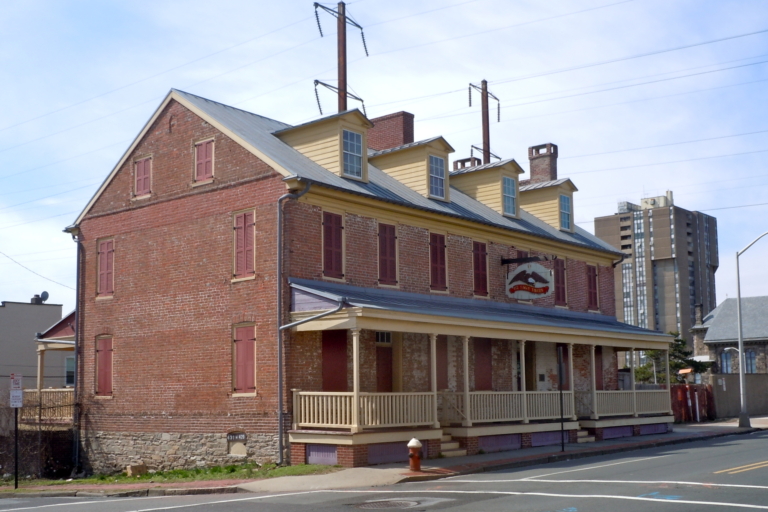
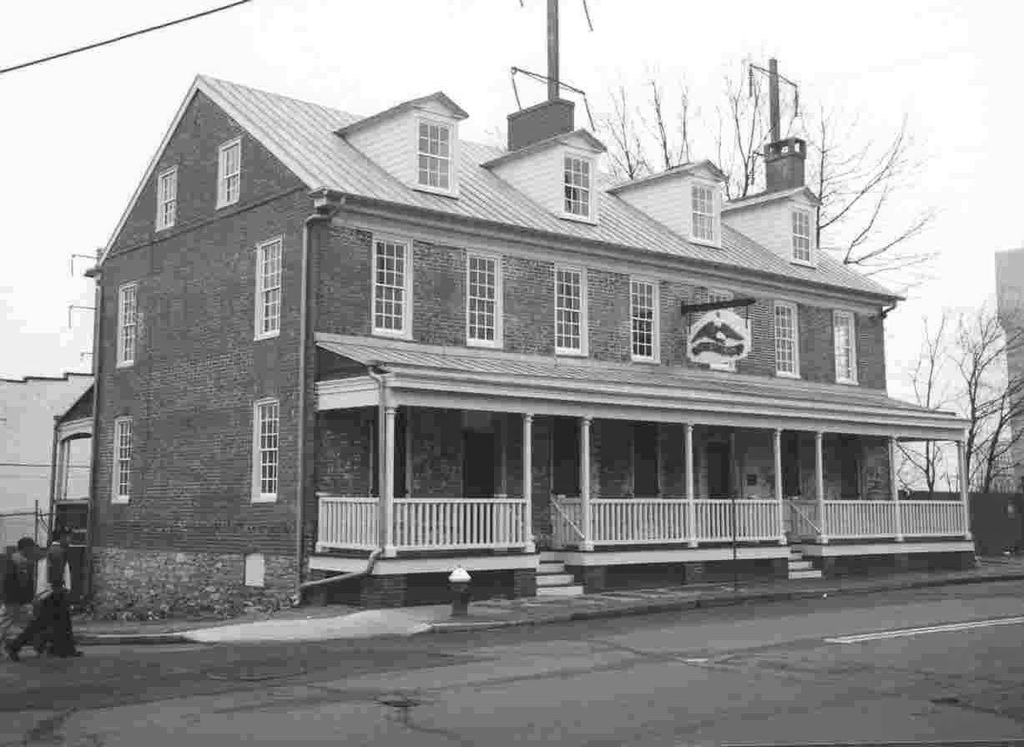
The Old Eagle Tavern on South Broad Street in Trenton, pictured in the city’s 2001 Historic Preservation Plan. Built around 1760 and expanded and remodeled in the early 19th century, the building is an example of vernacular Federal-style architecture. (Photo courtesy of the City of Trenton.)

The establishment became known as the Eagle Tavern, and later the Eagle Hotel, serving travelers moving between New York and Philadelphia as well as residents of the growing city.

Its fortunes improved during the 1820s and 1830s with the popularity of horse racing.

The Eagle Race Course, one of a relatively small number of major racing facilities in the region, occupied about 100 acres east of the tavern near what is now the intersection of South Clinton Avenue and Hudson Street in Chambersburg.

The track attracted horse owners, trainers and racing enthusiasts from throughout the eastern United States. Some spent summers in the Trenton area attending races, providing a steady source of business for the tavern.

The increased activity is believed to have contributed to the expansion of the building during the 1820s or 1830s.

The enlarged structure took on the seven-bay configuration that survives today. The two-and-a-half-story building features a brick exterior, dormer windows, multiple chimneys and porches along the front and rear. The city’s 2001 preservation plan describes it as an example of vernacular Federal-style architecture.

The tavern’s success coincided with broader changes in Trenton. During the 1830s and 1840s, new transportation connections and industrial businesses brought workers and investment to the city.

In 1839, property owner Elijah Brown conveyed land immediately north of the tavern for a railroad right of way, helping establish a direct rail connection between New York and Philadelphia through Trenton.

Industrialist Peter Cooper established iron rolling mills and wire mills in south Trenton during the 1840s, bringing additional workers to the neighborhood. The tavern served local residents and likely provided meals for teamsters hauling coal to the ironworks.

As the city grew, the tavern became more than a place to eat, drink or spend the night. It was an important center of political and social activity, particularly for Trenton’s South Ward.

Political meetings and election activities were held there, and the establishment served as a polling place for primary elections. Historical accounts also describe gambling at the tavern during the mid-19th century.

During the Civil War, the Eagle Hotel was the site of a political rally supporting Democratic presidential nominee George B. McClellan, who challenged President Abraham Lincoln in the 1864 election.

The establishment also served as a meeting place for members of the Masons, adding to its role as a center of neighborhood and civic life.

Its association with horse racing continued even after the Eagle Race Course closed around 1850. During the 1850s, horse trainer William H. Doble managed the hotel and undertook improvements to the building.

By then, however, the tavern’s business was changing. The closure of the racetrack eliminated an important source of customers, and the surrounding neighborhood was becoming increasingly residential and industrial.

The property changed ownership several times during the second half of the 19th century. By the end of the century, its original role as a tavern and hotel had largely come to an end.

The building subsequently served as a rooming house and later was converted into apartments. Its condition gradually deteriorated as the structure aged and the surrounding neighborhood changed.

History beneath the ground

The Eagle Tavern’s historical significance extends beyond the building itself.

Archaeological investigations conducted on the property between 1976 and 1981 uncovered thousands of artifacts associated with its early residential and commercial uses, along with evidence of a pottery operation that predated Trenton’s emergence as a major industrial pottery center.

The excavations involved members of the Trenton Historical Society, students and faculty from Mercer County Community College and Rider College, and other local participants.

Although much of the documentation from the original excavations was lost, the recovered materials remained available for study.

In 2005, Hunter Research prepared a detailed historical and archaeological analysis for the Trenton Historical Society and the New Jersey Historical Commission. The study examined the building’s history and cataloged 4,087 artifacts recovered during the earlier investigations.

Among the discoveries were fragments of wine and liquor bottles, ceramic tableware, clay pipes, buttons, glass beads, a toothbrush, a clay marble and a copper coin dating to 1723.

The artifacts provided clues about daily life at the property during its years as a private residence and later as a tavern, although researchers cautioned that many could not be conclusively assigned to one period or the other.

One of the most significant discoveries involved the remains of an 18th-century stoneware pottery operated by James Rhodes, who purchased property adjoining the Eagle Tavern site in 1778.

Rhodes established a pottery that operated until his death in 1784. Archaeologists recovered kiln debris, fragments of pottery vessels and other materials associated with the manufacturing process.

Nearly half of the cataloged artifacts were linked to the pottery rather than the tavern.

Researchers also identified similarities between materials found at the Eagle Tavern and those recovered from another early pottery operation along the Delaware River in Lamberton. The evidence helped connect Rhodes to both locations and provided additional information about Trenton’s early manufacturing history.

Possible remains of a pottery kiln were identified near the rear of the property, suggesting that additional archaeological resources may still be present.

The findings added another dimension to the site’s significance. Beyond its architectural importance and association with Trenton’s political and commercial development, the property contains evidence of some of the city’s earliest manufacturing activity.

A long road to restoration

By the middle of the 20th century, the Eagle Tavern’s future had become uncertain.

The city purchased the property in 1965, beginning a series of preservation efforts that would continue for decades.

The building was added to the New Jersey Register of Historic Places in January 1972 and the National Register of Historic Places on Nov. 3 of that year, recognizing its architectural, commercial and political significance.

It later became a contributing property within the Trenton Ferry Historic District, which was added to the National Register in 2013.

The city leased the building to the Trenton Historical Society in the 1970s, and restoration efforts continued as preservation advocates sought to find a suitable use for the property.

The tavern reopened as a restaurant in 1980, and renovations during that decade included installation of a commercial kitchen on the lower level and a bar on the first floor. But attempts to establish a successful operation proved unsuccessful, and by the early 1990s, the building was vacant again.

Preservation New Jersey included the Eagle Tavern on its list of the state’s 10 Most Endangered Historic Places in 1995, drawing attention to the building’s deteriorating condition and the difficulties of finding a sustainable use.

The Eagle Tavern’s importance to the city’s preservation efforts was reflected in Trenton’s Historic Preservation Plan, adopted in March 2001. The building was featured on the cover of the document and identified as an individually designated historic landmark.

The plan also reflected the city’s broader concern about the surrounding corridor. It recommended conservation-district protection for a stretch of South Broad Street between Dye and Liberty streets, underscoring the longstanding importance of preserving the area’s historic commercial buildings.

The city undertook another restoration in the early 2000s, repairing the roof, windows, chimneys and brickwork and making accessibility improvements. The work helped stabilize the building and preserve its exterior, but substantial interior renovations were still needed before it could reopen.

In May 2022, Trenton issued a request for proposals seeking a developer or redevelopment team to rehabilitate the property. The city expressed a preference for returning the building to use as a tavern or brewpub, although other commercial uses were also considered.

The solicitation called for a developer capable of leasing, designing, permitting and carrying out the restoration while preserving the building’s historic character. Potential financial incentives included state historic preservation tax credits and funding through economic development programs.

Despite those efforts, the property remained vacant.

In June 2023, Preservation New Jersey again named the Eagle Tavern to its list of the state’s 10 Most Endangered Historic Places, citing its historical significance, deteriorating condition and the continued need for a viable use.

A more substantial opportunity emerged in June 2025, when Trenton received $7 million through the NJEDA’s Urban Investment Fund Grant Program.

Half of the funding, $3.5 million, was designated for the Eagle Tavern. The remaining $3.5 million was allocated to the rehabilitation of the historic Roebling Machine Shop, another landmark along South Broad Street.

The Roebling project is intended to transform the former industrial building into a large event space, creating another attraction in a corridor that officials hope will become a center of commercial and entertainment activity.

The New Jersey Historic Trust also listed a $750,000 preservation grant award for the Eagle Tavern in 2025, with the Mercer County Improvement Authority named as the recipient.

The funding is intended to support exterior rehabilitation, heating and cooling system replacement, and accessibility improvements.

The city partnered with Mercer County and the Mercer County Improvement Authority to move the project forward.

The latest rehabilitation includes structural improvements, preservation of historic architectural features, restoration of original windows and woodwork, accessibility upgrades and installation of modern building systems and a commercial kitchen.

The work is being overseen by the Mercer County Improvement Authority under the leadership of Executive Director Anthony Verrelli.

Earlier this year, Mayor Reed Gusciora joined Mercer County Executive Dan Benson, Verrelli and Construction Trades Council President Wayne DeAngelo to announce a project labor agreement supporting union construction jobs during the rehabilitation.

Major structural repairs have been completed, historic windows are being reinstalled, and restoration of the building’s interior and exterior continues.

Benson said the project offers an opportunity to preserve an important part of Trenton’s history while supporting new business activity.

“The Eagle Tavern represents the kind of investment that brings together historic preservation and economic opportunity,” Benson said. “Mercer County is proud to partner with the City of Trenton and the NJ EDA to restore this important landmark and help create a destination that will benefit residents, visitors, and local businesses.”

The building’s location directly across from CURE Insurance Arena is an important part of its potential.

The arrival of the Trenton Ironhawks for the 2026-27 hockey season has brought another regular attraction to the arena, which also hosts concerts and other entertainment events.

City officials hope the tavern will provide a place for visitors to gather before and after events, encouraging them to spend more time in Trenton and support surrounding businesses.

“For more than 30 years, the Eagle Tavern has stood empty while thousands of people passed by on their way to events at the arena,” Gusciora said. “We’re changing that. With the arrival of the Trenton Iron Hawks, we have a tremendous opportunity to keep fans and visitors in Trenton before and after the games.”

The mayor said the goal is to make the South Broad Street corridor a destination rather than simply a place visitors pass through on their way to the arena.

“We want people coming downtown not just for two hours of hockey or a concert, but for an entire evening of dining, entertainment, and enjoying our Capital City. Bringing the Eagle Tavern back to life is an important part of that vision.”

The building’s return to commercial use would also restore a connection to its historic role in the surrounding neighborhood.

During the 19th century, the Eagle Tavern benefited from crowds drawn to nearby horse races and industrial businesses. Today, the arena and other entertainment venues could provide a new source of customers.

The restoration also comes as Trenton commemorates America’s 250th anniversary, adding significance to efforts to preserve one of the city’s few surviving buildings from the colonial era.

“As we celebrate America’s 250th anniversary, we should remember that Trenton’s history isn’t confined to museums or monuments,” Gusciora said. “It’s in the buildings and neighborhoods that have shaped our city for generations. The Eagle Tavern gives us an opportunity to preserve that history while making it part of Trenton’s future. And what better way to celebrate that history than by raising a glass in a tavern that dates back to colonial America?”

Although the building’s restoration is moving forward, several steps remain before customers can return.

Construction is expected to be substantially completed during the first quarter of 2027, with the city targeting a spring reopening. That schedule remains dependent on completion of the renovations and selection of a restaurant operator.

The city and county expect to announce additional details about the process for selecting an operator as the restoration approaches completion.

Five keywords: Eagle Tavern, Trenton historic preservation, South Broad Street, Mercer County Improvement Authority, Trenton Ironhawks

One fact-checking point remains: The city’s 2001 preservation plan dates the building to about 1760, while the historical account places Waln’s purchase in 1765. I have presented both dates with appropriate qualifications rather than declaring either the definitive construction date.

Lawmakers call for halt to South Brunswick data center

0

Federal and state lawmakers are calling on New Jersey environmental regulators to halt or reject an air pollution permit for a data center under construction in South Brunswick, citing potential health risks to residents of neighboring communities.

U.S. Rep. Bonnie Watson Coleman, state Sen. Andrew Zwicker and Assemblywoman Tennille McCoy announced their opposition Monday, Nov. 9, the final day for public comments on the proposed permit before the New Jersey Department of Environmental Protection.

Watson Coleman and Zwicker sent a joint letter to DEP Commissioner Ed Potosnak requesting that the state pause the permitting process until questions about the facility’s diesel-powered generators, potential emissions and public health effects are addressed.

McCoy, whose 14th Legislative District includes neighboring Plainsboro, separately called on DEP to deny the permit, saying residents of her district could be affected by a project approved in another municipality.

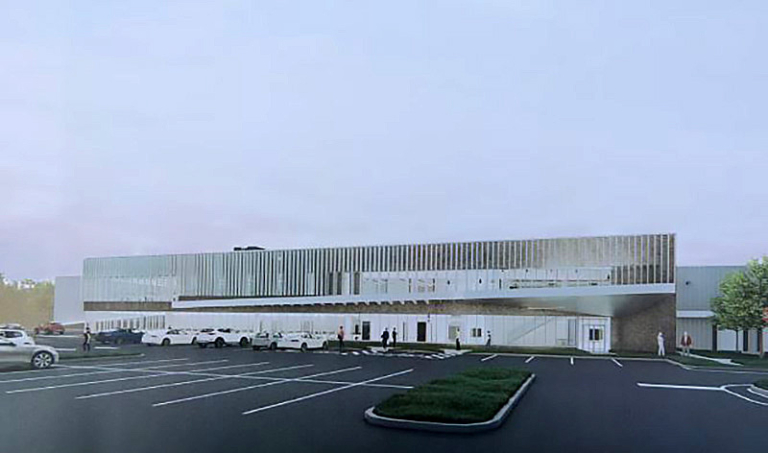
The permit concerns the Sentinel Princeton Nurseries Data Center, a 341,000-square-foot facility under construction at 4405 Route 1 on the former Princeton Nurseries property, just across the municipal boundary from Plainsboro.

“Air doesn’t stop at a township line,” McCoy said. “Plainsboro families will breathe what this facility emits, yet Plainsboro had no seat at the table when the project was approved. Before a single generator is permitted to run, NJDEP should offer our residents a full, transparent accounting of what this facility will put into our air.”

The draft permit, identified by the state as PN-DC1, covers 12 diesel-powered emergency generators, each rated at 3,620 kilowatts. The generators would provide backup electricity when the facility’s primary power supply is unavailable.

In their letter, dated Nov. 2 and announced Nov. 9, Watson Coleman and Zwicker questioned whether DEP’s environmental review adequately accounts for the generators’ potential emissions, particularly during extended power outages or other emergency operations.

The draft permit limits routine testing and maintenance to 28 hours annually per generator, but does not impose the same limit on qualifying emergency operation.

The lawmakers asked DEP to recalculate the facility’s potential emissions using at least 500 hours of operation per generator or explain why a lower figure would be appropriate and enforceable.

They also questioned why the permit covers 12 generators when public statements and reports have referred to plans for as many as 20 at the site.

The lawmakers want DEP to determine whether the full planned development should be classified as a major source of air pollution rather than a minor source, a distinction that affects the permitting requirements.

They also requested public disclosure of the data used in DEP’s health risk assessment, including how the analysis accounted for nearby homes, schools, existing pollution, weather conditions and the possibility of multiple generators operating simultaneously.

DEP has said its assessment found the health risk associated with the proposed generators to be negligible under state technical standards.

Watson Coleman and Zwicker said the department should independently verify the analysis, establish enforceable operating restrictions and allow another opportunity for public comment before issuing a final decision.

“We respectfully request that DEP not issue the permit in its current form,” the lawmakers wrote.

“We are asking for a complete, transparent review that protects public health and gives residents confidence that the law will be enforced.”

The letter also calls for an examination of cleaner backup power alternatives, including lower-emission generators, pollution controls and battery storage systems.

Pollutants associated with diesel exhaust include nitrogen oxides, benzene and formaldehyde. Residents and environmental advocates have also raised concerns about approximately 400,000 gallons of diesel fuel reportedly planned for storage at the site, along with the potential effects of generator testing and emergency operation on surrounding neighborhoods.

McCoy said the proximity of the data center to a major residential development planned in Plainsboro makes the potential environmental effects particularly important.

In June 2025, the Plainsboro Planning Board approved a mixed-use development on approximately 109 acres of the former Princeton Nurseries property, immediately south of the data center site.

That project includes 950 residential units, including apartments, townhouses, single-family homes and senior housing, along with a 75,000-square-foot hotel and nearly 320,000 square feet of commercial space.

McCoy said existing and future Plainsboro residents could be exposed to emissions, noise and other effects associated with the neighboring data center.

“We are asking residents to make a home on one side of this property line and asking them to accept an industrial power plant’s worth of diesel generators on the other,” McCoy said.

The latest statements add to growing opposition to the project from neighboring communities.

On Oct. 1, Princeton Mayor Mark Freda and the Princeton Council urged DEP to deny the permit in its present form, raising concerns about diesel emissions affecting residential neighborhoods and two elementary schools.

Zwicker and Assembly members Roy Freiman and Mitchelle Drulis, who represent the neighboring 16th Legislative District, previously requested additional time for public comments.

The DEP subsequently extended the original Oct. 7 deadline to Nov. 9. Approximately 200 people attended a Sept. 23 public hearing at the Princeton Marriott at Forrestal in Plainsboro, with about 30 offering testimony, according to the lawmakers.

The state permit proceeding is separate from the municipal land-use approvals already granted by South Brunswick. The township approved the data center in May 2025, and construction is continuing despite opposition and a legal challenge to the redevelopment process.

Watson Coleman and Zwicker acknowledged that data centers play an important role in the economy but said their increasing size and demand for electricity require closer examination.

Watson Coleman has introduced the Data Center Community Impact Act, which would authorize a federal study of the environmental, economic and public health effects of data centers, with particular attention to low-income communities and communities of color.

She is also an original co-sponsor of the federal AI Data Center Moratorium Act.

Zwicker is a primary sponsor of state legislation, S4659, that would require DEP to study the environmental and infrastructure effects of data center development and prohibit construction of new facilities until the study is completed.

The proposed state moratorium would exempt projects already approved or under construction when the legislation takes effect.

McCoy also pointed to recent state actions addressing the growing data center industry.

In July, Gov. Mikie Sherrill signed legislation creating a separate utility rate class for large data centers, intended to prevent the facilities’ electricity and infrastructure costs from being shifted to other customers.

In August, Sherrill signed another law requiring data center operators to report their energy and water consumption to the New Jersey Board of Public Utilities twice annually.

The following month, DEP announced a $1.07 million penalty against a Vineland data center after inspectors found 62 large natural-gas generators installed and operating without the required air permits.

Watson Coleman and Zwicker cited that enforcement action, along with a September diesel spill at an Equinix data center in Secaucus, as examples of why they believe backup power systems require additional scrutiny.

The Vineland enforcement action is unrelated to the South Brunswick project, which is undergoing the state’s air permitting process.

“These laws are a good start, but they don’t change the fact that this facility is already rising along Route 1,” McCoy said. “I will continue working with my colleagues in the Legislature, local officials and neighbors to make sure Plainsboro’s voice is heard.”

The DEP has not announced a date for its final decision on the Sentinel permit. The agency is expected to review testimony from the September hearing and written comments submitted during the public-comment period before making its determination.

Residents can submit comments through the DEP’s online form at dep.nj.gov/boss/permit-comment-form. Comments must be received by today and should reference facility PN-DC1, Program Interest Number 19525 and Permit Activity Number PCP250001.

Architectural rendering of the Sentinel Princeton Nurseries data center currently under construction in South Brunswick Townhip along Route 1. The develope is Senitel Data Centers of New York City.

Pennington’s La Unica earns Mexico seal of approval

0

Restaurant receives international recognition for preserving authentic cuisine

When Rafael Ponce de Leon and his wife, Monica Saldivar, opened La Unica Mexican Eatery in downtown Pennington three years ago, they set out to give customers a taste of Mexico that went beyond the familiar tacos, burritos and other dishes commonly associated with Mexican restaurants in the United States.

Their commitment to preserving the flavors, ingredients and cooking traditions of Ponce de Leon’s homeland has now earned the restaurant international recognition from Mexico itself.

La Unica received the Sello M designation from Mexico’s Ministry of Foreign Affairs and the Mexican Academy of Gastronomy during a ceremony Wednesday, Aug. 12, becoming the only restaurant in Mercer County to earn the distinction. The award recognizes restaurants outside Mexico that preserve and promote authentic Mexican cuisine, with particular attention to traditional recipes, ingredients, preparation methods and culinary expertise.

For Ponce de Leon, known to friends and customers as Rafa, the honor is especially meaningful because it comes from the country whose food and traditions inspired him to leave behind a 30-year corporate career and pursue his lifelong interest in cooking.

“It’s the Mexican authority saying your restaurant is a real restaurant,” he says.

The award is not based on customer reviews or popularity. Restaurants seeking the designation must undergo an evaluation conducted through Mexican embassies and consulates, with culinary experts reviewing their menus, ingredients, techniques and the experience of the people preparing the food. La Unica underwent an on-site evaluation and menu review that examined its recipes, use of traditional Mexican ingredients and culinary expertise.

The designation was presented to Ponce de Leon and Saldivar by Mariana Díaz, head consul at the Mexican Consulate in New Brunswick, during the August ceremony. Díaz emphasized that the distinction is not easily earned. Applicants must demonstrate that their food is rooted in Mexican culinary traditions and that the people preparing it understand the techniques necessary to reproduce those dishes authentically.

The recognition is a milestone for a restaurant that opened only three years ago, but the story behind La Unica stretches back decades and across two continents.

Ponce de Leon was born and raised in Mexico, where he spent the first 50 years of his life. He grew up in a traditional Mexican family in which cooking and sharing meals were central to everyday life. Those experiences gave him an appreciation for the role food plays in Mexican culture, where recipes and cooking techniques are often passed from one generation to the next.

“Coming from a traditional Mexican family, food was central to our lives,” he says. “Weekends were celebrations, holidays were gatherings, and the kitchen was where we spent most of our time.”

He learned to cook informally from relatives and friends, spending time in their kitchens and developing an interest that would eventually become a second career. For much of his adult life, however, Ponce de Leon’s professional path had little to do with food.

He spent 30 years working in sales and marketing for multinational companies in the pharmaceutical and medical device industries. In 2011, a corporate transfer brought him and his family from Mexico City to the United States, where they settled in Pennington. Although he continued his corporate career, his interest in cooking remained.

He eventually pursued more formal culinary training, studying at the International Culinary Center in New York City, Mercer County Community College and Bocconi University in Milan, along with additional instruction from chefs in Madrid and Mexico. The education broadened his knowledge beyond the Mexican recipes he had learned growing up and introduced him to other culinary traditions, particularly Spanish cooking.

In 2016, he established Las Patatas de Rafa, a family catering business specializing in authentic Mexican and international cuisine. Among the additions to his menu was paella, the traditional Spanish rice dish, which quickly became one of his most popular catering offerings. The venture allowed him to begin building a business around his culinary interests while continuing to share the foods and flavors he had grown up with.

His involvement in cooking also led him into teaching. In 2018, he began offering classes through Princeton Adult School, introducing students to Spanish and Mexican cuisine, a role he continues today.

By 2023, Ponce de Leon and Saldivar were ready for another step. When a commercial space became available in downtown Pennington, the couple saw an opportunity to open a restaurant in the community where they had made their home.

They named it La Unica Mexican Eatery, meaning “The Unique,” and developed a fast-casual menu centered on Mexican street food and regional specialties. The restaurant officially opened May 5, 2023, with a ribbon-cutting ceremony attended by family members, friends and local officials.

Opening a restaurant, however, brought challenges that went beyond preparing food. For Ponce de Leon, one of the most important was finding ingredients that would allow him to reproduce the flavors of Mexico without relying on substitutes that substantially changed the character of the dishes.

“One of our early challenges was sourcing native ingredients to replicate authentic Mexican flavors,” he says.

He began searching for suppliers that could provide traditional Mexican products, eventually assembling a network that includes local farms, specialty stores and distributors in New York City and Philadelphia. Among the local suppliers are Fairgrown Farm and Kerr’s, while specialty distributors supply ingredients that are more difficult to find in central New Jersey. The restaurant also incorporates selected international products, including grass-fed beef, when they meet the standards Ponce de Leon has established for his recipes.

Over three years, Ponce de Leon and his team have refined recipes, adjusted ingredients and modified the menu in pursuit of flavors that reflect the food served in Mexico. Rather than concentrating on a single region, La Unica’s menu draws on culinary traditions from across the country, incorporating classic dishes associated with different parts of Mexico.

Ponce de Leon says the goal has always been to reproduce the experience of eating in a Mexican restaurant rather than simply offering familiar interpretations of Mexican food. That approach reflects the diversity of a cuisine that varies considerably from region to region.

Traditional Mexican cooking incorporates ingredients and techniques shaped by local agriculture, geography, history and cultural influences. Corn, beans and chiles are staples, but the ways they are prepared and combined differ throughout the country. Even something as basic as a tortilla requires attention to the methods used to prepare the corn and make the masa, or dough. Ponce de Leon sought out suppliers who followed traditional corn-processing techniques rather than settling for commercially produced alternatives.

The emphasis on authenticity became a defining feature of La Unica and ultimately helped the restaurant qualify for the Sello M designation.

The Sello M program was established by Mexico’s Ministry of Foreign Affairs and the Mexican Academy of Gastronomy as part of an effort to recognize businesses abroad that help preserve the country’s culinary heritage. The initiative grew out of the 15th anniversary in 2025 of UNESCO’s recognition of traditional Mexican cuisine as an Intangible Cultural Heritage of Humanity. That designation, awarded in 2010, acknowledged the cultural significance of Mexican food, including the agricultural practices, cooking techniques, rituals and family traditions associated with its preparation.

Under the Sello M program, restaurants must have been operating for at least two years, offer a menu reflecting Mexico’s culinary diversity, use appropriate traditional ingredients and preparation techniques, and employ someone with training or experience in authentic Mexican cooking. Applications are reviewed by the Mexican Academy of Gastronomy, with consular representatives conducting verification visits to help determine whether establishments meet the requirements.

For La Unica, the process involved an examination of the restaurant’s menu, its recipes and the background of its chef. Ponce de Leon says evaluators recognized the restaurant’s use of original recipes reflecting Mexico’s culinary diversity, its commitment to native ingredients and traditional techniques, and the expertise behind its preparation methods.

The recognition also places La Unica among Mexican restaurants around the world that have earned the distinction. Recipients are included in an international directory designed to help travelers identify restaurants serving authentic Mexican cuisine.

The award provides another measure of how far the business has come since opening in 2023. Ponce de Leon says La Unica has developed a loyal following and earned a 4.8-star rating on Google. Although customer reviews are important to any restaurant, he considers the Sello M recognition different because it validates the culinary philosophy behind the business.

“After three years of working with our recipes, adjusting ingredients, modifying the menu, we were recognized with Sello M,” he says.

The restaurant has also become another way for Ponce de Leon to strengthen his ties to the community that welcomed his family after their move from Mexico. In addition to operating La Unica and his catering business, he continues to teach cooking classes at Princeton Adult School and serves on Pennington’s Economic Development Commission, where he participates in efforts to support the borough’s business community.

“I love being part of the local community!” he says.

His involvement in Pennington reflects a career that has taken several turns, from corporate sales and marketing in Mexico City to catering, culinary education and restaurant ownership in central New Jersey. The transition has allowed him to turn something that was always part of his family life into a profession, while introducing customers to the culinary traditions that shaped his childhood.

For Ponce de Leon and Saldivar, the Sello M designation represents both an acknowledgment of their work and an incentive to continue refining the food they serve. It also gives their small restaurant on North Main Street a distinction that extends well beyond Pennington.

Three years after opening La Unica, the couple has received recognition from the country whose culinary traditions they set out to preserve, bringing Ponce de Leon’s journey from the family kitchens of Mexico to international recognition in the community he now calls home.

For more information about La Unica Mexican Eatery, visit la-unica.net or call (609) 901-3181.

La Unica Mexican Eatery owners Monica Saldivar and Rafael “Rafa” Ponce de Leon display the Sello M award recognizing their Pennington restaurant for preserving authentic Mexican cuisine. La Unica is the only restaurant in Mercer County to receive the international distinction.